Where T‑Mobile stands as Gopalan nears year one
Srini Gopalan is closing in on his first anniversary running T‑Mobile US Inc., having taken the baton from Mike Sievert on Nov. 1. At age 56, he is steering through a rough patch for the stock, which is down 25% since last September when he was tapped for the role. Over that stretch, Verizon is up 16% and AT&T is down 10%.
July's second-quarter update underwhelmed investors, with revenue coming in below forecasts and subscribers falling 13% year over year in a category T‑Mobile has typically led. Gopalan, though, is playing a longer game. "How the market reacts to any one quarter, frankly, is down to so many different things. And I'm not going to manage this company to a day or a quarter stock price," he said. "Obviously, creating shareholder value is central to the purpose of this company, but we take a much more thoughtful, long-term view of it."
Executive transitions and the finance team
The company said Thursday that Peter Osvaldik, the chief financial officer, will retire next year. Jessica Uhl, previously the CFO at Shell Plc., will arrive in mid-September and work in tandem with Osvaldik through February 2027. Gopalan said her background fits T‑Mobile well, noting that both firms run nationwide retail footprints and manage large, complex infrastructure.
Gopalan said the finance leadership handoff is separate from Deutsche Telekom's recent executive moves, and he declined to address reports about a tie-up involving T‑Mobile's parent. Bloomberg reported that Elliott Investment Management has built a significant ownership position in Deutsche Telekom and said the German firm ought to abandon any proposal to merge with its American arm.
A few minutes a day is enough to stay genuinely informed about your money. Join Market Briefs free and start tomorrow.
Strategy: AI, home internet, new services, and partnerships
Gopalan wants T‑Mobile's network to be the backbone for AI that shows up in the real world, not just in chat apps. Think factory automation and drone deliveries, which he said "none of that is feasible without a wireless network connecting it." He said these kinds of uses line up with T‑Mobile's push to broaden its business connectivity portfolio, which he described as increasingly centered on wireless.
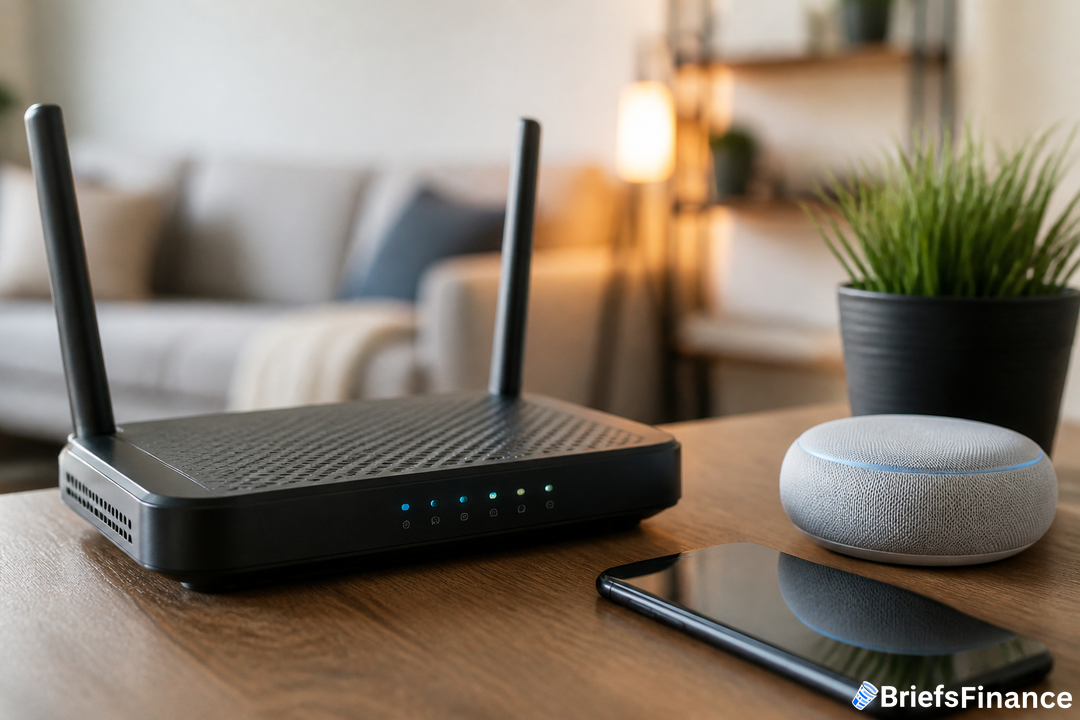
On the home internet side, the Bellevue, Washington-based company has grown from no households to almost 10 million in about four years. Gopalan called the roughly 60 million home internet accounts at cable providers the next big prize as T‑Mobile expands its fiber footprint and fixed-wireless access, which uses surplus 5G capacity.
To sweeten the bundle for existing wireless users, T‑Mobile has refreshed its loyalty program and added more phone financing choices. It is also moving into ads and financial products, launching a credit card in partnership with Capital One Financial Corp. The company teamed up with SpaceX's Starlink service to offer satellite coverage for hard-to-reach areas where its terrestrial network is thin, but most customers are not opting to spend $10 per month to add it. "We see, with time, this is not really going to be a differentiator," Gopalan said. "This is something that customers will come to expect as part of a standard cellular service."
What this means for your money
T‑Mobile is trying to turn a stock slump into a springboard: lean into AI that needs connectivity, chase millions of cable internet households, and layer on new perks and services while a lengthy CFO handoff runs through early 2027. If you are tracking this story, keep an eye on subscriber trends, home internet gains, and whether those new offerings catch on with people outside the carrier's core wireless base.