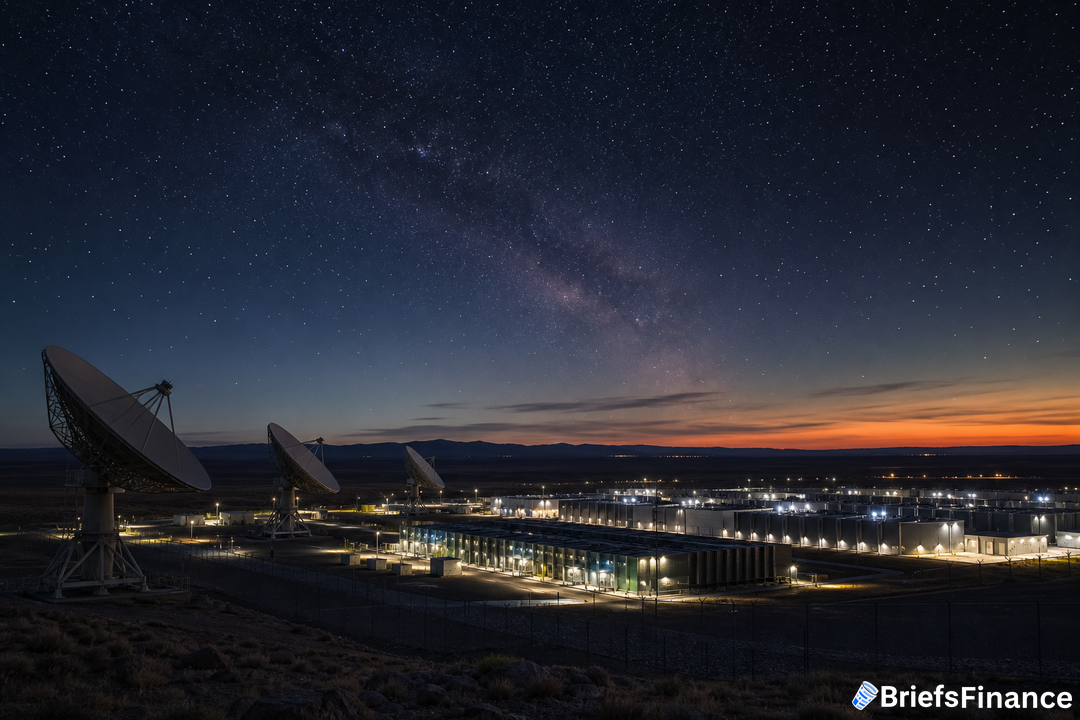
Why Planet is looking at server farms from space
Planet Labs is talking with prospective customers about using its satellites to keep tabs on data centers, CFO Ashley Johnson told Bloomberg News. The aim is to diversify outside the defense world. Johnson called the opportunity "absolutely an emerging growth vertical that we've barely scratched the surface on," and added, "I think it could potentially be the biggest market that we ultimately have."
Who wants the view and why
In its second-quarter report released Thursday, Planet Labs said it extended a deal with a hyperscaler AI customer to provide global surveillance of data centers and to track construction of semi-conductor manufacturing facilities. Johnson said there is "definitely demand for understanding what the pace of construction is," noting that interest goes beyond hyperscalers to insurers, energy traders and utilities. As she put it, "That obviously has implications for anyone who's trying to understand what the demand on the grid's going to be, what the availability and capacity of that specific data center owner is going to look like."
Contracts, tensions and momentum
Rising geopolitical strains have boosted demand for Planet Labs' imagery, helping the San Francisco-based company win work with the US Navy and the North Atlantic Treaty Organization. Earlier the same day as its quarterly release, Planet Labs announced a seven-figure agreement with a European customer in the defense and intelligence space. The company also logged its biggest quarterly sales increase to date and its first profit per share since going public in 2021. It raised the bottom of its guidance range for fiscal-year revenue and adjusted EBITDA.
The best financial decisions come from understanding the whole picture. Join Market Briefs free and get the full brief each morning.
What this could mean for your wallet
If satellites can count cranes and cooling towers at data centers and factories, that is real-time intel on AI buildouts, power needs and supply chain capacity. For anyone watching the knock-on effects in energy, chips and industrials, more frequent and precise imagery could tighten the feedback loop between what is getting built and where money is flowing next.