Where the exposure is
America's AI push needs a massive power backbone, and much of the gear feeding that backbone is tied to Chinese suppliers. Analysts told CNBC that transformers, switchgear, batteries, and optical technology are all areas where Chinese firms supply big portions of what goes into AI-ready data centers. That is why U.S. reliance on China for the power stack has become a strategic worry, even as American companies lead on the most advanced AI chips and systems. As Laveena Iyer at The Economist Group put it, scrutiny of China's role in the U.S. data center power stack has climbed over the last eight months, shifting attention beyond just the compute side.
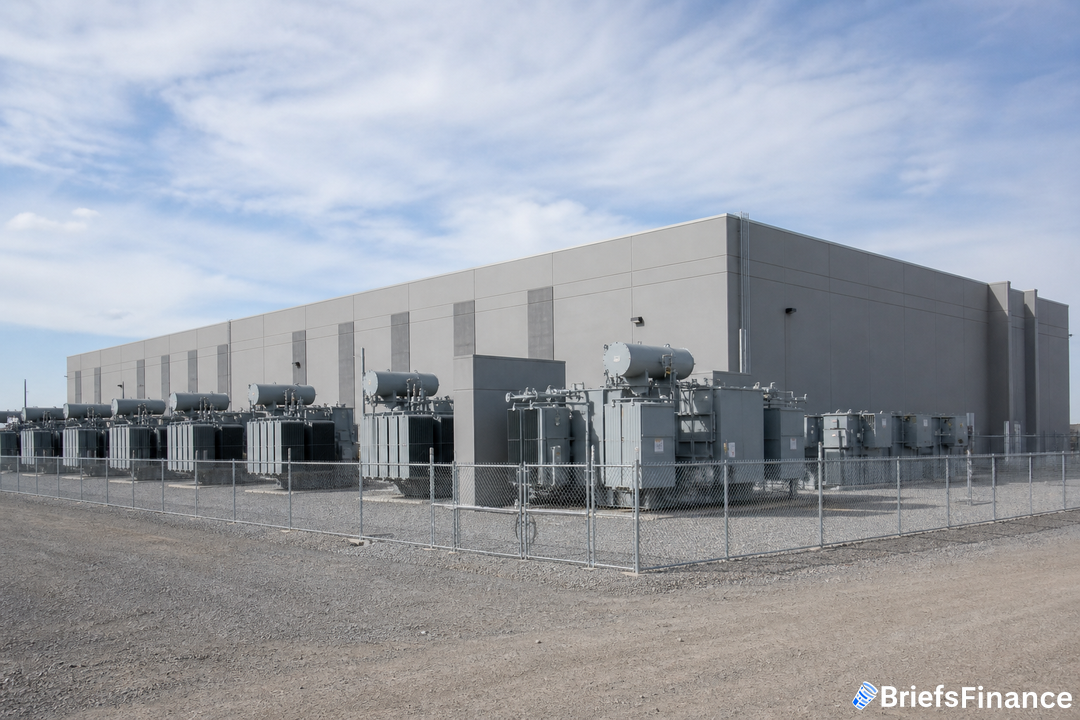
Here is the short version of the power stack: transformers step high-voltage electricity down so servers and cooling can use it, switchgear houses the switches, fuses, and breakers that control and protect circuits, and batteries cover backup power. Ben Boucher of Wood Mackenzie said AI infrastructure is increasingly reliant on Chinese imports in several key areas, especially substation transformers that hyperscalers install on site to bring transmission voltages down. Yury Dvorkin of Johns Hopkins University said the mid-term risk is concentrated in the gear that ties data centers to the grid, namely transformers, switchgear, and batteries. He added that China's share in certain transformer and switchgear categories is close to 30% and that the country supplies more than 40% of U.S. battery imports, and that vulnerabilities extend further up the chain to inputs such as copper, electrical steel and materials used for battery cathodes.
Optics are another choke point. Counterpoint Research says Chinese firms collectively produce about two thirds of global data center optical transceiver units, with Zhongji Innolight and Eoptolink among the top vendors by revenue. Neil Shah of Counterpoint warned in August that Western rivals have the designs but not yet the cleanrooms, automated packaging, or yields to take on that volume within 12 to 24 months. His words: "Western competitors like Coherent and Lumentum possess advanced photonic designs, but currently lack the cleanroom capacity, automated packaging infrastructure, and yield scale required to absorb Innolight and Eoptolink's volume within a 12-to-24-month horizon."
Policy moves and industry responses
Last week, President Donald Trump issued an executive order that declared a national emergency over the "extraordinary foreign threat" posed by bulk‑power system equipment manufactured overseas. The order lets the Energy Department block or attach conditions to certain transactions involving components used across the grid and in data centers. In remarks accompanying the order, he argued the foreign‑sourcing risk has worsened since his first term, pointing to the rapid expansion of defense production plus AI, data centers, and advanced manufacturing as factors that heighten the country's dependence on reliable electricity and the costs of disruptions.
Regulators have stepped in elsewhere too. In July, the Federal Communications Commission added power inverters made in foreign countries to its Covered List of equipment and services deemed an unacceptable national security risk. Reports also indicate the administration is preparing to prohibit new Chinese optical transceivers from entering the U.S. via imports, the devices that move high‑speed data between data centers. CNBC said it reached out to the U.K. embassy of the People's Republic of China for comment on the executive order and on China's role in providing components for the AI data center build‑out.
The administration's message is that reshoring is the plan. "Reshoring manufacturing that's critical to our national and economic security has been a top priority for President Trump, and the Administration continues to deliver with a robust and nimble agenda of tax cuts, tariffs, and deregulation," a White House spokesperson told CNBC. "Trillions in investments across key sectors - from steel to semiconductors to autos - prove that the Administration's strategy is paying off."
The best financial decisions come from understanding the whole picture. Join Market Briefs free and get the full brief each morning.
Market gaps, investment, and timing
Tight supply is already biting. Wood Mackenzie estimates that in 2026 the market will be short by about 15% on power transformers and 8% on substations. The crunch is most severe for 100 MVA and above, the segment where data centers have leaned on Chinese manufacturers to manage delays.
The demand picture is not easing. That kind of scaling lifts everything tied to the power stack and the optical links between facilities.
Money is moving to expand supply. In February, Siemens Energy also announced a $1 billion U.S. investment for grid and gas turbine equipment tied to AI infrastructure and data center growth.
On the optics front, any curbs on Chinese vendors could steer orders toward U.S. names such as Lumentum and Coherent; both received $2 billion apiece from Nvidia in March. Analysts caution that ramping domestic capacity will be a challenge in the near term, echoing Shah's point about facilities, packaging, and yields.
What this means for your money
Expect pressure on timelines and prices as Washington tries to reduce China exposure while AI data center demand keeps climbing. Iyer said a ban on Chinese optical transceivers would push U.S. hyperscalers to source locally, likely raising costs. She also noted that the political will to de-risk the power stack is growing and that the goal is to act before Chinese tech is embedded, pointing to the 5G experience where ripping out equipment later slowed builds and raised costs.
If you follow companies that make transformers, switchgear, batteries, or optical components, keep an eye on two levers beyond AI hype cycles: policy and production. Restrictions and incentives can redirect orders, while new factories and cleanrooms take time to stand up. The gap between demand and domestic supply is where margins, delays, and stock stories will be decided.