Free NewsletterPro Login
S&P 500 6,287 +0.42%
DOW 44,521 -0.18%
NASDAQ 21,103 +0.71%
S&P 500 +12.4%
Briefs Finance Fund +24.8%
JOIN THE FUND →

Stan Kroenke Becomes Largest Private Landowner in America

A stylized illustration of a cylindrical cup with blue arrows and lines indicating a swirling or rotational motion inside the cup.
Published Jan 15, 2026
[tts_player]
Share:
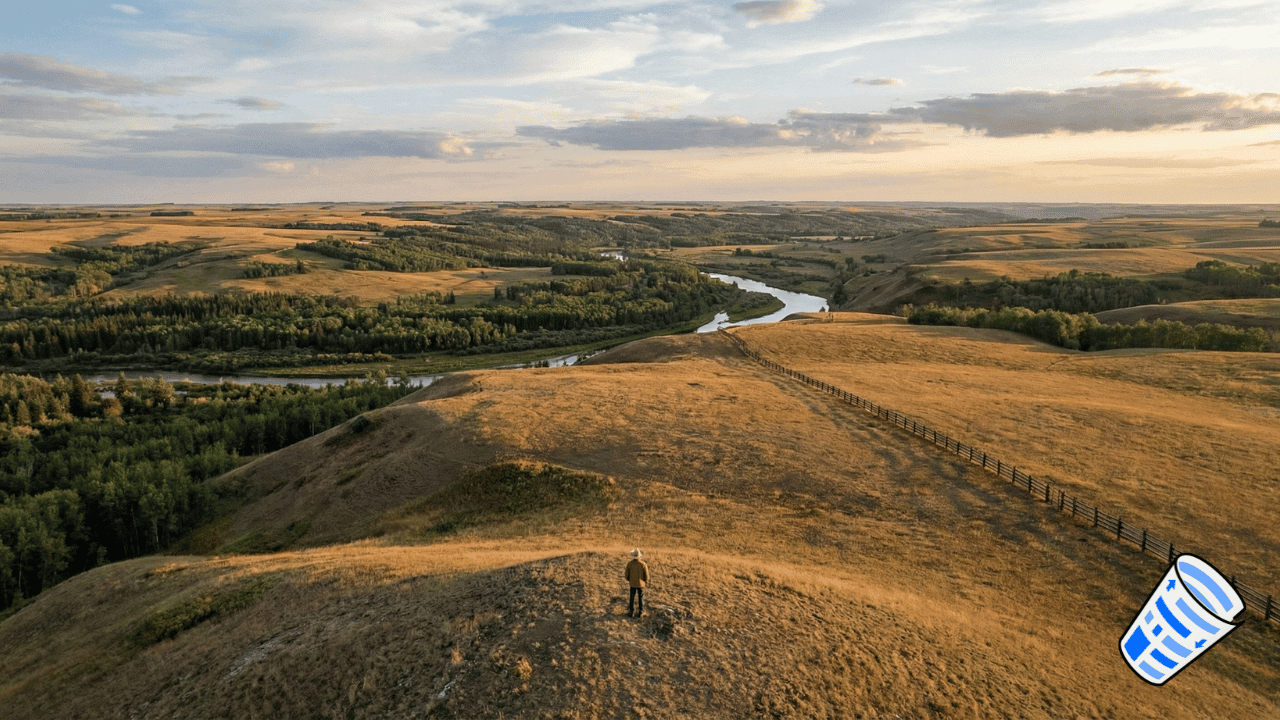
A person stands on a hilltop overlooking a winding river, fields, and distant forests under a partly cloudy sky at sunset—reminiscent of the vast landscapes owned by America's largest private landowner, Stan Kroenke.
Summary:

  • Stan Kroenke purchased nearly 1 million acres of New Mexico ranchland in December 2023.
  • His total land holdings now amount to 2.7 million acres, larger than Yellowstone National Park.
  • The New Mexico ranch purchase is the largest land acquisition in the U.S. in over a decade.

Kroenke's Major Land Acquisition

Stan Kroenke, the owner of the Los Angeles Rams, has become America's largest private landowner after acquiring nearly 1 million acres of ranchland in New Mexico in December 2023.

This purchase was part of the Singleton Ranches transaction, which is noted as the largest land purchase in the U.S. in more than a decade, according to The Land Report.

Total Land Holdings

With this latest acquisition, Kroenke's total land holdings now reach 2.7 million acres. To put this into perspective, this area is larger than Yellowstone National Park and is roughly equivalent to about 2 million football fields.

This significant expansion has positioned Kroenke at the top of The Land Report's annual ranking of the 100 largest private landowners, moving him up from fourth place.

Comparison with Other Landowners

Following Kroenke are the Emmerson family, who owns an estimated 2.44 million acres through their forest-products company, Sierra Pacific Industries.

Other notable landowners include billionaire Bill Gates, who holds 275,000 acres, making him the largest private owner of U.S. farmland. Gates’ farmland produces various crops such as soybeans, corn, and potatoes.

The Rise of Farmland Investments

Investing in U.S. farmland has gained popularity among the ultra-wealthy as a hedge against inflation and stock market volatility.

According to the U.S. Department of Agriculture, farmland values have grown at an average annual rate of 5.8% from 2019 to 2024, which translates to a 2% increase after adjusting for inflation. This trend has encouraged billionaires, including Philip Anschutz, to invest in large parcels of land for farming and ranching.

Previous Land Acquisitions

Kroenke is known for quickly expanding his land holdings by purchasing large ranches that have been in families for generations.

For example, in 2016, he acquired the Waggoner Ranch in Texas for $725 million, marking the end of 160 years of family ownership. As heirs opt to sell rather than continue family operations, more unique ranch properties are becoming available on the market.

What This Means for Future Investments

As farmland investments continue to attract attention, it remains to be seen how this trend will impact future land values and ownership structures in the U.S.

With high-profile figures like Kroenke leading the charge, the landscape of private landownership is likely to evolve further.

Disclosure

Recent News

1 2 3 33

Get Market Briefs delivered to your inbox every morning for free!

No fluff. No noise. No politics. Just finance news you can read in 5 minutes.

Blogs

June 29, 2026
Portfolio Diversification: Why Putting All Your Eggs in One Basket Destroys Wealth
  • Real diversification means spreading investments across all 11 economic sectors plus bonds, alternatives, and cash so no single bet can sink the portfolio.
  • Different sectors perform at different times, so a diversified portfolio captures upswings while smoothing the brutal drawdowns that wipe out concentrated bets.
  • Total market index funds offer the simplest path to diversification, and annual rebalancing is what keeps the structure working over time.
Read More
June 29, 2026
Non Taxable Income: What It Is and Why It Matters
  • Non taxable income is money you receive that you don't owe income tax on.
  • The tax code treats workers, investors, and business owners very differently, and investors often come out ahead.
  • Learning how income is taxed is a quiet superpower for keeping more of what you earn.
Read More
June 29, 2026
Semiconductor Stocks: A Simple Guide for Investors
  • Semiconductor stocks are companies that design and make computer chips, the brains inside nearly every modern device.
  • The AI boom has turned chips into one of the market's most important and most watched groups.
  • They offer big growth potential, but come with high valuations and a notoriously cyclical history.
Read More
June 25, 2026
How Stocks Work: A Simple Guide for Beginners
  • A stock is a slice of ownership in a company - buy one, and you own a piece of the business.
  • You make money two ways: the share price rising over time, and dividends paid to shareholders.
  • The simplest path for most beginners is buying into the whole market through a low-cost index fund.
Read More
June 25, 2026
Stop Loss vs Stop Limit: What's the Difference?
  • A stop loss order sells your stock once it hits a trigger price, prioritizing getting you out.
  • A stop limit order only sells within a price range you set, prioritizing price over a guaranteed exit.
  • The trade-off: a stop loss almost always executes; a stop limit might not if the price moves too fast.
Read More
June 25, 2026
Energy Stocks: A Simple Guide for Investors
  • Energy stocks are companies that produce and supply the power the world runs on, from oil and gas to newer sources.
  • They make up one of the 11 sectors of the market and tend to move with energy prices and big-picture shifts.
  • Like any sector, the key is diversification and understanding the forces driving demand.
Read More
June 18, 2026
What Is a Stop Loss Order? A Simple Guide
  • A stop loss order automatically sells a stock once it falls to a price you set.
  • It's a tool to cap losses or lock in gains without watching the market all day.
  • It works best for active strategies, and can backfire if used carelessly on long-term holdings.
Read More
June 18, 2026
Best S&P 500 Index Fund: How to Choose One
  • The best S&P 500 index fund for most investors is simply the cheapest, most established one that tracks the index well.
  • Funds like VOO, IVV, and SPY all hold the same 500 companies, so the biggest difference is the fee.
  • Pick one, automate your buys, and let time do the heavy lifting.
Read More
June 17, 2026
What Are Penny Stocks? Risks and Rewards Explained
  • Penny stocks are very low-priced shares of very small companies, often trading for just a few dollars or less.
  • They promise huge gains but carry huge risks: low liquidity, high failure rates, and wild price swings.
  • Most investors are better served by quality companies and funds than by chasing cheap shares.
Read More
June 17, 2026
Best Stocks for Beginners With Little Money
  • The best stocks for beginners with little money usually aren't individual stocks at all - they're low-cost index funds.
  • You can start with $100 or less and use small, regular investments to build wealth over time.
  • Focus on diversification and consistency, not on picking the next big winner.
Read More
1 2 3 24
Share via
Copy link









