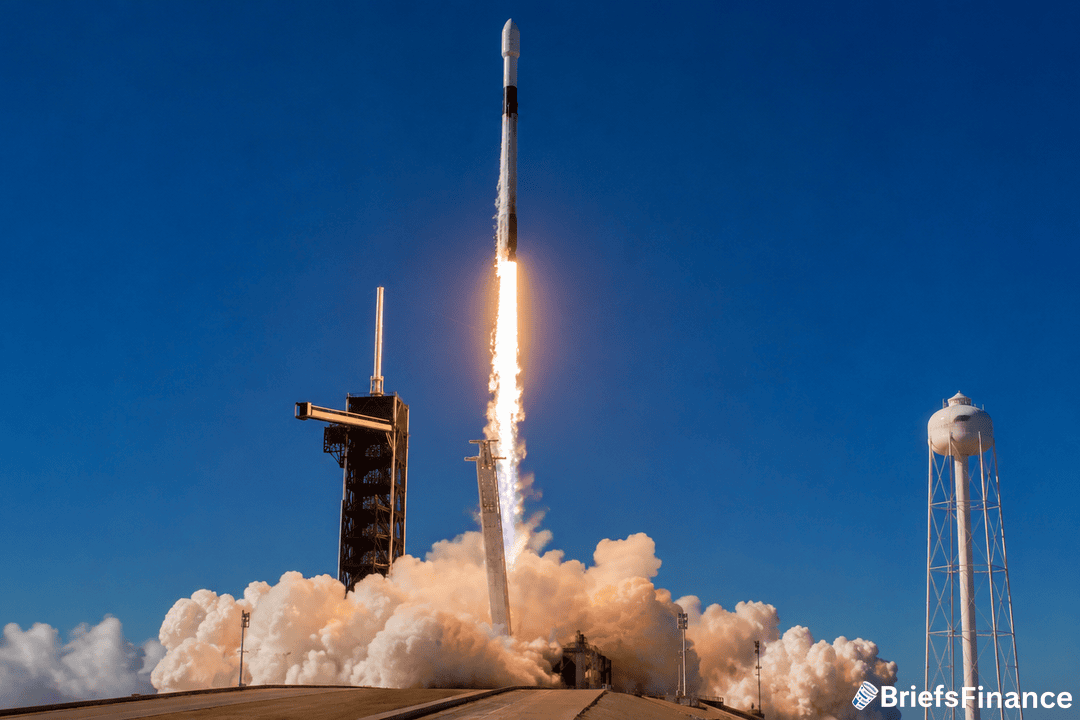
First Report Since the Mega IPO Shows Almost Doubled Revenue
SpaceX just published its first earnings report since pulling off the biggest IPO in history. The headline number: revenue almost doubled.
The net loss shrank to $541 million, down from $1 billion in the same quarter last year.
The report landed nearly two months after the largest IPO ever, which raised over $85 billion at a $1.75 trillion valuation. For a company that was private for so long, this is the first time everyday investors get to see the financials up close.
AI Hosting and Starlink Did the Heavy Lifting
Two businesses powered the jump. The AI unit brought in nearly $2 billion of the increase, and Starlink added $1.7 billion.
The AI part is the surprise. The unit started as Musk's xAI startup, was absorbed into SpaceX, and had struggled to compete with labs like OpenAI and Anthropic or win clients.
xAI also dealt with scandals, including a chatbot that called itself MechaHitler and technology that produced child sexual abuse imagery. SpaceX built two data centers in and around Memphis, Tennessee to train xAI models, then shifted much of that capacity to paid hosting for customers such as Anthropic and Google.
Get the free Always Be Buying eBook and learn the simple system for building wealth on any income
The cloud deals were revealed in the weeks before the IPO and marked a strategic shift. Instead of just building its own AI models, SpaceX is renting out computing power to some of the biggest names in AI.
CFO Bret Johnsen said on a Tuesday call that SpaceX has $6.7 billion in extra cloud revenue under contract, coming in "over a six month period that begins ramping starting in October of this year."
He also said the new hosting deals come with "high incremental EBITDA margins," which in plain English means most of that extra cloud revenue drops to the bottom line.
Spending Is Heavy, But So Are the Ambitions
This kind of growth costs real money. Capital spending exceeded $28 billion in the first half of this year, compared with $7 billion in the first six months of 2025.
A bond sale after the IPO gave SpaceX $100 billion in available funds to pay for that buildout.
ARR is a projection of what the company would earn in a full year at its current sales pace. For SpaceX, that projection would be a huge jump from the $18.67 billion it brought in during all of 2025.
Musk was more direct, saying the December figure is "not a question mark" and will probably be higher.
Those figures are now part of a public record. SpaceX spent years operating without quarterly reporting, but after the IPO its revenue, losses, and capital spending will be scrutinized every three months. The $6.7 billion in contracted cloud revenue and the $100 billion annual target give investors concrete milestones to gauge against future filings.
What the Stock Move Means for Your Portfolio
In early trading, SpaceX's market value briefly passed Amazon and came close to Microsoft before dipping below the $135 per-share IPO price that Musk reportedly set.
For regular investors, the bigger story is not the overnight move but the direction the company is heading. Shares closed below the $135 IPO price even after revenue almost doubled, which tells you the market is still working out what this company is worth.
The AI business is no longer a side project. Contracts with Anthropic and Google are signed, and the $100 billion annual revenue target gives investors a clear marker to watch.
October is when the next wave of cloud revenue starts flowing, and December is when the company says it will hit the $100 billion pace. For anyone holding SpaceX stock or just watching from the sideline, those dates matter more than the daily price swings.
Download the free Always Be Buying eBook and start putting your money to work today