What would change and why it matters
The SEC rolled out a proposal that would scrap longstanding federal procedures for putting shareholder proposals on corporate ballots. Instead, the filing rules would be set at the state level, according to the agency, and an SEC official told reporters Wednesday that policing shareholder proposals is squarely within states' authority. If the commission finalizes the shift, statehouses and corporate law hubs could take on a role they have often ceded to Washington.
SEC Chairman Paul Atkins, who has criticized investors he says turned the proxy system into a tool for climate or social equity campaigns, said the agency is acting within its statutory authority. For many decades, the SEC has overseen how shareholder proposals are handled. "The proposed rescission would not eliminate the concept of shareholder proposals and is not an attempt by the commission to silence shareholders," Atkins said in a statement.
Reactions from key players
New York State Comptroller Thomas DiNapoli, who oversees the state's pension funds, pushed back. "The SEC has chosen to allow corporate management to shield themselves from accountability rather than protect the investors it was created to serve," he said, describing the process as a "vital mechanism" that helps institutional investors flag financially material risks for board review.
Republican SEC Commissioner Hester Peirce praised the move, writing that overturning "this mechanism by which small shareholders gain disproportionate leverage over companies would mark a fresh start." She added, "The transition period may be bumpy, but shareholders and companies will work to strike the right balance in state laboratories of experimentation."
The US Chamber of Commerce, a business-friendly lobbying organization, labeled the SEC's plan a "long-term solution" addressing activist investors who have relied on proxy votes to "advance their own agendas at the expense of public companies and their shareholders." Frank Zarb, a lawyer at Proskauer in Washington, tied the initiative to a broader push to address the decline in public companies, saying, "The SEC's primary motive for these proposals is to make it more attractive" to become or remain a public company.
Changes in rules can remind investors to review how they protect their savings. Join Briefs Finance CEO Jaspreet Singh on September 29th for a FREE live investor workshop, How to Profit From A Dollar That's Losing its Value, where he shows how we're spotting investment opportunities as the dollar falls. Save your spot.
Texas has already tested a state-led approach.
The glossy report goes and what happens next
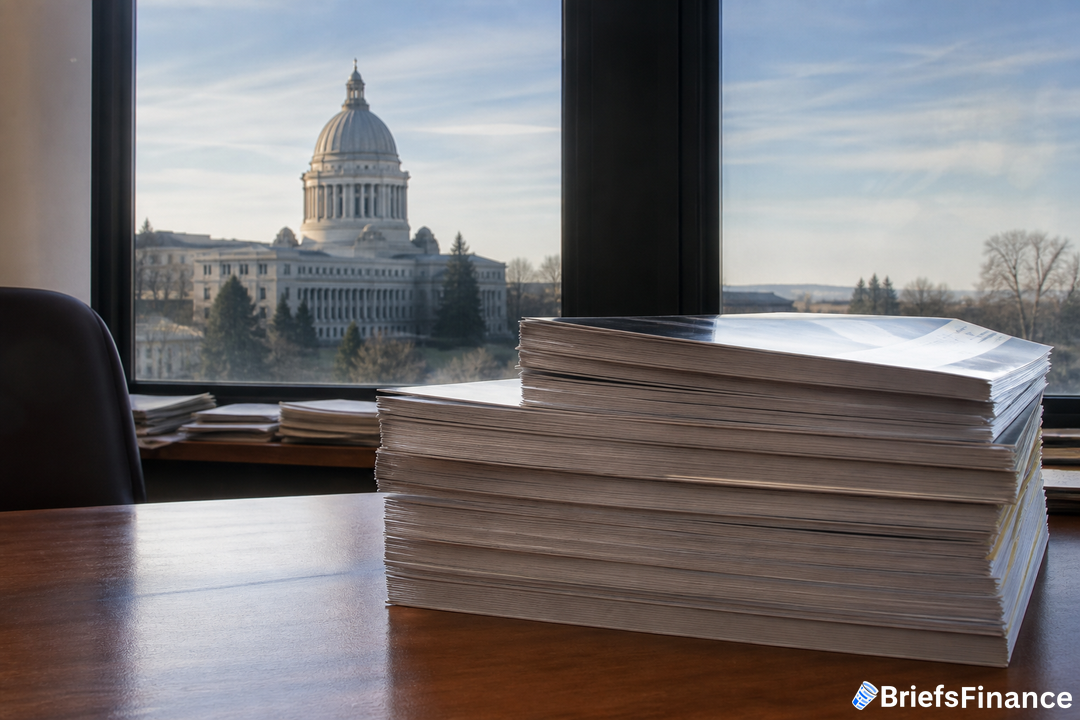
In a second proposal released Wednesday, the SEC moved to eliminate the glossy report that companies produce separately from the proxy statement and the annual 10-K. The commission said the only substantive disclosures in those annual reports that do not appear in the 10-K are stock performance graphs, and that data is "widely and freely available."
The SEC will take public comment for 60 days. After that, staff will review feedback and incorporate it into final rules, which require a formal commission vote before they can take effect. The full process typically runs 12 to 18 months.
What this means for your money
If these changes stick, shareholder proposal fights could start looking different from state to state, and that glossy booklet you get each year could be history. The headline for everyday investors is simple enough: the venue and the packaging may change, but the tug-of-war over investor voice is not going away.
When governance shifts arise, steady planning helps your portfolio stay focused and growing. Our CEO Jaspreet Singh is hosting a FREE live investor workshop, How to Profit From A Dollar That's Losing its Value, on September 29th. Sign up free to join him live.