What Vlasiuk is pushing for in Asia
Speaking with reporters at Ukraine's Embassy in Singapore, Vladyslav Vlasiuk - who serves as President Volodymyr Zelenskyy's point man on sanctions - argued that penalties are the strongest lever to bring Moscow to serious talks. "Sanction is a really good way to force the Russian side to start talking," he said, adding, "We also believe that sanctions so far caused a lot of difficulties for the Russian economy - a lot of constraints, a change of dynamics." He said another wave of "really crushing sanctions" that trims Russia's oil revenue by at least half could put Moscow "in a tricky situation" and force a retreat within six months.
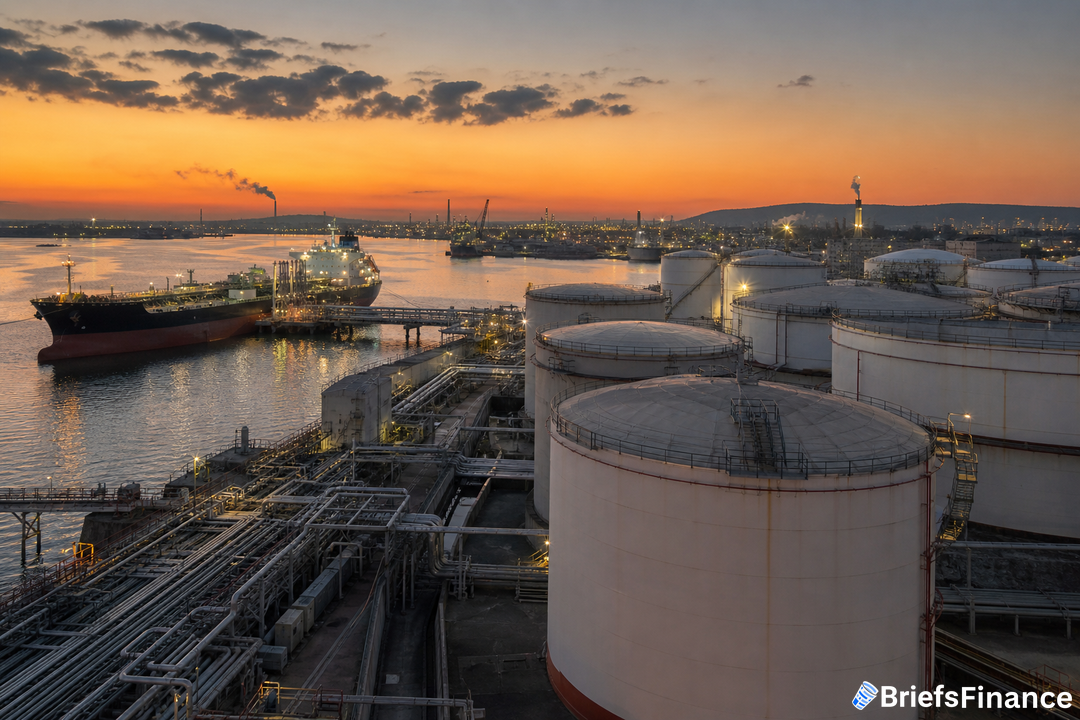
As part of a wider push into Asia, which Kyiv increasingly sees as the weak seam in the sanctions web built by the U.S., European Union and Group of Seven since 2022, Vlasiuk said he plans meetings in Malaysia, Indonesia, Japan and Thailand. The agenda: Russia's so‑called shadow fleet that moves oil outside Western services to dodge price caps, and the flow of microelectronics feeding Russia's defense industry.
Why the region is a sanctions weak point
Indian and Chinese refiners have taken most of the discounted crude from Russia, keeping oil money coming in despite stricter price‑cap policing by Western governments. At the same time, ports and free-trade hubs across Southeast Asia are being leveraged for ship-to-ship handoffs that make it difficult to trace the true origin of sanctioned Russian cargoes.
Files reviewed by CNBC indicate that parts taken from a missile intercepted over the Kyiv region last month were predominantly sourced from the U.S., Russia, China, Taiwan and Japan. As Vlasiuk put it, "Some of the microelectronic components used in such missiles reach Russia through the Asian region." He also warned the problem is bigger than one country: "You have to be very careful about sending around certain types of mechanicals, because otherwise those would be ending up in the military-industrial complexes of terrorist countries," including Iran and North Korea.
Geopolitical shifts remind investors to keep a long term plan for their savings. Join Briefs Finance CEO Jaspreet Singh on September 29th for a FREE live investor workshop, How to Profit From A Dollar That's Losing its Value, where he shows how we're spotting investment opportunities as the dollar falls. Save your spot.
The gray zone is getting busier
Vlasiuk cautioned that Russia is increasingly active just short of open conflict with NATO members. European authorities have linked Moscow to more drone incursions, sabotage, cyberattacks and other hostile activity in recent months. He framed it as part of a wider pressure campaign while Russia struggles to gain ground in Ukraine and absorbs more Ukrainian drone and missile strikes inside Russia.
"Wake up, people - the world has changed," he said. "Russia is not that funny bear anymore. It's not funny. It's a bear that's dangerous, and you have to be tight and powerful against it."
Why this matters to you
This story is about two pipes that touch daily life: oil cash and chips. Vlasiuk's ask to Asian governments zeroes in on Russia's energy income and the microelectronics showing up in its missiles, with recent parts traced to the U.S., Russia, China, Taiwan and Japan. How those flows are handled influences the backdrop for the prices you pay at the pump and the tech that ends up in your hands.
Staying informed and steady can help you protect and grow your financial future. Our CEO Jaspreet Singh is hosting a FREE live investor workshop, How to Profit From A Dollar That's Losing its Value, on September 29th. Sign up free to join him live.