A River Rescue the Country Has Never Tried
You do not usually need explosives to keep a power plant running. Then again, you do not usually have a river that is too low to cool one.
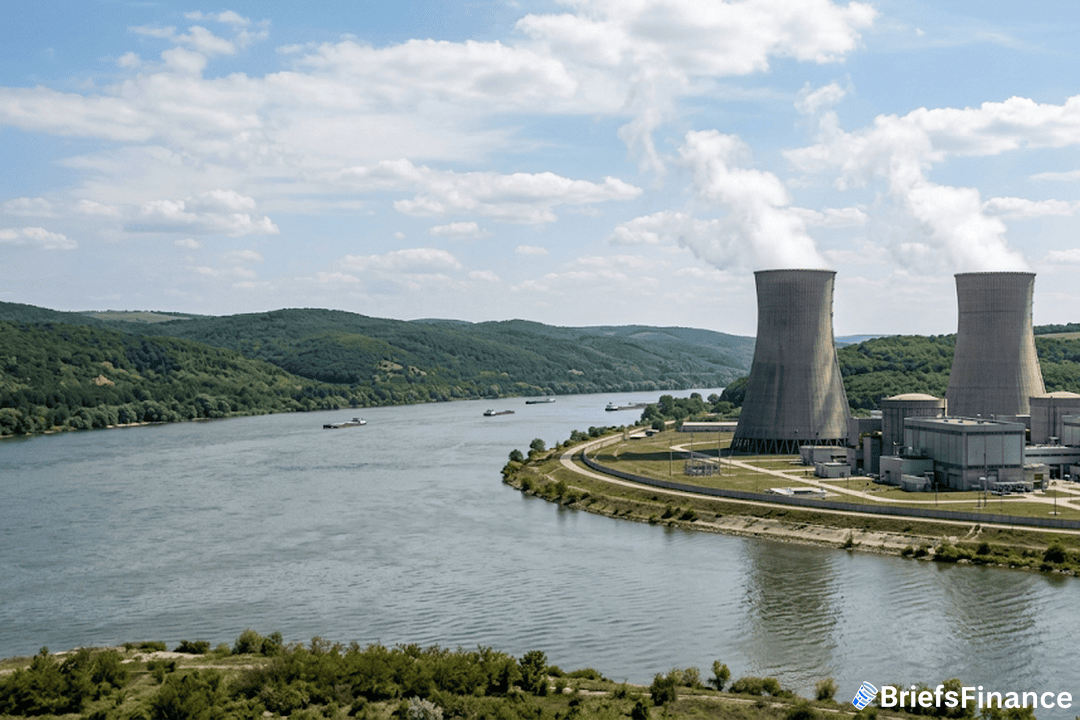
That is the situation Romania faced this month. A drought has pushed the Danube to its lowest level on record, and the Cernavoda nuclear plant depends on that river.
So Romania tried something it had never tried before. On Aug. 3, crews set off a controlled blast on the riverbed in Izvoarele village, then dredged underwater ridges and sank four barges loaded with rocks.
The whole point was to push more water toward the plant. The early reading looks good.
Radu Miruta, the official temporarily heading both the defense and transport ministries, said the first measurement this morning at Cernavoda showed the water level had climbed 4cm (1.6 inches) over the previous 24 hours, after falling 3cm the day before.
"Based on the current forecast, this will allow us to keep Unit 2 operating for at least another nine days," Miruta said.
Nine days is not forever. But in an August this hot, it is time the grid badly needs.
Why Water Levels Matter to a Nuclear Plant
A nuclear plant needs a steady supply of water to cool its systems. Nuclear reactors throw off a lot of heat, and that heat has to go somewhere.
Get the free Always Be Buying eBook and learn the simple system for building wealth on any income
The water from the river carries it away. When the river level drops too far, the plant cannot pull enough water to do that job.
Output falls, and if the water level keeps dropping, the reactor eventually has to shut down. That is the pressure the whole region is under.
The drought has cut power output sharply at nuclear plants upstream in Hungary, and Romania has felt the same strain. Romania's energy sector is now on alert status for the entire month of August.
The government has also asked businesses and residents to use less electricity since nuclear output dropped. Four centimeters is about the width of two fingers, which is why a gain that small matters.
It is the difference between a reactor staying online and going cold. In this case, that means at least nine more days of operation.
The Energy Squeeze Hits the Rest of the Economy
The strain is not staying inside the power grid. Renault SA's Dacia and Ford Otosan, the country's two biggest carmakers, have both paused production until late August.
Romania uses several energy sources, among them solar, wind and nuclear. That mix helps, but it cannot fully replace the steady output of a nuclear reactor when the river is low.
The car plant pause is the clearest sign that the drought has moved from utility reports into daily life. When factories stop, the problem stops being abstract.
What the Extra Nine Days Mean for You
The blasting bought time, not a cure. Unit 2 can keep running while the grid manages one of its toughest summers in years, but the river can still drop again.
Think about what alert status means at home. When a government asks people to reduce electricity use, it is usually because the gap between supply and demand is thin.
That request is still in force, and the government may pull the same lever again if the river falls. For now, the calendar has a little more room.
The next few weeks come down to how much water the Danube sends Cernavoda and whether the forecast holds. Nine days is a short window, but for the people and businesses in Romania, it is the difference between a grid that has room to breathe and one that does not.
Download the free Always Be Buying eBook and start putting your money to work today