Free NewsletterPro Login
S&P 500 6,287 +0.42%
DOW 44,521 -0.18%
NASDAQ 21,103 +0.71%
S&P 500 +12.4%
Briefs Finance Fund +24.8%
JOIN THE FUND →

Memory Chip Stocks Have Doubled In 2026. Wall Street Is Quietly Warning About The Cycle

Published May 25, 2026
[tts_player]
Share:
Summary:
  • Samsung is up 114% year-to-date; SK Hynix is up 186%; Micron is up 141%; SanDisk is up 156%.
  • Samsung and SK Hynix together now make up over half of South Korea's entire Kospi index.
  • Google unveiled a new compression technology in March that the company says could cut AI memory needs by roughly six times.

Every time memory stocks go on a tear, somebody on Wall Street says the same thing: this time is different.

Memory used to boom and bust because demand was fickle and supply was rigid, and the argument is that AI changes that. The pros who have been doing this for decades disagree.

The Run Has Been Massive

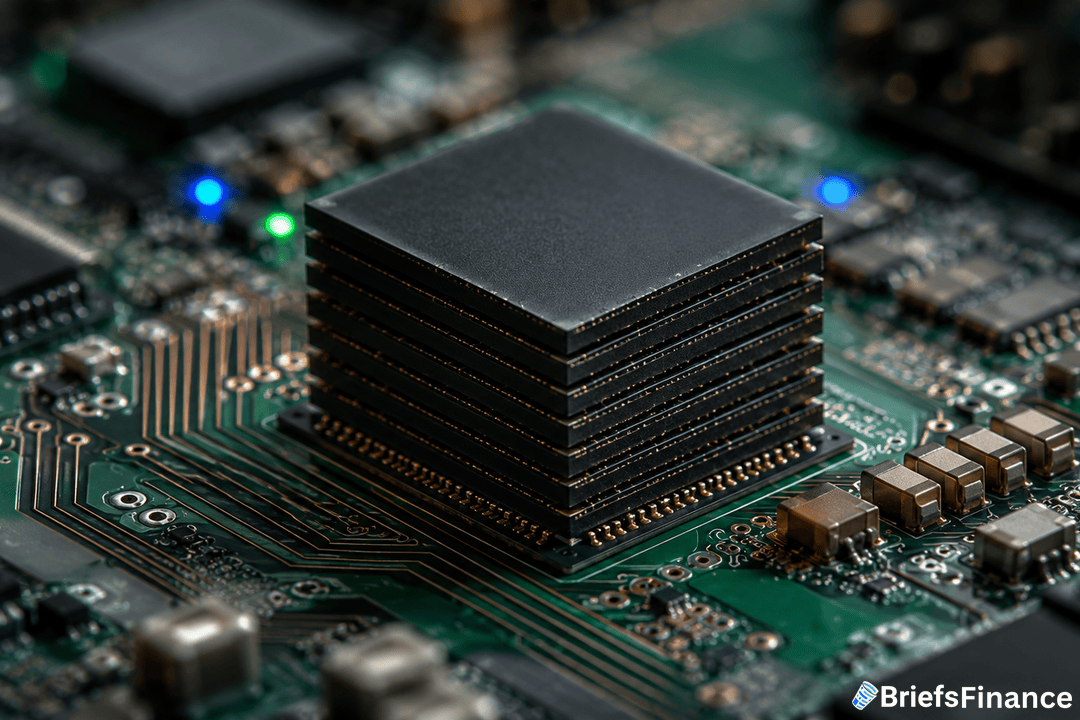
Memory chips have been on a tear since ChatGPT launched in late 2022, which kicked off a sustained demand wave for high-bandwidth memory, or HBM - the specialized chips needed to train large AI models.

Samsung and SK Hynix are the dominant suppliers, and the stock prices reflect it. Samsung is up 114% this year, SK Hynix is up 186%, U.S.-listed Micron has climbed 141%, and SanDisk is up 156%.

Those are full-year gains, and we are not even at the halfway mark.

The bull thesis goes like this: AI demand is structural, not cyclical, memory factories take years to build, so supply cannot catch up fast, companies have learned discipline, prices stay high for years, and margins stay fat.

Most of South Korea is along for the ride, with Samsung and SK Hynix together now over half of the Kospi - two stocks effectively running an entire country's stock market.

If you want a sharper read on the AI trade every weekday morning, Market Briefs covers it in five minutes - and includes a free investing masterclass when you sign up.

The Warnings Are Starting

BlueBox Asset Management's William de Gale was on CNBC's Europe Early Edition last week, and his take was blunt.

"In the long run it's a pretty dreadful industry," he said. "I suspect that's still the case every time people make an argument that the memory cycle is gone, and it's now a long-term value-creating industry - just before it all goes horribly wrong."

That is the kind of line that ages well after a crash.

There is also a technology risk. Back on March 24, Alphabet's Google introduced something called TurboQuant, a compression technique that the company claims can shrink the memory footprint of large AI models by roughly six times.

Less memory needed means less demand for memory chips, and memory stocks dropped when the announcement landed.

Deutsche Bank told clients to "continue to brace themselves for continuous AI-related disruption," and other AI shifts are also forcing policymakers and investors to keep recalculating their assumptions.

Whether TurboQuant proves out is a separate question, but anything that makes AI models more efficient eats into the memory thesis.

Andrew Lapping, chief investment officer at Ranmore Fund Management, summed up the worry in a line: "A leopard does not often change its spots."

Worth Noting

Standard Chartered's Steve Brice was in Korea recently and told CNBC's Squawk Box Asia his team was advising clients to take some profits and diversify away from Korean stocks.

Jon Cunliffe at JM Finn said today's share prices assume "prices stay high for a long time, companies stay very disciplined about not over-investing, and profit margins remain much better than in the past." In plain English: a lot has to go right.

Nomura is still bullish, and the firm sees Samsung climbing another 20% and SK Hynix doubling again over the next year. But cycle-aware investors know what those calls usually look like near a top.

The chips might still be hot. The history is too.

If you want to see how stories like this play out for the broader market, join Market Briefs every morning and get the 45-minute investing course tossed in for free.

Disclosure

Recent News

1 2 3 41

Get Market Briefs delivered to your inbox every morning for free!

No fluff. No noise. No politics. Just finance news you can read in 5 minutes.

Blogs

June 29, 2026
Portfolio Diversification: Why Putting All Your Eggs in One Basket Destroys Wealth
  • Real diversification means spreading investments across all 11 economic sectors plus bonds, alternatives, and cash so no single bet can sink the portfolio.
  • Different sectors perform at different times, so a diversified portfolio captures upswings while smoothing the brutal drawdowns that wipe out concentrated bets.
  • Total market index funds offer the simplest path to diversification, and annual rebalancing is what keeps the structure working over time.
Read More
June 29, 2026
Non Taxable Income: What It Is and Why It Matters
  • Non taxable income is money you receive that you don't owe income tax on.
  • The tax code treats workers, investors, and business owners very differently, and investors often come out ahead.
  • Learning how income is taxed is a quiet superpower for keeping more of what you earn.
Read More
June 29, 2026
Semiconductor Stocks: A Simple Guide for Investors
  • Semiconductor stocks are companies that design and make computer chips, the brains inside nearly every modern device.
  • The AI boom has turned chips into one of the market's most important and most watched groups.
  • They offer big growth potential, but come with high valuations and a notoriously cyclical history.
Read More
June 25, 2026
How Stocks Work: A Simple Guide for Beginners
  • A stock is a slice of ownership in a company - buy one, and you own a piece of the business.
  • You make money two ways: the share price rising over time, and dividends paid to shareholders.
  • The simplest path for most beginners is buying into the whole market through a low-cost index fund.
Read More
June 25, 2026
Stop Loss vs Stop Limit: What's the Difference?
  • A stop loss order sells your stock once it hits a trigger price, prioritizing getting you out.
  • A stop limit order only sells within a price range you set, prioritizing price over a guaranteed exit.
  • The trade-off: a stop loss almost always executes; a stop limit might not if the price moves too fast.
Read More
June 25, 2026
Energy Stocks: A Simple Guide for Investors
  • Energy stocks are companies that produce and supply the power the world runs on, from oil and gas to newer sources.
  • They make up one of the 11 sectors of the market and tend to move with energy prices and big-picture shifts.
  • Like any sector, the key is diversification and understanding the forces driving demand.
Read More
June 18, 2026
What Is a Stop Loss Order? A Simple Guide
  • A stop loss order automatically sells a stock once it falls to a price you set.
  • It's a tool to cap losses or lock in gains without watching the market all day.
  • It works best for active strategies, and can backfire if used carelessly on long-term holdings.
Read More
June 18, 2026
Best S&P 500 Index Fund: How to Choose One
  • The best S&P 500 index fund for most investors is simply the cheapest, most established one that tracks the index well.
  • Funds like VOO, IVV, and SPY all hold the same 500 companies, so the biggest difference is the fee.
  • Pick one, automate your buys, and let time do the heavy lifting.
Read More
June 17, 2026
What Are Penny Stocks? Risks and Rewards Explained
  • Penny stocks are very low-priced shares of very small companies, often trading for just a few dollars or less.
  • They promise huge gains but carry huge risks: low liquidity, high failure rates, and wild price swings.
  • Most investors are better served by quality companies and funds than by chasing cheap shares.
Read More
June 17, 2026
Best Stocks for Beginners With Little Money
  • The best stocks for beginners with little money usually aren't individual stocks at all - they're low-cost index funds.
  • You can start with $100 or less and use small, regular investments to build wealth over time.
  • Focus on diversification and consistency, not on picking the next big winner.
Read More
1 2 3 24
Share via
Copy link