The Stakes for North American Trade
Investment under the pact has reached $182 billion, mostly in the U.S., highlighting the deep interdependence. Any disruption to tariff-free trade would raise costs significantly, as components cross borders multiple times during production.
The USMCA was supposed to give North American trade a stable foundation. Instead, the missed extension deadline has thrown the auto industry into a fog of uncertainty. The three countries could have locked in a 16-year extension by Wednesday - they did not, and now a slow-motion review process begins.
That review could take years and could ultimately let the deal expire in 2036. For an industry that moves roughly $2 trillion in goods across borders each year, that is a lot of risk to carry.
Why the Deadline Was Missed
The Trump administration soured on the USMCA deal and did not plan to extend it. Instead, it wants higher domestic content requirements and more U.S. investment. In May, U.S. Trade Representative Jamieson Greer stated that the U.S. aims to tighten North American rules of origin "in a way that enhances U.S. content in these goods" to boost domestic manufacturing.
Get your free investing masterclass bonus when you join Market Briefs, our free daily newsletter
Right now, passenger vehicles must have 75% "regional value content" - meaning 75% of the vehicle's value must come from North America to qualify for tariff-free trade. The administration reportedly wants to raise that to 82%. It also wants 50% of the value to be produced specifically in the U.S.
A scholar from the Center for Strategic and International Studies, Diego Marroquín Bitar, noted that the Trump administration's public discussions touch on many subjects, not just trade, such as immigration and crime. "Everything is on the table. Not just the trade issues," Bitar said. "The more things on the table, the longer it takes to negotiate and the more uncertainty it will generate."
What the Auto Industry Faces
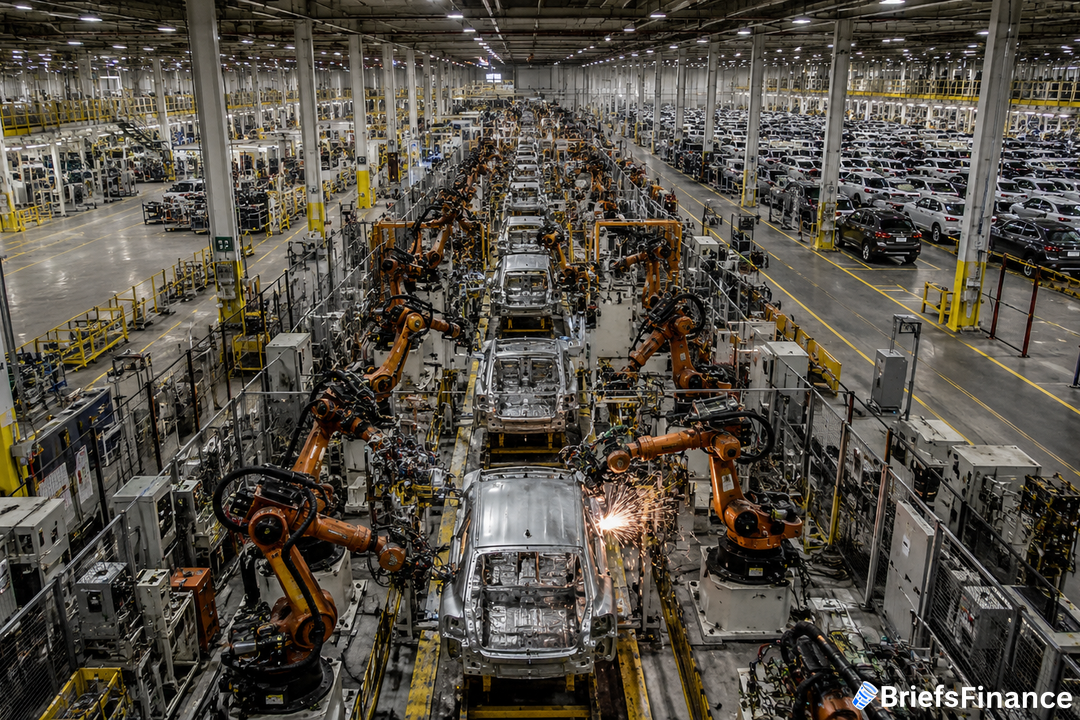
The auto industry is deeply integrated across the three countries. AlixPartners calculates that transporting a product from Mexico to Canada adds up to 20% in costs, whereas importing specific components from China into the U.S. could raise expenses by as much as 50%.
Diego Marroquín Bitar remarked that the uncertainty is damaging: "If we let this go on for a very long time, it's very painful for everyone. That's the last thing that the region needs."
Still, some see a path forward. Flavio Volpe, president of Canada's Automotive Parts Manufacturers' Association, said: "I'm bullish on where we're headed. There are real issues on the table but, in my opinion, none of [those] are insurmountable."
What to Watch
The three countries will now enter an annual review process that could take years. Automakers worry that prolonged uncertainty will freeze investment and cost jobs. The U.S. government pushes for higher domestic content, but raising content requirements too fast could push companies to build less in America, not more.
U.S. automotive trade groups wrote to U.S. Trade Representative Jamieson Greer, saying: "We support U.S.-Mexico bilateral engagement and encourage trilateral discussions to support an efficient and effective review that will ultimately extend USMCA as a trilateral agreement."
Mark Wakefield, an AlixPartners partner who leads its global automotive market practice, offered a summary: "The regional value content is what people are talking about a lot, but really it's the U.S. content that's going to matter. Some of these don't even really have a plan as to how to even do them, and so it's going to be a bumpy road, and a fairly expensive road."
Subscribe to Market Briefs, our free daily newsletter, and claim your bonus investing masterclass