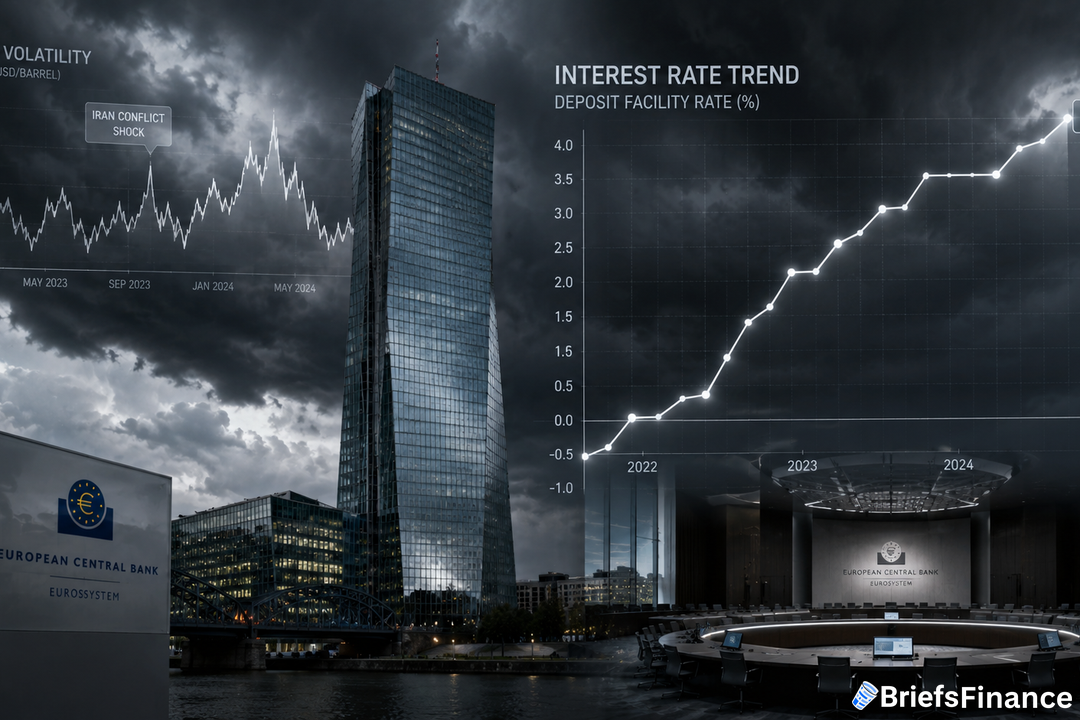
Ulo Kaasik, who sits on the ECB's Governing Council, indicated that additional policy tightening could be necessary to bring inflation back to the 2% goal following the Iran conflict.
"Markets are expecting another hike," "the Estonian central‑bank chief said in Sintra, Portugal". "At the moment, it seems reasonable to me to have at least one more and there's a reasonable understanding that with the kind of oil shock that we had, this is needed to make sure inflation will come down 2%."
Last month's inflation data came in below expectations after US‑Iran peace negotiations led to a drop in energy prices. However, the outlook is still unstable, and central bank officials are monitoring how prolonged swings in commodity markets are affecting the broader economy.
The ECB has been on a tightening path since mid‑2022, raising rates from record lows to combat inflation that had surged above 10%. The Iran war introduced a new geopolitical shock that briefly pushed oil prices higher, complicating the central bank's efforts. While the recent peace negotiations have tempered energy costs, the risk of renewed instability remains high, and policymakers are weighing the need for further action against signs of a slowing economy.
Get your free investing masterclass bonus when you join Market Briefs, our free daily newsletter
Eurostat reported that euro‑zone inflation decelerated more sharply than analysts had predicted.
During the ECB's annual symposium in Sintra, several policymakers suggested that interest rates might stay unchanged at the July meeting provided the environment stays tranquil.
"One question is how geopolitics will play out and what the oil market looks like," "Kaasik said about the July 22‑23 gathering". "The other part is what impact the three‑month oil‑price shock is having on other prices."
"He also suggested that deeper analysis will be needed to understand commodity‑price dynamics".
"Some of the infrastructure got hit, some of the supply lines are not yet back, so there's probably a longer‑term effect," he said. "Of course, you can think about the positive scenario where the peace deal holds, Iranian oil comes to the market, prices are much lower. For me, the risk is more to the higher side, but we need to have an open mind."
A key concern for officials is whether rising consumer prices in the euro area will trigger wage increases that could make inflation stickier over time.
"That's the risk I'm most afraid of," Kaasik said. "If things calm down, we should have more clarity in the autumn, but I'm afraid it may not be the only shock we are facing."
Subscribe to Market Briefs, our free daily newsletter, and claim your bonus investing masterclass