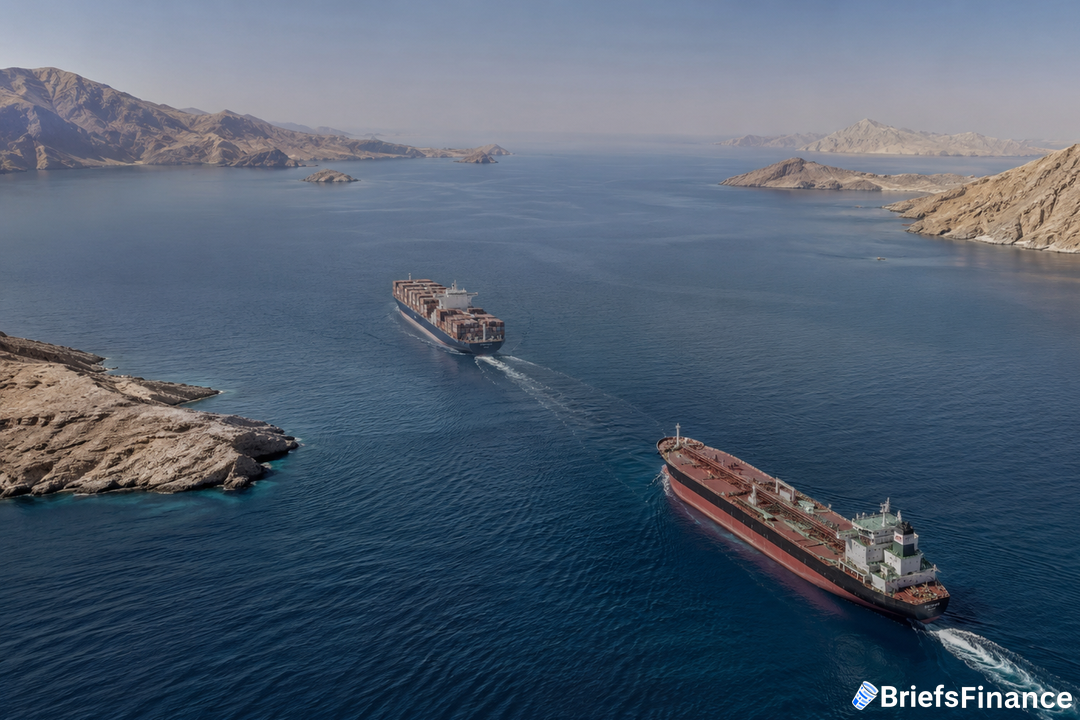
What Shut the Strait Down
In late February, a conflict erupted that caused vessels to abandon the central route through the Strait of Hormuz.
After a ceasefire took effect in April, a few vessels received Iranian authorization to use the northern lanes. The majority opted for the southern route, disabling their tracking systems to evade Iranian observation and relying on American naval support.
An interim deal between the US and Iran was signed in mid-June, raising hopes shipping would return to normal.
The skirmishes between the US and Iran paused since Friday of last week. That pause set the stage for the current talks.
Get the market news that matters in a five-minute read with Market Briefs, our free daily newsletter
This narrow channel links the Persian Gulf to the Gulf of Oman and handles around 20% of the world's oil along with a large portion of LNG. Its closure has sent energy prices soaring and disrupted global supply chains. The longer the strait remains blocked, the greater the strain on economies that depend on these shipments, particularly in Asia and Europe.
Who Is at the Table
Oman is the key mediator. Iran is the other side, sitting down to hash out a deal that would let shipping lanes reopen.
But this is not just a two-country conversation. On Monday, Axios reported that Donald Trump said, "deep talks" were underway, though he was unclear if he was referring to the Strait of Hormuz specifically. His envoy Steve Witkoff and Jared Kushner are involved. Pete Hegseth, the US Defense Secretary, has been urging British Defense Secretary Wes Streeting to organize a conference focused on safeguarding shipping lanes in the Strait of Hormuz.
Qatar, Pakistan and Egypt are also in the mix, according to Axios.
What Comes Next and Why You Should Care
A suggested plan involves reopening the central corridor of the strait, a route that most vessels have steered clear of since hostilities began. That central corridor is believed to hold Iranian sea mines, and it may need to be demined before ships can travel through it routinely. European countries including Britain and France have offered to spearhead mine-clearing operations, but only after conditions are secure enough.
Should a deal come together, it would allow Tehran and Washington to restart negotiations aimed at concluding their conflict.
With the strait blocked, hardly any ships are moving through with their locator devices turned on.
Since the conflict began with US-Israeli airstrikes on Iranian territory, Tehran has asserted its authority to control vessel traffic in and near Hormuz - a claim that Washington and its partners have resisted. Iran is now seeking Omani approval for a shared management framework that would likely impose charges on ships.
Join Market Briefs, our free daily newsletter, for a quick daily rundown of the markets