Free NewsletterPro Login
S&P 500 6,287 +0.42%
DOW 44,521 -0.18%
NASDAQ 21,103 +0.71%
S&P 500 +12.4%
Briefs Finance Fund +24.8%
JOIN THE FUND →

Investors Just Parked A Record $8.3 Trillion In Cash

Published May 30, 2026
[tts_player]
Share:
Summary:
  • U.S. money-market fund assets hit a record $8.281 trillion.
  • About $66 billion poured in during the week ending May 28.
  • Roughly $41 billion of that landed in a single day, on Thursday.

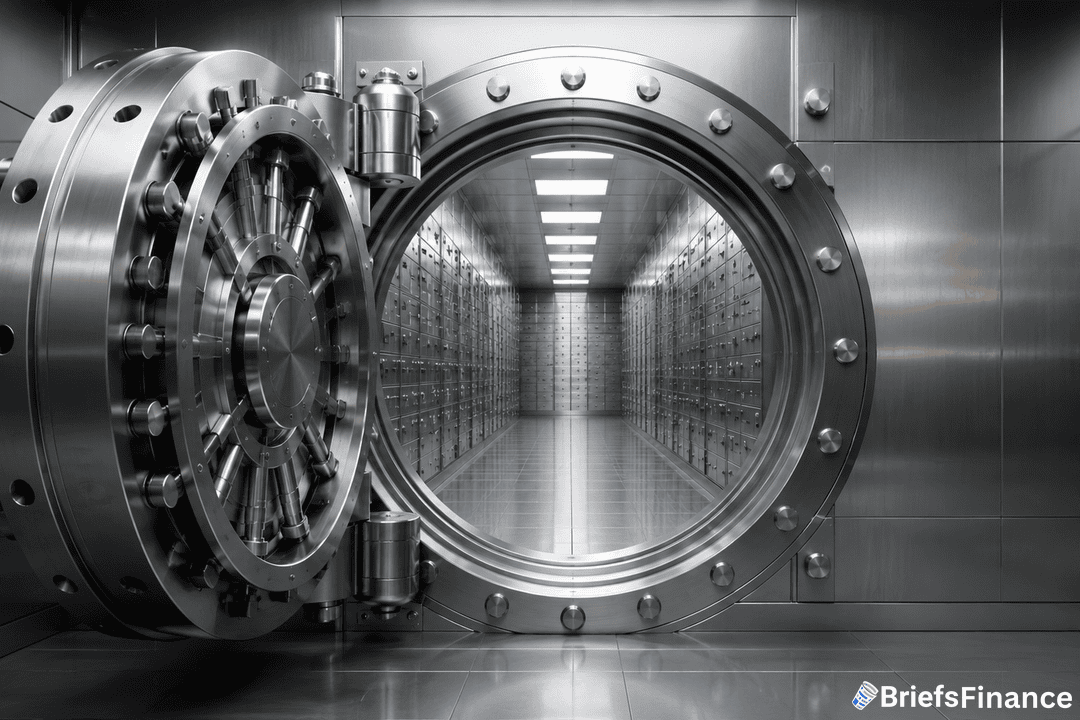
When investors are not sure what comes next, they sit on cash. Right now they're sitting on a record pile of it. The total just crossed $8.3 trillion.

Where The Money Went

Money funds are about as boring as investing gets. They hold safe, short-term assets. And they pay a small interest rate.

Think of them as a parking lot. It's where you wait when you don't want to make a bet.

That parking lot just hit a record. The total reached $8.281 trillion. These funds now hold more cash than ever before. About $66 billion of it poured in during the week ending May 28.

Most of that rush came fast. Around $41 billion landed on a single day. Investors were cleaning up their accounts before the month closed.

That single-day jump was no accident. Big investors often shift cash at month-end. They want safe, easy-to-reach money on their books.

Knowing where the crowd is hiding its money is half the game. Market Briefs tracks moves like this every morning in five minutes, plus a free investing masterclass when you join.

Why Everyone Wants Cash

The short answer is the Federal Reserve. No one is sure what it does next with interest rates. And that doubt makes safe cash look smart.

There's also the war involving Iran. It has nudged nervous money toward anything that feels safe. Cash is the safest seat in the room. Add it all up, and about $172 billion has moved into these funds so far this year.

The pile has grown for most of 2026. Each new scare has sent a bit more money in. The war abroad added one push. Mixed signals from the Fed added another.

Why Now

Cash actually pays something these days. High rates mean these funds give a real return. For years they paid almost nothing.

So sitting in cash no longer feels like a waste. You get paid to wait. That's a big part of the pull.

Savers have noticed. These funds often pay more than a basic bank account. So cash quietly became a place to earn, not just a place to hide.

What A Cash Pile Signals

A record cash stack cuts two ways. The first read is fear. It means investors are hiding from risk.

But it can also be fuel. That's money sitting on the sidelines. At some point a lot of it goes looking for a better return. A parking lot does not pay that much.

History gives a hint here. Big cash piles have often come right before money flows back into stocks.

Where it lands next is one of the bigger questions hanging over the market.

What To Watch

$8.3 trillion does not stay still forever. The real story starts when that cash decides it's done waiting.

Sign up for Market Briefs and get the daily read on where money is flowing, with a 45-minute investing course thrown in as a bonus.

Disclosure

Recent News

1 2 3 28

Get Market Briefs delivered to your inbox every morning for free!

No fluff. No noise. No politics. Just finance news you can read in 5 minutes.

Blogs

June 25, 2026
How Stocks Work: A Simple Guide for Beginners
  • A stock is a slice of ownership in a company - buy one, and you own a piece of the business.
  • You make money two ways: the share price rising over time, and dividends paid to shareholders.
  • The simplest path for most beginners is buying into the whole market through a low-cost index fund.
Read More
June 25, 2026
Stop Loss vs Stop Limit: What's the Difference?
  • A stop loss order sells your stock once it hits a trigger price, prioritizing getting you out.
  • A stop limit order only sells within a price range you set, prioritizing price over a guaranteed exit.
  • The trade-off: a stop loss almost always executes; a stop limit might not if the price moves too fast.
Read More
June 25, 2026
Energy Stocks: A Simple Guide for Investors
  • Energy stocks are companies that produce and supply the power the world runs on, from oil and gas to newer sources.
  • They make up one of the 11 sectors of the market and tend to move with energy prices and big-picture shifts.
  • Like any sector, the key is diversification and understanding the forces driving demand.
Read More
June 18, 2026
What Is a Stop Loss Order? A Simple Guide
  • A stop loss order automatically sells a stock once it falls to a price you set.
  • It's a tool to cap losses or lock in gains without watching the market all day.
  • It works best for active strategies, and can backfire if used carelessly on long-term holdings.
Read More
June 18, 2026
Best S&P 500 Index Fund: How to Choose One
  • The best S&P 500 index fund for most investors is simply the cheapest, most established one that tracks the index well.
  • Funds like VOO, IVV, and SPY all hold the same 500 companies, so the biggest difference is the fee.
  • Pick one, automate your buys, and let time do the heavy lifting.
Read More
June 17, 2026
What Are Penny Stocks? Risks and Rewards Explained
  • Penny stocks are very low-priced shares of very small companies, often trading for just a few dollars or less.
  • They promise huge gains but carry huge risks: low liquidity, high failure rates, and wild price swings.
  • Most investors are better served by quality companies and funds than by chasing cheap shares.
Read More
June 17, 2026
Best Stocks for Beginners With Little Money
  • The best stocks for beginners with little money usually aren't individual stocks at all - they're low-cost index funds.
  • You can start with $100 or less and use small, regular investments to build wealth over time.
  • Focus on diversification and consistency, not on picking the next big winner.
Read More
June 16, 2026
Tech Stocks: A Simple Guide for New Investors
  • Tech stocks are companies in the information technology and related sectors, from software to chips to the internet giants.
  • They've driven much of the market's growth, but they can be volatile and richly valued.
  • The smart approach is to understand what you own and not let one sector run your whole portfolio.
Read More
June 16, 2026
What Is a Joint Stock Company? A Simple Guide
  • A joint stock company is a business owned by many people, each holding shares of stock that represent a slice of ownership.
  • It's the basic idea behind every public company you can buy on the stock market today.
  • Owning a share makes you a part-owner, entitled to a piece of the profits and growth.
Read More
June 16, 2026
Capital Gains Tax in California: A Simple Guide
  • Capital gains tax is what you owe when you sell an investment for more than you paid for it.
  • How long you held it matters: long-term gains are taxed more gently than short-term gains at the federal level.
  • Smart investors lower the bill with tools like tax-loss harvesting and holding for the long run.
Read More
1 2 3 23
Share via
Copy link










