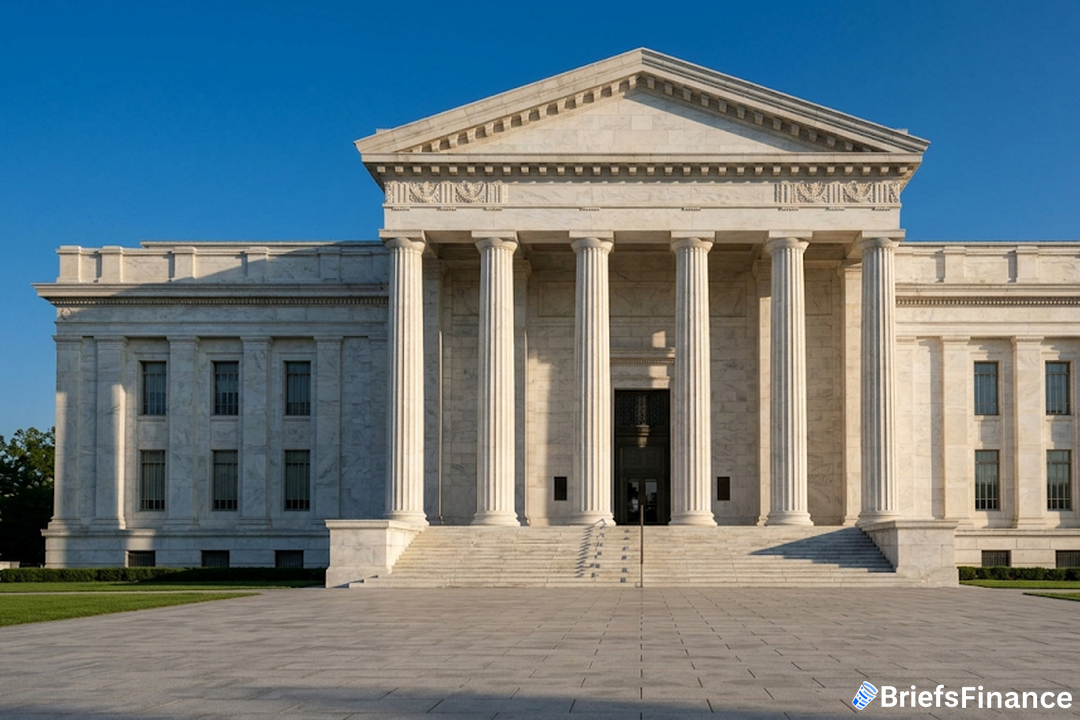
Why the Fed Is Staying Put for Now
If you were hoping for some relief from high borrowing costs, the next Fed meeting probably won't deliver it.
The central bank is expected to hold its benchmark rate steady when the Federal Open Market Committee wraps up on July 29. The reason is simple: inflation is moving in the right direction, but not fast enough, and other worries have popped up.
It is still well above the Fed's 2 percent target - a number the economy has topped consistently since 2021. Additionally, higher energy prices and renewed tensions involving Iran are adding uncertainty, prompting the Fed to remain cautious.
The central bank's decision to hold rates steady follows a series of aggressive hikes over the past few years. The current rate level, the highest in decades, reflects the Fed's aggressive campaign to tame inflation that began in early 2022. Even though inflation has cooled from its peak, it still sits above the Fed's 2 percent goal, and rising oil prices could complicate the picture.
What Steady Rates Mean for Mortgages, Credit Cards, and Savings
Just because the Fed is holding still does not mean your borrowing costs are frozen, too.
Get the market news that matters in a five-minute read with Market Briefs, our free daily newsletter
Take mortgages. The average rate on a 15- or 30-year fixed loan is holding just above 6.50 percent right now. That is high, and Jeff DerGurahian, chief investment officer and head economist at LoanDepot, says the bond market has a lot to do with it.
Credit cards are even more expensive. Currently, the typical APR for newly issued credit cards stands at 23.79 percent. That is not a typo. If you carry a balance, that is a heavy weight on your wallet month after month.
The bottom line: The rate you pay on a loan is not just about the Fed. As Columbia Business School economics professor Brett House put it, "The bond market has a big hand in determining the rates consumers pay."
On the saving side, there is some good news. Matt Schulz, LendingTree's chief credit analyst, points out that while CD and high-yield savings account rates have dropped compared to their highest levels of recent years, they remain historically attractive. "They're likely to remain that way for a while," he said. So if you have cash you do not need immediately, parking it in a high-yield account still makes sense.
What Could Happen in September - and Why It Matters for Your Money
The real action might come this fall.
According to the CME Group's FedWatch gauge, the odds now lean toward a rate cut being discussed at the September meeting.
Either way, a potential conflict is brewing. President Trump has been advocating for a reduction in the federal funds rate, yet the central bank is unlikely to comply in the near term. "It sets up a potential conflict between Trump and the Fed, where his desire for lower interest rates is unlikely to be realized anytime soon," said Brett House.
For your money, the takeaway is straightforward. Borrowing is expensive right now.
On the flip side, savings rates are still strong by historical standards. "It's still a good time to save," Schulz said. If you can afford to lock in a CD or keep cash in a high-yield savings account, you are getting a decent return with very little risk.
The next few months will tell us whether inflation keeps cooling or whether the new geopolitical headaches push the Fed in the other direction. Either way, knowing where your money is and what it is costing you is the smartest move you can make right now.
Join Market Briefs, our free daily newsletter, for a quick daily rundown of the markets