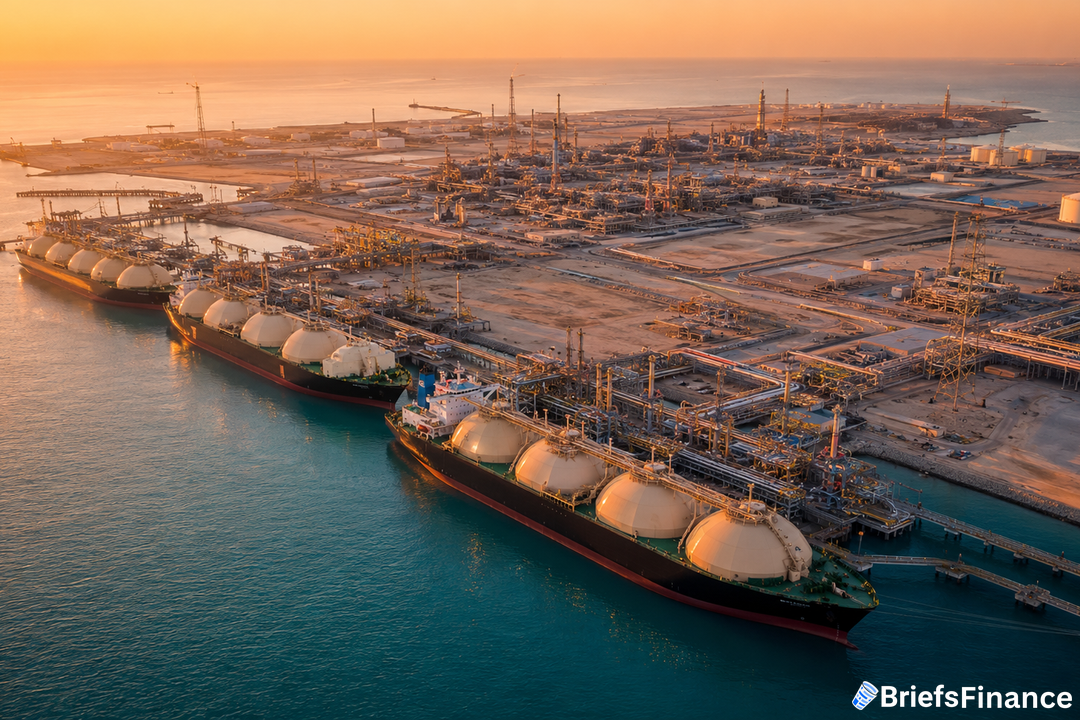
One additional tanker currently in the Persian Gulf is heading toward the plant, and two more vessels linked to Qatar are drawing near the eastern side of the Hormuz waterway.
QatarEnergy, which runs Ras Laffan - the biggest LNG export facility worldwide - has seen output largely stopped since Iranian strikes harmed two production units and the conflict forced Hormuz to nearly shut down. Increased exports rely on secure transit through the strait; a recent assault on a cargo vessel has reignited worries and caused one LNG tanker to reverse course before entering.
Get your free investing masterclass bonus when you join Market Briefs, our free daily newsletter
The disruption at Ras Laffan has tightened global LNG supplies, pushing up prices for buyers in Asia and Europe as winter demand approaches. Qatar's return to normal output is seen as critical for stabilizing markets, and the lineup of empty tankers suggests loading could resume imminently, providing relief to importers.
The company, which supplied nearly one-fifth of the world's LNG last year, has been checking equipment and conducting upkeep to enable a swift production ramp-up. Some production trains have been running at reduced capacity, enabling the facility to keep supplying regional markets while maintaining flexibility to increase shipments as needed, according to earlier Bloomberg reports.
The return of Qatari LNG exports holds significance for global energy markets, as the country is one of the world's top producers of the super-chilled fuel. Before the conflict disrupted operations, Qatar regularly sent large volumes to buyers in Asia and Europe. The gradual recovery, combined with the lineup of empty tankers, signals that loading activity may soon pick up, potentially easing some supply tightness in the months ahead.
The impact of the shutdown has been particularly felt in Europe and Asia, where buyers had already been grappling with volatile gas prices. Qatar's ability to quickly ramp up exports after repairs will help refill depleted storage ahead of peak winter demand, a critical factor for energy security in importing nations. The lineup of tankers waiting to load underscores the urgency of these shipments.
The Strait of Hormuz is a vital chokepoint for global energy flows, and its near-closure during the conflict compounded the supply shock from the Ras Laffan outage. With winter approaching, importers in both Europe and Asia have been closely watching every sign of recovery, making the resumption of Qatari LNG exports a key factor for stabilising prices and ensuring adequate storage levels.
Subscribe to Market Briefs, our free daily newsletter, and claim your bonus investing masterclass