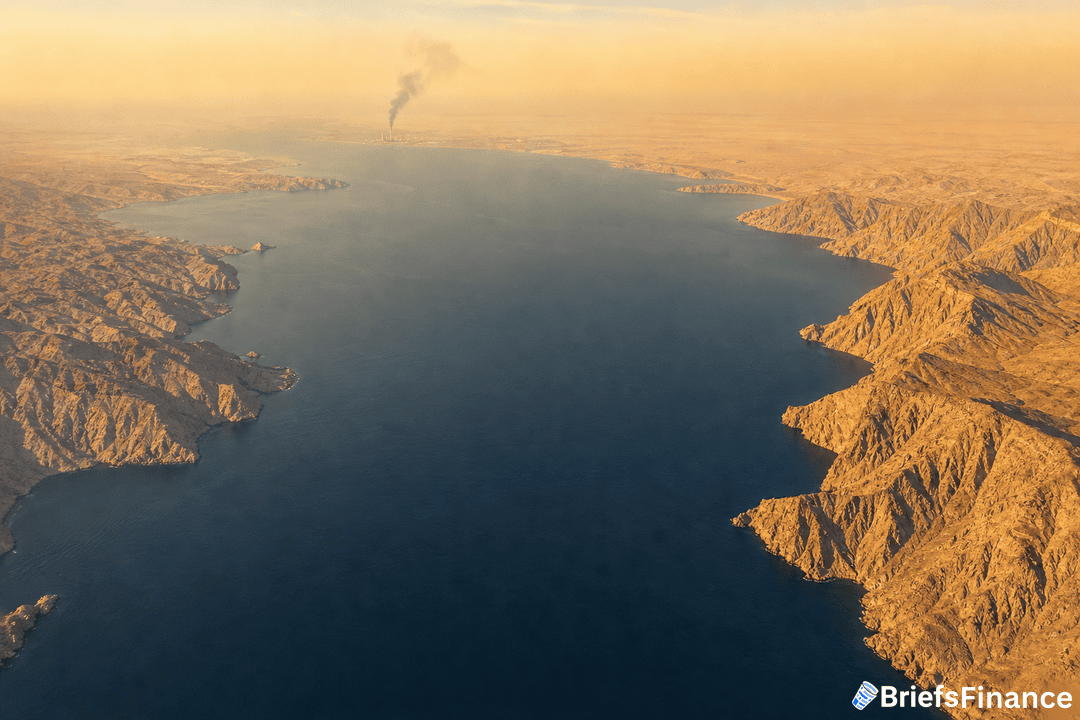
The most important shipping lane for oil is now mostly empty, and Iran does not want to let ships through. The U.S. just decided to do it anyway, and that's the setup for the biggest energy crisis in years.
The market is not buying that the U.S. fix is enough.
How Empty The Strait Has Gotten
Before the war that started on Feb 28, about 3,000 vessels passed through the Strait of Hormuz every month, carrying roughly 15 million barrels of oil a day, which is around a fifth of the world's oil supply.
In all of April, only 191 vessels made it through.
Roughly 170 million barrels of crude, jet fuel, and diesel are now sitting on 166 tankers waiting to leave, according to Kpler, with about 20,000 sailors stuck on those ships.
What Project Freedom Does And Doesn't Do
President Trump launched "Project Freedom" Sunday, putting U.S. Central Command in charge of "guiding" merchant ships through the strait. The mission is backed by guided-missile destroyers, more than 100 aircraft, and 15,000 service members.
A senior U.S. official told CNN the operation is not technically an escort, even though two American-flagged ships transited Monday under the new framework.
Iran is not on board, since senior Iranian official Ebrahim Azizi called the plan a violation of the ceasefire. Tankers were attacked over the weekend, and a major oil facility in the United Arab Emirates caught fire Monday in what officials there said was an Iranian drone strike.
Why The Market Doesn't Believe It Yet
Oil futures climbed Monday instead of falling, with WTI rising 3.5% to $105 a barrel and Brent up 5% to $114.
The pump: Gasoline futures jumped about 4%, and retail gas hit $4.46 a gallon, the highest level in nearly four years and up close to 50% since the war started.
Lipow Oil Associates told CNN that $5 a gallon is on the table if the strait stays closed for another month, and Eurasia Group said in a Monday note that without Iran agreeing to step back, Project Freedom will fail to move real volume.
What To Watch
How fast Project Freedom can clear the logjam. Kpler's lead oil analyst said it could take three months to fully reopen flow even after a deal, and Treasury Secretary Scott Bessent told Fox News that "help is on the way." The market is waiting to see actual barrels, not press conferences.