The Merger That Almost Was
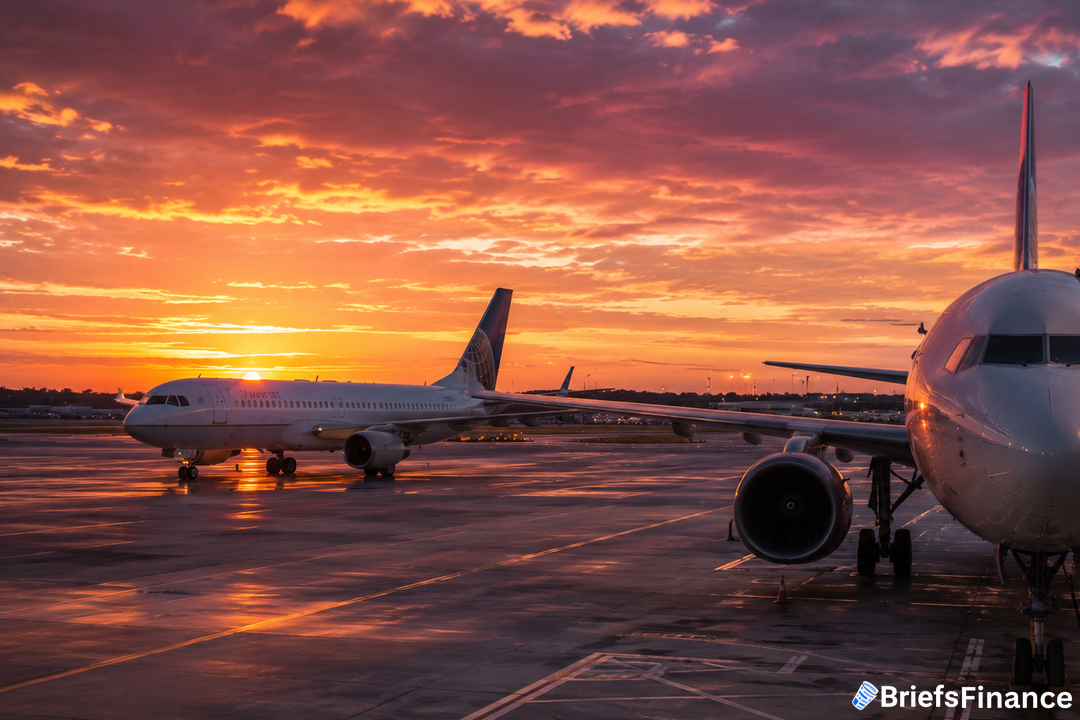
United Airlines wanted Delta Air Lines. Or at least it wanted to talk about joining forces.
Over the weekend, reports emerged that United Airlines' chief executive, Scott Kirby, reached out to Delta's CEO, Ed Bastian, last year with a merger proposal involving two of the largest U.S. carriers. Delta's team did some preliminary homework on the idea - what the industry calls due diligence - and then decided not to move forward. Neither airline has said much publicly since then, but the report put both stocks in the green on Monday. United shares (UAL) climbed 2.54% to $118.27, while Delta (DAL) gained 3.77% to $85.06.
The airline industry has seen a wave of consolidation over the past two decades, with mergers such as Delta-Northwest, United-Continental, and American-US Airways reshaping the competitive landscape. Those deals were approved under prior administrations, but the current regulatory environment is far less accommodating, making a United-Delta combination particularly unlikely. According to The Wall Street Journal, a deal of this size would have drawn intense examination from both federal antitrust officials and state attorneys general.
Get the market news that matters in a five-minute read with Market Briefs, our free daily newsletter
A Pattern of Rejected Approaches
This was not the only merger pitch United has made recently.
What Comes Next
Kirby himself seems to know the effort is a long shot. At the International Air Transport Association annual meeting in Rio de Janeiro in June, he said: "I think consolidation is unlikely for United. That doesn't mean we won't still be in the market to buy assets, but consolidation is a low probability."
Translation: United is not going to buy another major airline anytime soon. It might still snap up smaller pieces - airport slots, gates, landing rights - that help it grow without triggering a regulatory fight.
United's failed overtures underscore the difficulty of major airline consolidation in the current regulatory climate. The Biden administration's antitrust enforcers have taken a hard line against mergers in concentrated industries, and the airline sector - dominated by four carriers controlling over 80% of domestic capacity - would almost certainly face a challenge. While United has been investing heavily in its fleet and premium cabins to close the gap with Delta, achieving parity without a transformative deal will require patience and piecemeal growth through smaller asset purchases.
The proposed United-Delta combination would have created the largest U.S. carrier by far, controlling roughly a third of domestic seats. Industry analysts noted that such a move would likely face insurmountable opposition from regulators who have blocked previous attempts at consolidation among the Big Four. The current environment stands in stark contrast to the early 2010s, when Delta-Northwest, United-Continental, and American-US Airways were approved under the theory that scale benefits would lower costs and improve service. Today, the Justice Department and state attorneys general are far more skeptical of deals that reduce competition.
Join Market Briefs, our free daily newsletter, for a quick daily rundown of the markets