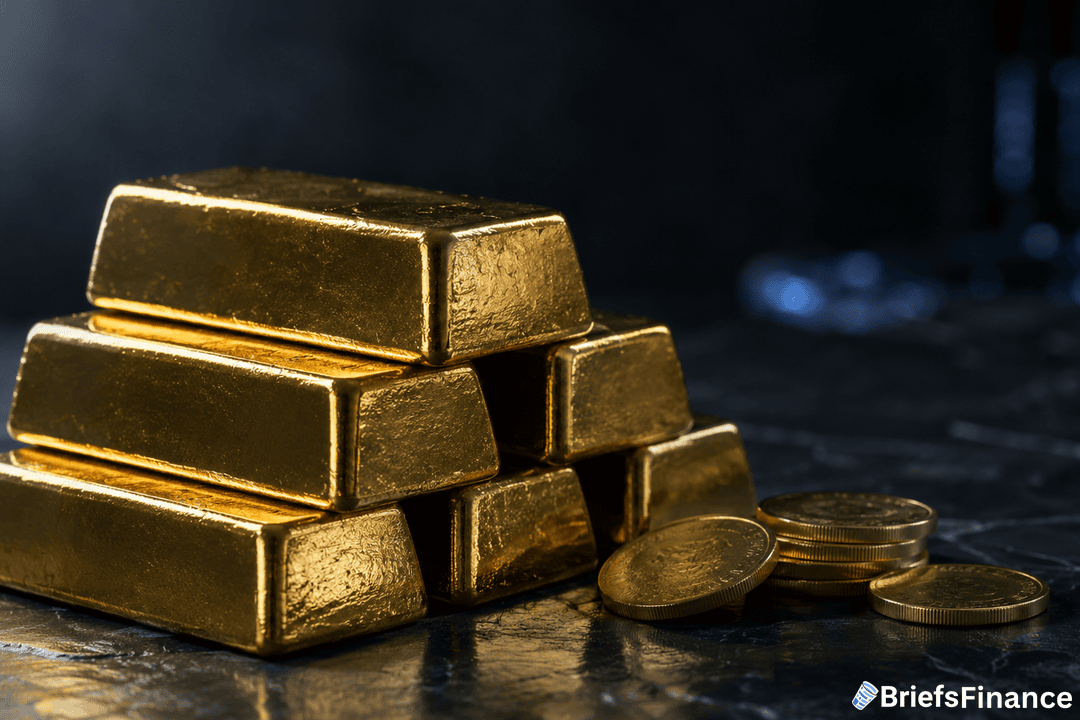
There's a war on, yet gold is falling. That's backwards, because gold is what people buy when the world feels scary.
It hit a record high in January, then slid for months. Now Citi sees even more room to fall.
The $3,500 Call
Citi laid it out in a note on Monday. The bank said gold could drop to $3,500 an ounce by late summer.
The trigger is the Strait of Hormuz, a key oil shipping lane. If that lane stays shut, the slide happens.
That target sits about 20% below Tuesday's price near $4,357. At $3,500, gold would sit back where it was about nine months ago.
Citi even called gold "incredibly high risk" right now. That's a strange label for a safe asset.
So its advice was blunt: don't buy the dip unless you're sure the war won't flare again. And only hold gold here if you have patience and a wide safety net.
We break down the moves Wall Street is watching every morning in Market Briefs. It takes five minutes a day, and you get a free investing masterclass when you join.
Why The Safe Haven Turned Risky
Gold and war usually rise together. This time they didn't.
The reason starts with the Strait of Hormuz. With that lane shut, energy prices have stayed high.
High energy pushes up costs across the board. That keeps inflation hot, and hot inflation keeps interest rates up.
Here's why that hurts gold. Gold pays you nothing to hold, so it's like cash under the mattress.
When bonds and savings pay more, money leaves gold for the better deal. A strong jobs report last week made that pull even stronger.
It pushed investors to bet on one more rate hike this year. Higher rates make a no-income asset like gold look even weaker.
There's more weighing on it too. A strong dollar makes gold pricier for buyers overseas, and investors have pulled back as the story around heavy central-bank buying cools.
The war began on February 28, and gold's job is to shine when fear spikes. This time the fear came with high oil, a strong dollar, and rising rates, so all three pull against it at once.
What To Watch
Citi hasn't given up on gold, and it still likes the metal for the long run. It just sees a rough stretch first.
The fix, in Citi's view, is energy. Once Hormuz calms and oil cools, the weight on gold should lift and the price can settle.
For now, Citi cut its three-month target to $4,000 an ounce, from $4,300. The bigger, multi-year view hasn't changed.
Energy is the real swing factor here. Citi made that link the center of its call.
If the war drags on, gold likely stays under pressure. If it winds down, oil falls and the metal can heal.
For gold, the war isn't really the problem. The price of oil is.
Want this kind of read before your coffee gets cold? Join 350,000+ investors reading Market Briefs, and you get a 45-minute investing course thrown in as a bonus.