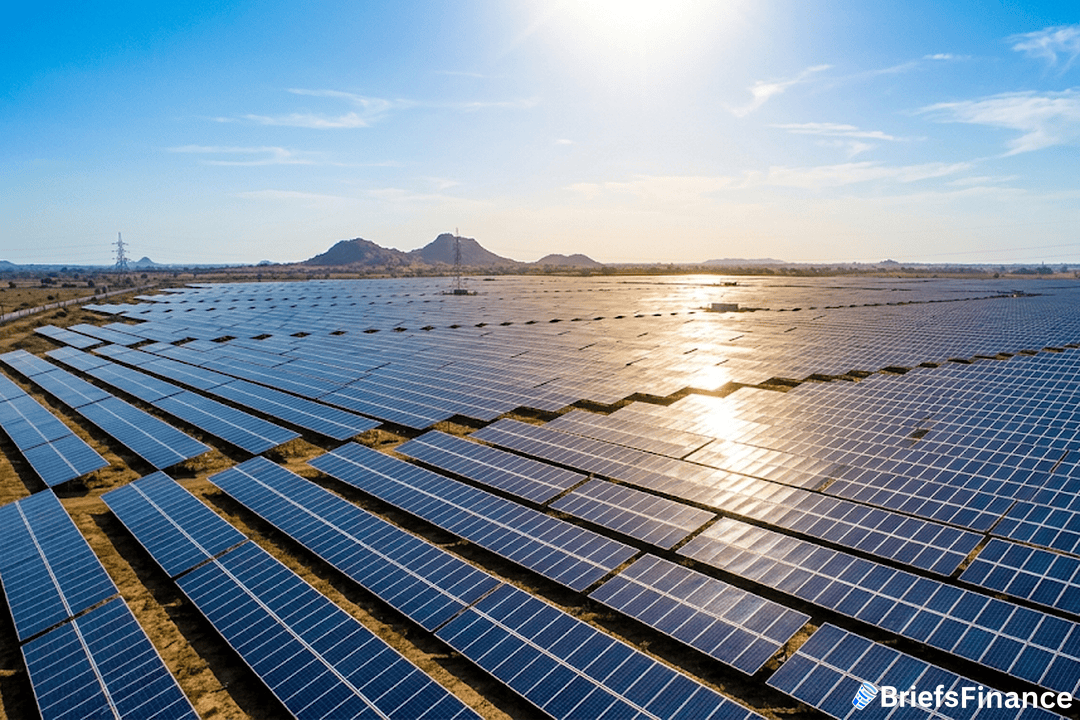
The Deal at a Glance
India wants 500 gigawatts of clean energy by 2030. That is a massive goal, and CESC Ltd, a company under the RP-Sanjiv Goenka Group, just took a major step toward it.
CESC is buying solar assets from ReNew Solar Power Pvt. In plain terms, enterprise value is a standard way to measure a deal, and it is not the same as the cash payment.
The buyer is Purvah Green Power Pvt, CESC's renewable energy arm.
The "peak" part matters because solar output depends on the weather and the time of day. So 1.4 gigawatts-peak is the ceiling at full sun, not the average output.
Once the deal closes, ReNew's solar plants move onto CESC's books and into Purvah Green's portfolio.
The Power Already Has a Buyer
A solar plant is only valuable if someone is ready to buy what it produces. This deal takes care of that before the paperwork is done.
Solar Energy Corporation of India serves as the primary customer for the expected output, with the remainder going to distribution companies in Karnataka.
Get the free Always Be Buying eBook and learn the simple system for building wealth on any income
For the buyer, that means less guesswork about future revenue. The cash flow is already mapped out.
That kind of certainty matters in a business where projects live or die on revenue. A project with a guaranteed customer is easier to value than one still looking for buyers.
Before this transaction, Purvah Green had contracted 3.4 gigawatts-peak of capacity. It is also working on 2.2 gigawatt-hours of battery storage, which lets it hang on to power and sell it later.
Together, the solar capacity and the battery storage point in the same direction. Purvah Green is building a business that can generate, hold, and sell renewable power.
Where This Fits in the Bigger Plan
The parent group has set its sights on building 10 gigawatts of clean energy capacity in the coming two years. Purchasing existing solar plants offers a faster path than constructing everything from scratch, especially with a two-year deadline looming.
That timeline is tight. Acquiring assets that are already profitable gives the group a head start.
Vice Chairman Shashwat Goenka said the deal lets the group accelerate growth using assets that are already generating returns. He added that the group will keep looking for acquisitions while staying focused on greenfield projects, or projects built from the ground up.
This move also aligns with India's national objective of reaching 500 gigawatts of clean energy capacity by 2030. This acquisition represents one piece of a much larger nationwide push.
For context, India's renewable energy sector has attracted significant investment over the past decade as the government has pushed for cleaner power sources. The country has already installed substantial wind and solar capacity, and deals like this one show how established players are consolidating their positions in the market to meet the ambitious 2030 target.
What It Means for Your Portfolio
For people who invest in India or clean energy, this is what a national target looks like when it shows up in real business decisions. If you own an India fund or a global clean energy fund, the companies in those funds are living this story.
The most useful number here is 90%. That is the share of expected output already sold before the deal closes.
CESC is paying cash for assets that are already selling power under long-term contracts. That can make the group's revenue more predictable, which is exactly the kind of thing fund managers watch for.
It also signals that the group is not done. More deals could follow as the search for acquisitions continues.
The bottom line: By Oct. 31, the deal should be done. After that, the new solar assets land on CESC's books, and investors will see whether this bet on India's clean energy future pays off.
Download the free Always Be Buying eBook and start putting your money to work today