A New Blow to a Fragile Truce
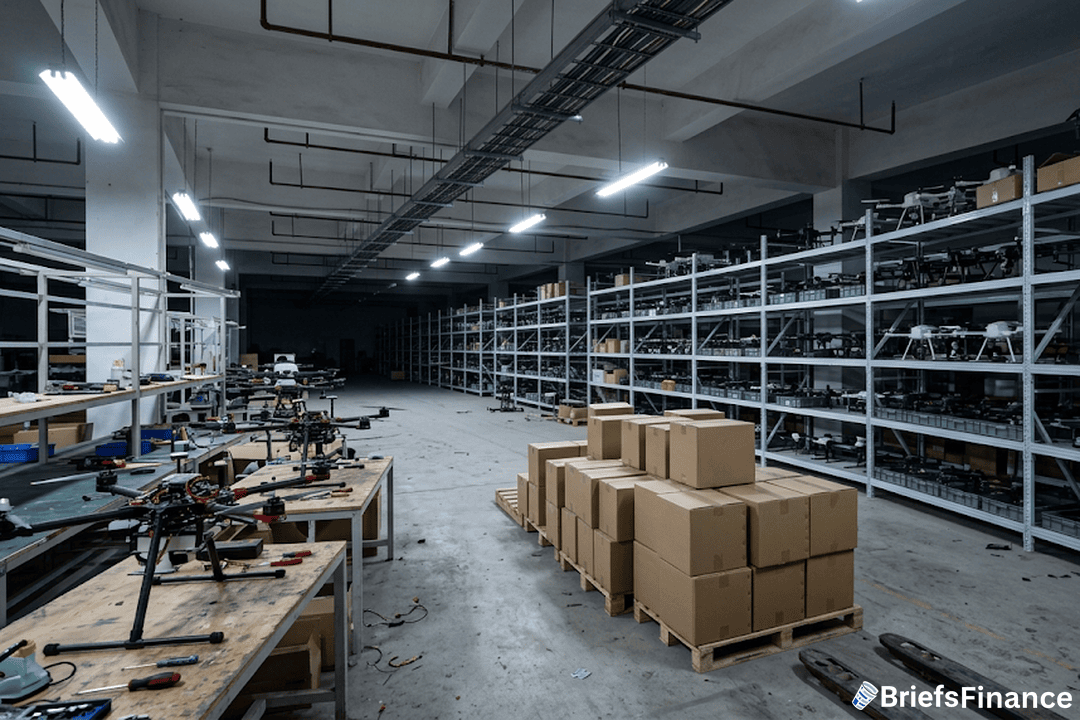
China is the world's biggest maker of drones. Last year, DJI Technologies, headquartered in Shenzhen, accounted for roughly seven in ten commercial drones bought in the US.
So when Beijing announced on Wednesday, August 5, 2026, that every drone shipment to the US would now need strict case-by-case approval, that was not a symbolic gesture. It was the sharpest piece of a four-part package of countermeasures from China's Commerce Ministry, and it added fresh strain to a fragile trade truce between the world's two largest economies.
The ministry pointed at Washington as the reason. It cited the FCC's ban on certain overseas-built robots and power inverters, along with Washington's decision to put 43 Chinese companies - more than 40 - on a forced-labor blacklist.
A ministry spokesperson said the US actions "contradicted the common understandings reached by the two heads of state and damaged China's legitimate rights," adding that Beijing had to respond. The spokesperson called the response broadly restrained and asked Washington to drop its measures and return to consultations.
Why Drones Are the Sharpest Piece
Under the new rules, drones, their key parts, and related technologies covered by China's export-control list for dual-use goods - products that can serve both civilian and military purposes - will all require approval before they can head to the US.
Get the free Always Be Buying eBook and learn the simple system for building wealth on any income
The US has been trying to cut that reliance for a while. In December, the FCC banned most foreign-made drones and critical unmanned-aircraft-system parts, though the ban only affects newly imported or sold items, not the ones already in use.
Beijing also went after the people and companies behind those US moves. It sanctioned six US organizations, including Applied DNA Sciences and Stratum Reservoir, for their alleged role in US Xinjiang-related sanctions. It separately sanctioned Compliance Testing for helping the FCC act against China.
The Countermeasures Go Beyond Drones
China also opened a foreign-trade national-security investigation into imported office printers, copiers, and similar imaging equipment that includes imported software. The review could create real friction for foreign office-gear makers who sell into China.
The timing shows how quickly the relationship soured. The 43 sanctions landed one day after Vice Premier He Lifeng held a video conversation last week with Scott Bessent, the US Treasury secretary, and Jamieson Greer, the US trade representative. So the two sides are still talking, but the actions keep piling up.
More US restrictions may be on the way. A Tuesday Bloomberg article, based on information from someone familiar with the matter, said the FCC is preparing a rule to ban Chinese-made data-center components.
Reuters said the FCC was weighing a ban on imports of new Chinese optical transceiver models. More US restrictions would bring more Chinese countermeasures, the spokesperson warned.
What This Means for Your Portfolio
Xi Jinping and Donald Trump are set to meet in the US next month, which suggests both sides still see a reason to talk. At their May summit in Beijing, they agreed to foster a stable, constructive strategic relationship, but that agreement is now being tested.
For investors, the real story is supply chains. If Chinese drone exports slow down, US businesses that rely on DJI could face delays or higher prices.
The same math applies if the FCC moves against Chinese data-center components.
Trade friction rarely stays inside one industry. It ripples through earnings calls, product prices, and the companies sitting in the middle.
Over the next few months, watching how these restrictions play out may tell you more about your portfolio than any single headline.
Download the free Always Be Buying eBook and start putting your money to work today