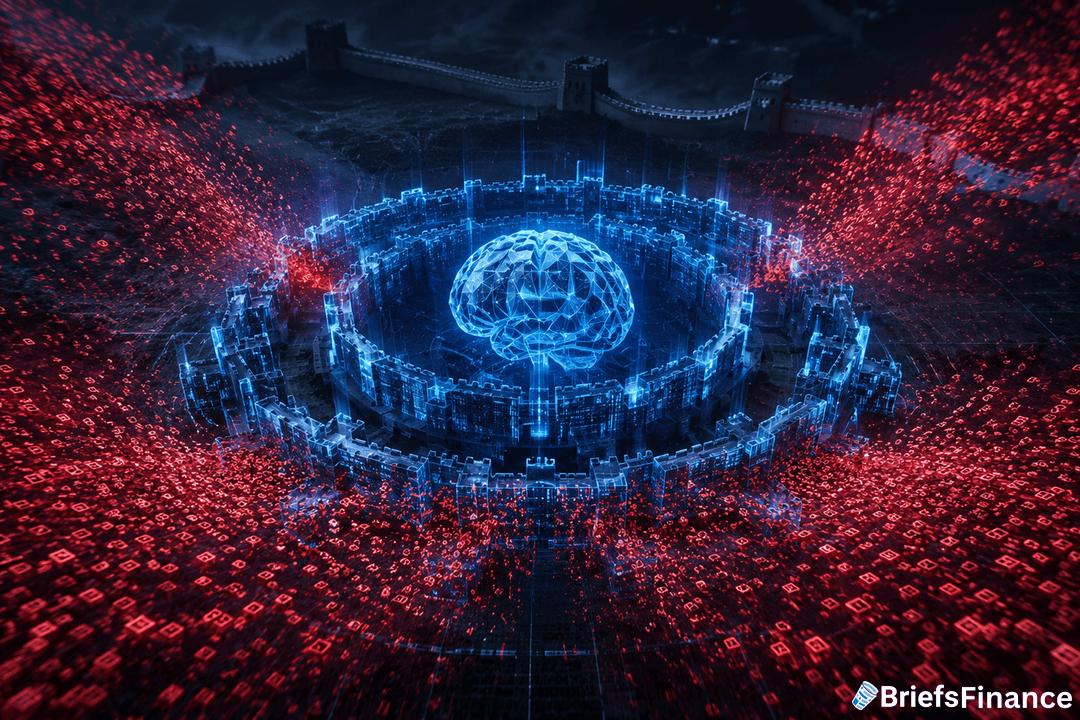
A U.S. AI company publicly accused one of China's largest technology companies of running an industrial-scale distillation attack against its models. The accusation comes just weeks after the U.S. government imposed an export restriction on Anthropic's newest model, Fable 5, preventing non-U.S. individuals from using it due to national security concerns. Now Anthropic is asking lawmakers for more legislation.
What Happened in the Distillation Attack
Sarah Heck, Anthropic's head of policy, sent a letter to Senators Tim Scott and Elizabeth Warren on June 10 describing what she called "the largest known distillation attack." Distillation is a technique where one AI model queries another to learn its behavior and then copies that behavior into a new model.
The goal, she wrote, was to "harvest US AI capabilities across frontier labs and repackage them as their own without incurring the training and R&D costs required to train US frontier models."
Furthermore, Heck stated that these attacks might enable Chinese AI systems to achieve the performance of Claude Mythos Preview earlier. Mythos represents Anthropic's cutting-edge large language model, which can identify security flaws and surpass human ability in cybersecurity tasks.
Don't get left behind - claim your no-cost investing masterclass bonus right here.
Who Is Involved and What's at Stake
Anthropic is the U.S. company behind the Claude family of AI models. Alibaba, a Chinese giant in e-commerce and cloud computing, creates AI models via its Alibaba Cloud division, such as the Qwen large language models.
Alibaba is already on a Pentagon blacklist, and it recently sued the U.S. government over that designation. Meanwhile, the U.S. government already restricted foreign access to Anthropic's Fable 5 model, citing national security risks.
The stock market reacted fast. By Thursday's market close, Alibaba's stock had fallen by over 4%.
What Anthropic Wants Next
Anthropic isn't just reporting the attack. In her letter, Heck urged the senators to enact new laws targeting distillation attacks, including restricting China's ability to use sophisticated U.S. computing resources and imposing penalties on Chinese organizations that carry out such operations.
Her letter makes the case that these attacks are "carried out illicitly, systematically, and at industrial scale." She argues that without new laws, U.S. companies will keep losing their most valuable AI capabilities to foreign rivals who do not incur the costs required to develop them.
See exactly how top investors play these market moves - get your free investing masterclass bonus now.