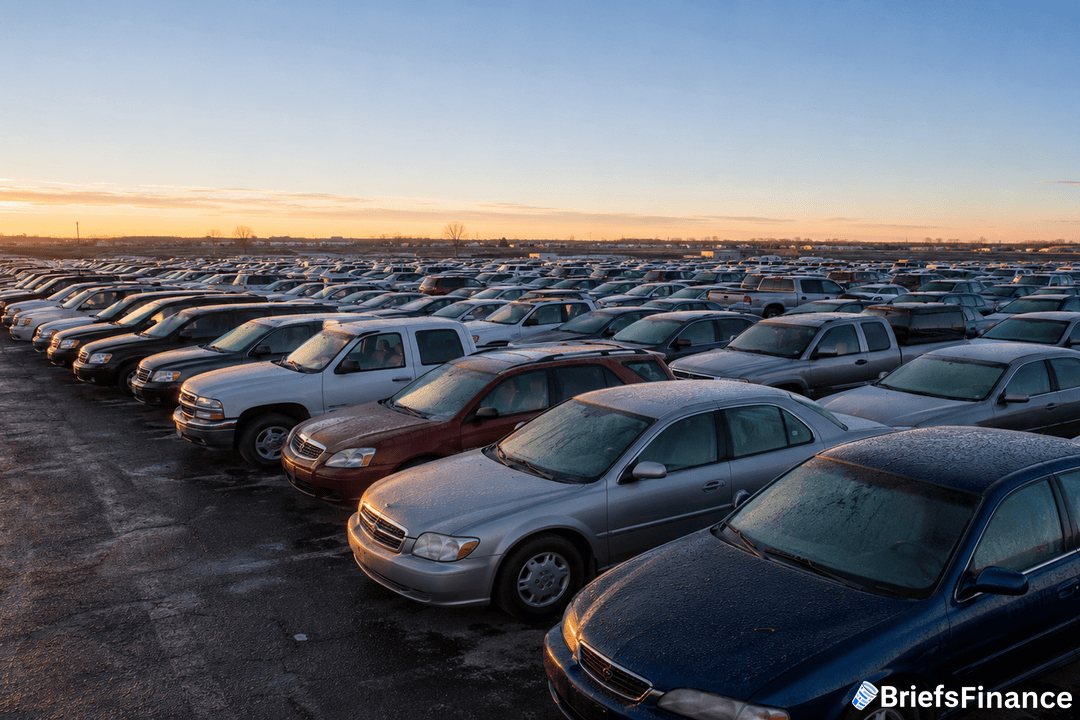
The pandemic ended years ago. The car market never got the memo.
People now fight over 10-year-old used cars. And prices keep climbing.
The reason goes back to 2020. Factories went quiet, and the gap still sets the price today.
The Cars That Never Got Built
Plants shut down and parts ran short. So makers lost the chance to build about 8 million cars for U.S. buyers.
That count comes from Jeremy Robb of Cox Automotive. Those missing cars never aged into the used market either.
Tyson Jominy of JD Power put it in plain terms. A new car sale is the marble at the top of a mousetrap game.
Drop it, and it rattles all the way down. Cheaper used cars feel the hit last.
The slump is not brand new. Sales were sliding even before Covid hit.
Add it all up, and a full year of sales has vanished. About half of that loss came after 2020.
About 16.2 million cars sold in 2025. That was up from a low of 13.8 million in 2022.
Cox expects about 15.8 million sales in 2026. JD Power sees a bit more, near 16.3 million.
Either way, it trails the record. Buyers snapped up 17.55 million cars back in 2016.
We dig into the why behind prices like these each weekday at Market Briefs, with a free investing masterclass as a welcome gift.
Why It Rolled Downhill
Makers also leaned into pricey trucks and SUVs. And they pulled back on leasing.
Leases were about 30% of new sales before the pandemic. They fell to just 18% by 2022.
Leases matter because they refill the used lot. Fewer leases back then means fewer cheap used cars now.
Discounts dried up too. Deals ran about 9.5% off the price before the pandemic, but only about 7% today.
Those deals are not spread evenly either. Some brands still barely discount at all.
Buyers Are Trading Down
Prices have jumped about a third. But paychecks have not kept up.
The typical new-car buyer now earns over $150,000 a year. That is nearly double the average U.S. household.
So shoppers reach for older, cheaper cars. Money is tight everywhere else, too.
Cox says demand for 9- and 10-year-old cars is well above normal. Robb says he rarely sees this kind of pressure at the cheap end.
The math is brutal for buyers. Used lots are thin for a clear reason.
The cars that should fill them were never made. So even old, high-mile cars hold their price.
That used to be rare. Now it is the norm.
Many families are simply priced out of new cars. So they hold onto older ones longer.
And demand keeps sliding down the price ladder. Buyers want cheaper rides than ever.
Worth Noting
Cox expects supply to stay tight for three to four more years. So today's high prices look less like a blip.
This is more of a new baseline. Robb has a name for it: the new normal.
Like seeing the why behind a price tag? Sign up for Market Briefs, free, with a 45-minute investing class as a bonus.