Free NewsletterPro Login
S&P 500 6,287 +0.42%
DOW 44,521 -0.18%
NASDAQ 21,103 +0.71%
S&P 500 +12.4%
Briefs Finance Fund +24.8%
JOIN THE FUND →

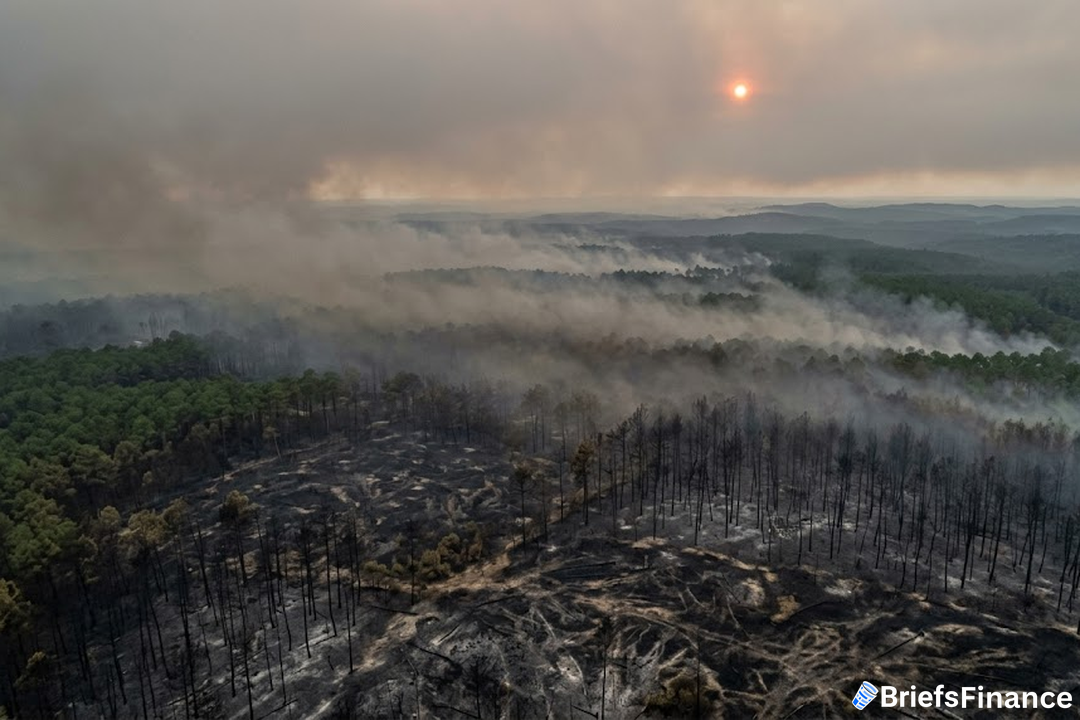
200,000 Evacuated as Gironde Wildfires Spark Economic Warning from French Official

Published Jul 27, 2026
[tts_player]
Share:
Summary:
  • French finance minister Roland Lescure called the Gironde wildfires an economic thunderbolt for the region.
  • Around 200,000 people have been evacuated as authorities warn fire conditions remain fragile.
  • Firefighters stay deployed across the Gironde, with dry vegetation and strong winds threatening fresh flare-ups.

The Economic Blow to the Region

France's finance minister is not mincing words about the wildfires tearing through the southwest. Roland Lescure called it "an economic thunderbolt hitting a region that did not need it."

Here is the scale. Lescure also characterized the event as an environmental and societal calamity, but he emphasized the financial impact. "Everyone is fully mobilized in response to the ecological and social disaster," he said. "But it's also an economic thunderbolt."

The Fire Situation Is Fragile

As of Monday morning, the worst may have paused - but it is not over. According to David Annotel, a spokesperson for the national firefighters association, the fire conditions are currently stable but remain precarious.

That word "fragile" matters. A shift in the wind or a dry spell could send flames back into populated areas. The region is not out of danger yet.

Get the market news that matters in a five-minute read with Market Briefs, our free daily newsletter

The fires have been unpredictable and erratic, which is why officials ordered so many people to leave even when flames were not at their doorstep. Firefighters remain deployed across the Gironde, monitoring containment lines and preparing for any flare-ups. Authorities have warned that dry plants and strong winds might cause hotspots to flare up again, which is why many areas remain under evacuation orders. To keep roads open and allow water-dropping planes to operate safely, national fire services, local police, and emergency management teams have had to work closely together.

What Insurers Are Doing

Insurance companies agreed to step up. They are giving customers extra time to file claims related to the fires.

They also committed to covering relocation costs for households that were ordered to leave - even if the fire never touched their house.

One number worth noting: according to a 2025 report from the French insurance federation, fires account for only about 4% of all insurance claims in France. But they make up roughly 25% of total home-insurance costs. That gap tells you how expensive a single fire can be when it does happen. The claims are rare, but they are massive when they arrive.

The Threat to Wine and Tourism

The Gironde region hosts the world‑famous Bordeaux wine industry, with thousands of châteaux and vineyards. Many of these vineyards sat inside evacuation zones, and smoke exposure can taint grapes, potentially ruining the 2025 harvest. The tourism sector, which draws visitors to the region's vineyards and coastal resorts, also faces severe losses as summer bookings are canceled. These two industries rely heavily on the summer season for the bulk of their annual revenue, making the timing of the fires especially damaging.

The Road to Recovery

The economic fallout from the wildfires extends beyond immediate losses. Many of these businesses, especially in the wine and tourism sectors, depend on the summer season for the bulk of their revenue.

The French finance minister's characterization of the event as an "economic thunderbolt" reflects the deep impact on a region that was already facing economic challenges. Recovery will likely involve government aid, insurance payouts, and long-term rebuilding efforts. The full extent of the damage will become clearer as firefighters gain control and businesses assess their losses.

For now, the priority remains on containing the fires and ensuring public safety.

Join Market Briefs, our free daily newsletter, for a quick daily rundown of the markets
Disclosure

Recent News

1 2 3 43

Get Market Briefs delivered to your inbox every morning for free!

No fluff. No noise. No politics. Just finance news you can read in 5 minutes.

Blogs

June 29, 2026
Portfolio Diversification: Why Putting All Your Eggs in One Basket Destroys Wealth
  • Real diversification means spreading investments across all 11 economic sectors plus bonds, alternatives, and cash so no single bet can sink the portfolio.
  • Different sectors perform at different times, so a diversified portfolio captures upswings while smoothing the brutal drawdowns that wipe out concentrated bets.
  • Total market index funds offer the simplest path to diversification, and annual rebalancing is what keeps the structure working over time.
Read More
June 29, 2026
Non Taxable Income: What It Is and Why It Matters
  • Non taxable income is money you receive that you don't owe income tax on.
  • The tax code treats workers, investors, and business owners very differently, and investors often come out ahead.
  • Learning how income is taxed is a quiet superpower for keeping more of what you earn.
Read More
June 29, 2026
Semiconductor Stocks: A Simple Guide for Investors
  • Semiconductor stocks are companies that design and make computer chips, the brains inside nearly every modern device.
  • The AI boom has turned chips into one of the market's most important and most watched groups.
  • They offer big growth potential, but come with high valuations and a notoriously cyclical history.
Read More
June 25, 2026
How Stocks Work: A Simple Guide for Beginners
  • A stock is a slice of ownership in a company - buy one, and you own a piece of the business.
  • You make money two ways: the share price rising over time, and dividends paid to shareholders.
  • The simplest path for most beginners is buying into the whole market through a low-cost index fund.
Read More
June 25, 2026
Stop Loss vs Stop Limit: What's the Difference?
  • A stop loss order sells your stock once it hits a trigger price, prioritizing getting you out.
  • A stop limit order only sells within a price range you set, prioritizing price over a guaranteed exit.
  • The trade-off: a stop loss almost always executes; a stop limit might not if the price moves too fast.
Read More
June 25, 2026
Energy Stocks: A Simple Guide for Investors
  • Energy stocks are companies that produce and supply the power the world runs on, from oil and gas to newer sources.
  • They make up one of the 11 sectors of the market and tend to move with energy prices and big-picture shifts.
  • Like any sector, the key is diversification and understanding the forces driving demand.
Read More
June 18, 2026
What Is a Stop Loss Order? A Simple Guide
  • A stop loss order automatically sells a stock once it falls to a price you set.
  • It's a tool to cap losses or lock in gains without watching the market all day.
  • It works best for active strategies, and can backfire if used carelessly on long-term holdings.
Read More
June 18, 2026
Best S&P 500 Index Fund: How to Choose One
  • The best S&P 500 index fund for most investors is simply the cheapest, most established one that tracks the index well.
  • Funds like VOO, IVV, and SPY all hold the same 500 companies, so the biggest difference is the fee.
  • Pick one, automate your buys, and let time do the heavy lifting.
Read More
June 17, 2026
What Are Penny Stocks? Risks and Rewards Explained
  • Penny stocks are very low-priced shares of very small companies, often trading for just a few dollars or less.
  • They promise huge gains but carry huge risks: low liquidity, high failure rates, and wild price swings.
  • Most investors are better served by quality companies and funds than by chasing cheap shares.
Read More
June 17, 2026
Best Stocks for Beginners With Little Money
  • The best stocks for beginners with little money usually aren't individual stocks at all - they're low-cost index funds.
  • You can start with $100 or less and use small, regular investments to build wealth over time.
  • Focus on diversification and consistency, not on picking the next big winner.
Read More
1 2 3 24
Share via
Copy link












