What moved markets
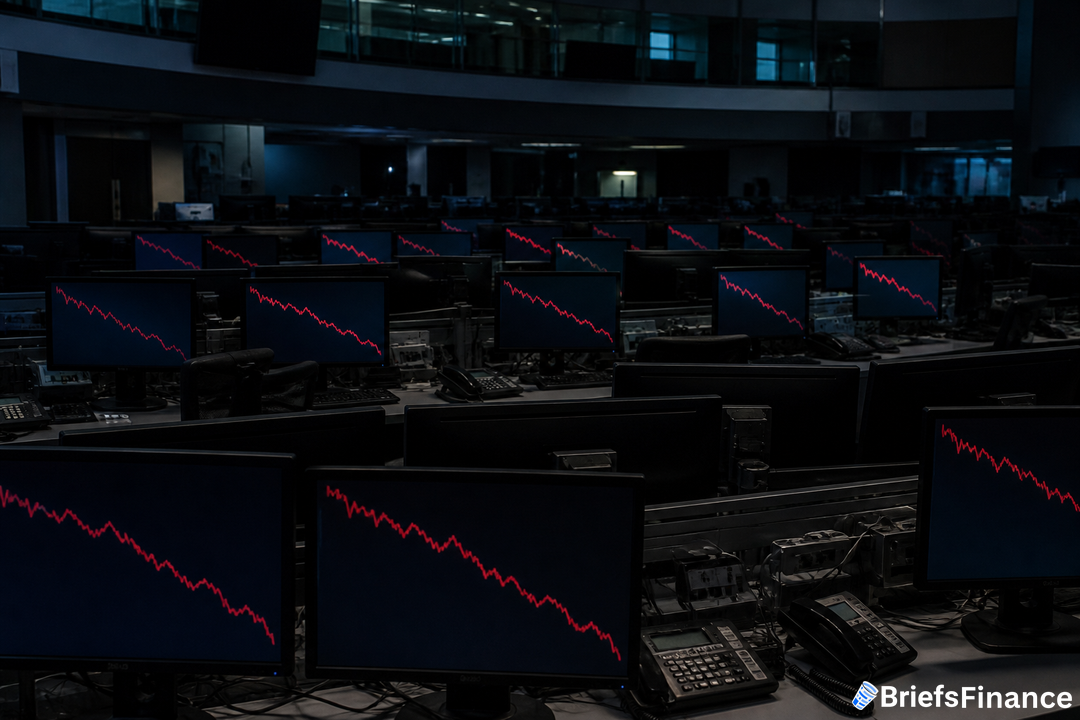
Tech led a broad retreat Thursday, with the Nasdaq 100 sliding 6.4% and logging a $2.3 trillion single-session value hit - the largest on record. The selloff followed concern that a Democratic sweep could bring tighter oversight of the AI buildout, threatening growth for chipmakers and data center suppliers that have powered the market's rally.
Those worries helped push major indexes through key chart levels, and once that happened, rules-based funds pared risk, accelerating the drop, according to JPMorgan Chase's equity derivatives strategists. These quantitative investors react to prices and momentum, not fundamentals, and that made the fall self-reinforcing.
How systematic flows fed the slide
JPMorgan's Bram Kaplan and colleagues said CTAs and other trend followers likely deleveraged hard, turning net short US equities as several momentum signals snapped during the morning. Their data show net selling of roughly $11 billion in S&P 500 futures in the initial 90 minutes of the cash session. S&P 500 futures then wavered around flat before the Friday open.
The team's model also points to volatility-targeting portfolios that may need to unload about $50 billion of equities in the coming days as they reset risk, taking target leverage down to near the 30th percentile from the 67th. Separately, Barclays Equities Tactical Strategies expects one of the larger single-day adjustments since the Covid turmoil, roughly a 30 percentage point cut to exposure. They also project about $135 billion of US equity futures could be unloaded in the coming 24 to 48 hours.
Markets can move quickly, making thoughtful tools essential for steady investors. We're hosting our first ever investor livestream on 11/17 to show you how to use ChatGPT and Claude to invest like a pro, hosted by Briefs Finance CEO Jaspreet Singh. Save your seat.
ETFs, tech concentration, and what it means for your portfolio
JPMorgan also noted that leveraged ETFs cut exposure sharply a second time within the week, with the latest wave focused on technology. These funds offloaded north of $60 billion of stock into the close, and around 90% of that was tied to tech-heavy products such as semiconductor, Nasdaq 100 and technology-sector ETFs.
Because leveraged ETFs already reduced positions, their next rebalancing flows should be smaller. The group's implicit short gamma - the sensitivity that forces them to trade with market moves - eased to roughly $6.5 billion for each 1% swing from about $7.5 billion. As Kaplan put it, "Investor dip-buying inflows may have offset some of this rebalancing need, as in past selloffs." The bottom line: when momentum cracks and volatility rises, mechanical sellers can amplify moves, especially in tech-heavy allocations.
Smart use of new tools can help investors find clearer signals amid noise. On 11/17, our CEO Jaspreet Singh goes live for our first ever investor livestream on how to use ChatGPT and Claude to invest like a pro. Register to join him.