Storage shortfall and where Germany stands
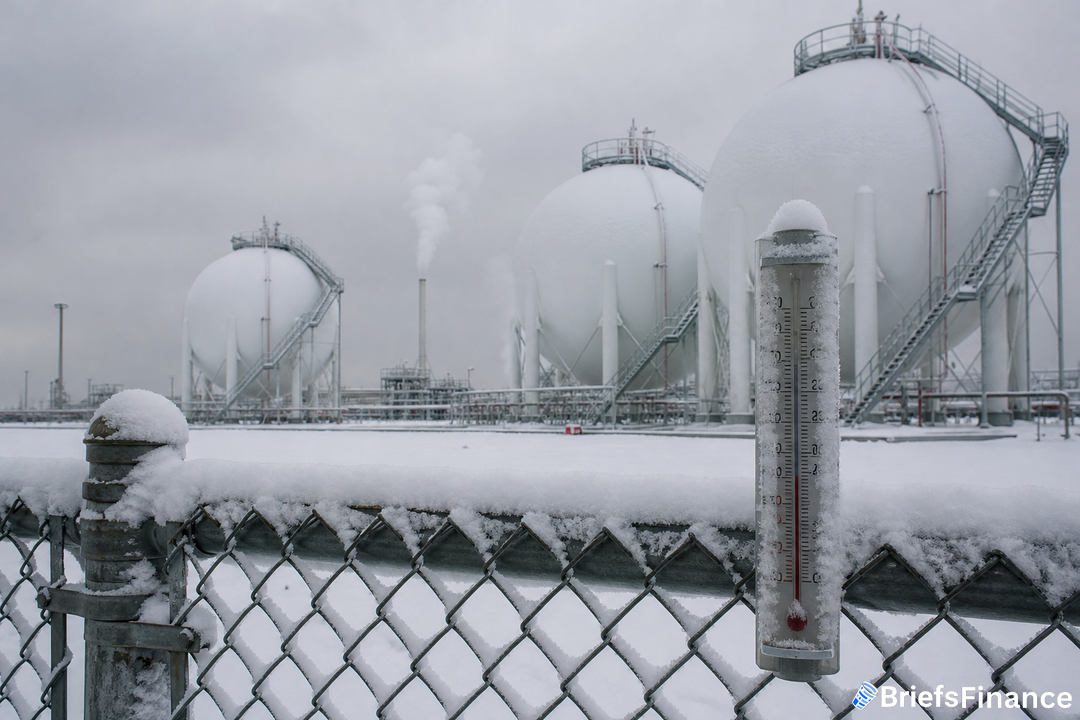
German gas reserves were 61.17% full as of Friday, according to Gas Infrastructure Europe. That is well under the roughly 70% fill target set for Nov. 1, and the economy ministry said Friday the milestone will be missed. Final Nov. 1 data are due after the weekend.
Authorities have leaned on state-owned SEFE to boost purchases over the last month, but the cushion still trails the European Union average of 75%. For an economy built on energy-heavy manufacturing, that leaves Germany more exposed if winter demand stays elevated.
Weather squeeze and price pressure
A colder pattern is moving in across Germany and large parts of Europe in the coming days, likely lifting heating demand. Vaisala meteorologist Matthew Dross expects typical readings in Berlin, Frankfurt and Munich to run 2C to 4C below normal, while forecaster DWD says southern and eastern regions could see temperatures slip below freezing.
Prices are already running hot. European natural gas futures rose above €100 per megawatt-hour last week, something not seen since 2022. The Iran war has upended global energy trade and pushed prices up threefold this year, with doubts about the conflict's duration complicating stockpiling. A high-pressure system is also expected to deliver calm, overcast periods with minimal wind - a setup dubbed Dunkelflaute that tends to reduce wind and solar output.
When markets face uncertainty investors who adapt find better opportunities. We're hosting our first ever investor livestream on 11/17 to show you how to use ChatGPT and Claude to invest like a pro, hosted by Briefs Finance CEO Jaspreet Singh. Save your seat.
Echoes of past crises and today's supply mix
Today's setup recalls the turmoil four years back, when the war in Ukraine throttled Russian pipeline flows and Germany took a heavy hit. The country has worked to improve energy security after decades of relying on Russian gas, yet Italy has still faulted Berlin for falling short on refilling storage this year.
"Entering this winter with record low stocks means Europe is extremely exposed to the volatile global LNG market and will need to compete directly with Asian giants such as China and Japan, for flexible US cargoes," said Anise Ganbold, who heads research for Global Energy Markets and Hydrogen at Aurora Energy Research.
A spokesperson for the German Economy Ministry said current reserves should be enough to make it through the winter, adding supply sources "are now more more diversified than at the beginning of the energy crisis." She noted, "Gas comes, in particular, via pipelines from Norway, via LNG terminals, and via our European neighbors," and that "Germany is closely integrated into the European gas network system."
What it means for your portfolio
Futures may not top the record peaks of the last crisis, but if disruptions persist, prices are likely to stay elevated. That feeds into broader living costs and the political heat they generate across Europe. With Germany's buffer below the EU average and a cold turn underway, watch Europe's gas curve, industrial margins, and utilities. These are the pressure points that can ripple through regional equities, credit spreads, and currency moves.
New tools can help investors sift signals from noise and stay confident. On 11/17, our CEO Jaspreet Singh goes live for our first ever investor livestream on how to use ChatGPT and Claude to invest like a pro. Register to join him.