A new surge of moisture, and why it matters now
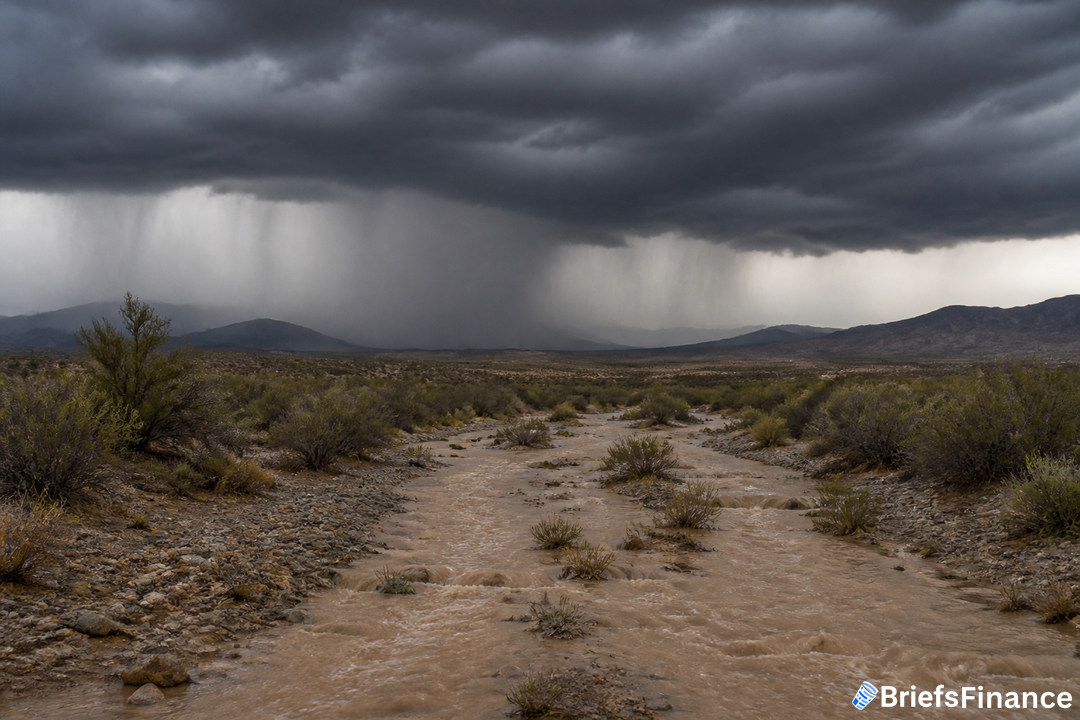
Another strong system is rolling into the Southwest this weekend after weeks of downpours. Forecasters say an atmospheric river loaded with tropical moisture could top 4 inches in some areas starting late Saturday. Joshua Schank, the lead forecaster at the National Weather Service office that covers Flagstaff, Arizona, said, "Our main concern is just how saturated soils are already." "It can't hold the moisture it's already had to contend with over the last three to four weeks."
The 66-hour precipitation outlook runs from 11 a.m. Friday, Oct. 30, through 5 a.m. Monday, Nov. 2, Phoenix time, based on NOAA, NWS and Weather Prediction Center data. El Niño usually shifts the heaviest U.S. rains to winter, but warmer oceans and a persistent train of tropical storms and hurricanes boosted by El Niño have steered moisture into the area since September, putting monthly rainfall records in parts of Arizona and New Mexico at risk. Schank sees a brief lull early next week, with rain chances building again into next weekend.
What the last round did on the ground
The Four Corners - where Arizona, Utah, Colorado and New Mexico meet - has taken repeated hits. Beginning Oct. 20, a series of storms unleashed devastation as the San Juan River overflowed in catastrophic fashion. Raw sewage entered the river as waters surged past the banks, swamping communities across the Navajo Nation and parts of rural New Mexico.
After the floodwaters receded, authorities discovered at least two people dead, and even a week later some residents still had not been allowed back. "With current hazmat concerns and potential for more rainfall soon, re-entry remains hazardous," officials in San Juan County, New Mexico, said Friday.
Since September, responders have performed hundreds of water rescues in neighborhoods isolated by floodwaters. Towns have launched extensive cleanup, and repairs are needed across drainage systems, sidewalks, roads, and bridges.
Smart investors blend new tools with steady judgment to stay prepared and adaptable. We're hosting our first ever investor livestream on 11/17 to show you how to use ChatGPT and Claude to invest like a pro, hosted by Briefs Finance CEO Jaspreet Singh. Save your seat.
Snow, drought and the aid calculus
The same storms have delivered needed snow to higher elevations, laying the base for winter snowpack and future water supplies. El Niño is expected to raise the odds of wet weather further as it peaks later this winter. Drought forecasters caution that one extra-snowy season will not refill depleted reservoirs, though added rain and snow can soften the edges of the multiyear drought, said New Mexico State Climatologist Dave DuBois. "It all benefits the environment and ecosystem, but in terms of water use for agriculture, it really helps to have a good, wet fall," he said, adding, "but not too much."
Prolonged dryness has strained the Rio Grande and the Colorado River; the latter supplies water to upwards of 40 million residents across seven states and underpins about $1 trillion in economic activity. The recent systems have been volatile, dropping golf-ball sized hail in some cases, and producing uncommon tornadoes across Arizona and the western part of New Mexico, even reaching typically dry Santa Fe. "Moisture doesn't usually go as far west," DuBois said. "It's pretty extraordinary."
The tab, the policy response and what to watch
In New Mexico alone, authorities say recovery expenses could top $200 million. "Our road crews cleared debris around the clock, and our counties and tribal nations spent money they don't have to keep people safe," Democratic Governor Michelle Lujan Grisham said Thursday. She noted the state would pursue financial assistance from federal partners to offset the costs.
FEMA can reimburse some expenses, but larger outlays require President Donald Trump to issue a major disaster declaration. To date, Trump has signed off on only limited assistance aimed at emergency response in New Mexico. No other states in the Southwest have made public requests for aid. According to White House spokesperson Lauren Bis, FEMA and additional federal agencies have been "on the ground in affected areas" delivering water, technical help, and support for incident management, infrastructure site evaluations, and communications.
Why this matters for your portfolio: municipal issuers and regional utilities face higher repair bills and uncertain federal backstops as another soaking arrives. El Niño strengthening later this winter raises the chance of more frequent wet spells and shorter recovery windows. Watch the current 66-hour rain window - 11 a.m.
Friday, Oct. 30, to 5 a.m. Monday, Nov. 2, Phoenix time - and how fast aid moves relative to growing infrastructure needs.
Finding small advantages with the right approach can make investing less uncertain over time. On 11/17, our CEO Jaspreet Singh goes live for our first ever investor livestream on how to use ChatGPT and Claude to invest like a pro. Register to join him.