Where AI Shows Up in the GDP Math
AI does not get its own line in the report, but it runs through several of them. Think billions in tech-company spending, a data-center construction boom, and consumer outlays reinforced by an AI-fueled stock rally.
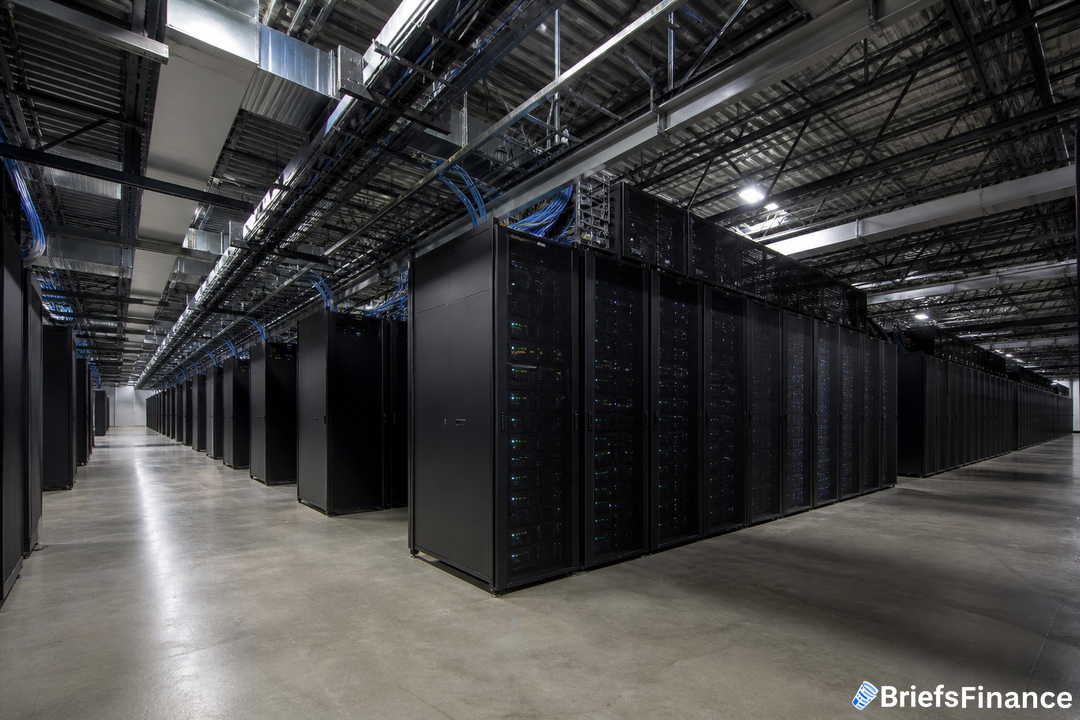
You can spot it in equipment and intellectual property, where software, chips, computers, data centers, and power infrastructure live. There is a catch for the headline number. A sizable chunk of AI hardware is made abroad, including in South Korea and Taiwan, and GDP counts domestic production. Statisticians strip out the imported share, so AI-related imports can subtract from top-line growth even as activity inside the U.S. ramps up.
How Big Is the Lift? Depends Who You Ask
The estimates span a range. Goldman Sachs argues the boost is held down by import content, inflation, and investment being redirected from other areas, putting AI's contribution at 0.1 percentage point over the last year. A Federal Reserve working paper from July says AI-related outlays - from computer equipment and software to power facilities and data centers - are volatile quarter to quarter but add up to about one-fifth of GDP growth over a year.
Nationwide's team counts direct spending plus spillovers such as data-center construction jobs and wealth from an AI-led stock surge, landing at 0.6 percentage point over the past year, about one quarter of total growth. "It's pretty meaningful," said Kathy Bostjancic, Nationwide's chief economist.
ING Groep NV expects U.S. growth around 2.4% in 2026, with around 0.8 percentage point - roughly a third - tied to AI's direct and indirect effects. Bloomberg Economics contends official accounts miss part of the impact, estimating 2025 growth would have been 3.1% instead of the recorded 2.3% if AI were better captured. Between the second quarter of 2025 and the second quarter of 2026, the U.S. economy expanded by 2.2%.
The Investment Supercycle Taking Shape
Stijn Van Nieuwerburgh, who teaches finance and real estate at Columbia Business School, estimates $10.3 trillion in AI outlays from 2025 to 2032 covering chips, computer equipment, power infrastructure, and data centers - equal to about 3.6% of U.S. GDP each year. By that yardstick, AI would surpass past buildouts such as canals, railroads, electrification, highways, and the internet. The biggest of those, the 1870 to 1890 railroad expansion, reached about 2.2% of GDP.
Jobs, Wealth, and What Happens If AI Cools
Since 2024, stocks have hit a string of records, helped by AI enthusiasm, sending household wealth to a record in the second quarter. That lift is concentrated: the wealthiest 10% hold about two-thirds of U.S. household wealth, while the bottom half holds a little more than 2%. Because higher earners typically own stocks, they are carrying much of the spending that supports consumption.
Some analyses suggest roughly 50% of AI's boost to growth comes via the wealth effect. ING's chief international economist, James Knightley, said, "We are seeing high-income households continuing to spend strongly. They have the income and hold the wealth. Middle and lower income households are feeling more financial pressure from weak wage growth and the rising cost of living."
New technologies reshape how investors find opportunities and assess long term value. We're hosting our first ever investor livestream on 11/17 to show you how to use ChatGPT and Claude to invest like a pro, hosted by Briefs Finance CEO Jaspreet Singh. Save your seat.
On the ground, AI is helping reshape construction. Since the fall of 2024, residential construction has lost 97,500 jobs; however, the boom in data centers has pushed nonresidential construction to record levels, more than offsetting that decline. Beyond that, the healthcare sector accounted for about three-quarters of job creation over the past year, and surveys indicate factories have been adding workers, while companies across sectors are reporting strong profits.
"It's flattering GDP growth. It's not everything," said Capital Economics senior North American economist Thomas Ryan. If AI investment pulls back, business spending would likely ease.
If stock gains stall or reverse, the wealth effect could flip and cool consumption. Labor markets tied to the buildout could feel it.
The long run is murkier. Anthropic PBC said in an IPO filing that AI could both pose "existential risks to humanity" and "accelerate global growth and dramatically improve quality of life for people around the world." Productivity gains are not yet obvious in official data, and early research points to fewer entry-level postings in fields like software development and customer support. McKinsey & Co. projects about 11 million Americans may need to switch jobs over the next decade.
"Even under the best circumstances, the transition to this new AI era will be one of the most turbulent times in human history," Bill Gates wrote in August. "There will be some new jobs," he wrote, "but without the right policies there will be far fewer than exist today." Still, policymakers see potential. In September, Federal Reserve Governor Lisa Cook said, "In the long term, I am optimistic that AI-fueled productivity growth can raise living standards for all Americans."
The bottom line: third-quarter GDP is expected to accelerate, and AI is one reason why. Just remember that imported AI hardware mutes top-line GDP even as the domestic buildout and market wealth ripple through spending and jobs.
Staying curious about emerging tools can give investors a steadier sense of advantage. On 11/17, our CEO Jaspreet Singh goes live for our first ever investor livestream on how to use ChatGPT and Claude to invest like a pro. Register to join him.