What the airline laid out and how it is thinking
On a Wednesday analyst call, finance and risk director Balagopal Kunduvara said the 77-year old flag carrier is exploring bank financing and other avenues to shore up working capital, per someone present who asked not to be named. Spokespeople for Garuda, Pertamina, and Danantara did not offer immediate comment when contacted.
Cash strain, ownership shifts, and the recovery grind
Garuda ended June with $624 million in cash versus $1.6 billion in current liabilities, per its first-half report released last week. Despite a 16% rise in revenue to $1.80 billion, the carrier recorded a first-half loss of $120.7 million, and shareholders' equity moved to a $52.2 million deficit, undoing what had been a $44.4 million surplus as 2025 closed. Indonesia views supporting Garuda, which employs around 10,000 people, as strategically important. In March last year, President Prabowo Subianto's administration moved the government's 65% holding to Danantara, and the fund's stake subsequently rose to 91% following the $1.4 billion infusion.
Payment terms are where a struggling airline's real condition shows up. Market Briefs covers aviation finance free every morning.
Funding plans, fuel costs, and maintenance needs
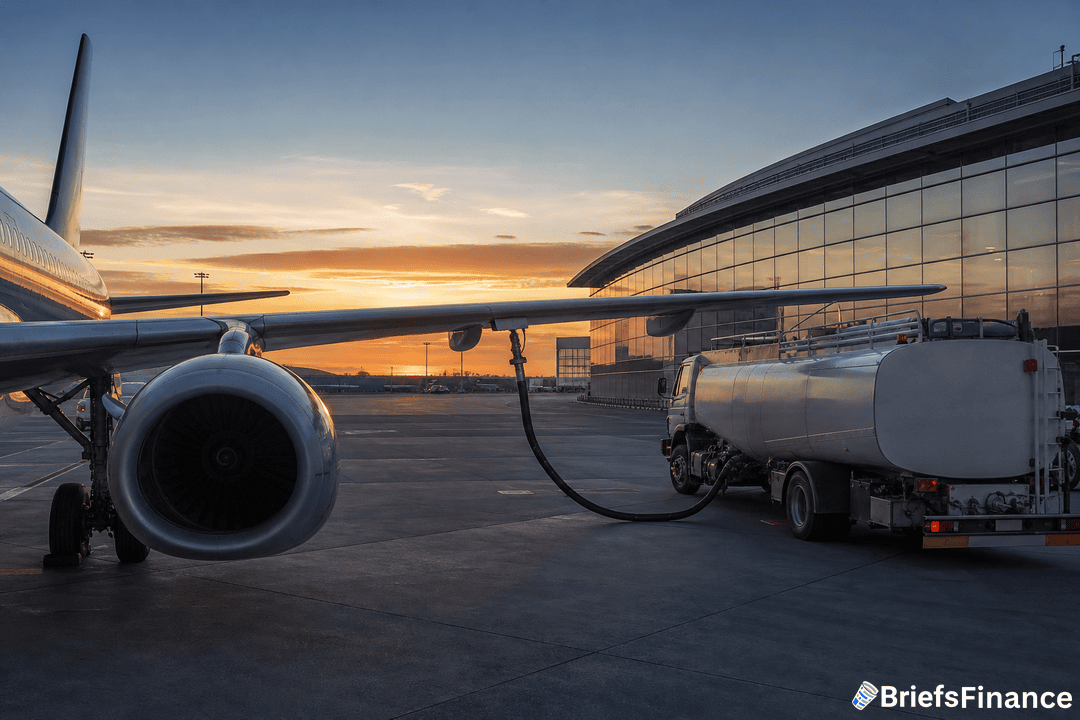
The company aims to access financing from banks, among other sources, to cover routine operating needs. It has already secured longer payment terms with Pertamina and is considering hedging to manage fuel costs. Garuda plans to spend the remaining portion of the $1.4 billion obtained last year from Danantara over the next six months on aircraft maintenance. With oil around $100 a barrel and an Iran-war-driven surge in fuel prices, the airline's recovery has become more costly, and it is currently on a six-quarter losing streak, its longest since the pandemic.
Fleet, maintenance, stock, and the wider backdrop
Last year, funding pressures and rising maintenance bills led Garuda to ground about 40% of its fleet. By June, the group, including Citilink, operated 104 aircraft, compared with 98 at the close of last year. Maintenance spending in the first half reached $232 million, more than triple a year earlier.
The strain shows up in the stock, down to its lowest level in 16 months this week and off 47% year-to-date. The challenges are industry wide: AirAsia Group Bhd. has posted two consecutive quarterly losses and has more liabilities than assets, while US low-cost carrier Spirit Aviation Holdings Inc. ceased operations in May after fuel costs spiked and a government bailout failed. Prabowo has expressed a hope that Garuda will become profitable next year, but high oil prices, mounting maintenance requirements, and tight liquidity still make the near-term picture difficult.
Stretching fuel payments buys time, not solvency. Get the free Market Briefs daily newsletter and read the signals.