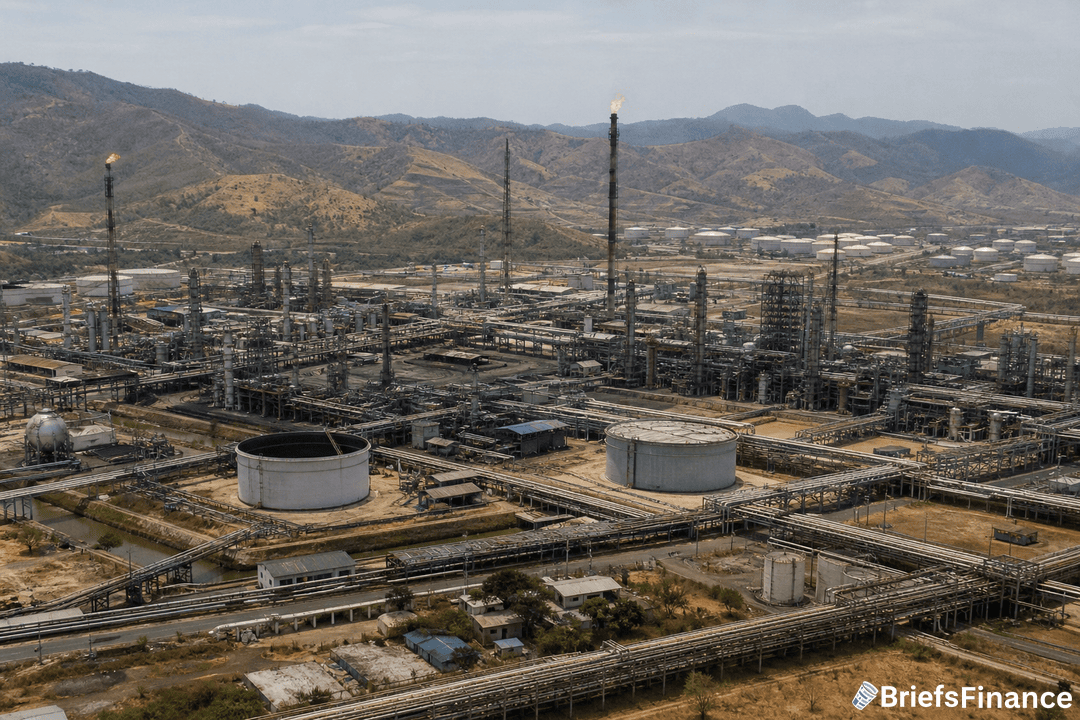
What NABEP just put on the table
NABEP laid out its first concrete production roadmap since its agreement was sealed last month, targeting 500,000 barrels a day by late 2028, up from about 200,000 today. Management says cash generated by operations will pay for the expansion, adding that the partnership with the Departments of Defense and State "only accelerates the trajectory." At the signing, the company also floated a longer term ambition to hit 1 million barrels a day, without giving a timeline.
The pact, the politics, and the fine print
The Trump administration, frustrated that majors like ExxonMobil Holdings Corp. and ConocoPhillips were not moving fast enough, teamed up with NABEP and CEO Alejandro Betancourt to reach a deal with the government in Venezuela that took power following the removal of strongman Nicolas Maduro. Washington called it "the biggest oil deal in world history." The agreement gives NABEP the right to produce from proved reserves estimated at 65 billion barrels and includes a 35% U.S. government equity stake that caught much of the industry off guard. Supporters argue U.S. involvement can speed development and signal to other investors that their money will be safer over time.
Among the still-murky pieces, White House assertions include the possibility that a fifth of production could be sold at cost to the U.S. government. "It's like a grocery store selling 20% of its milk at cost, without profit. An investor might say 'I don't know if I want to be part of that,'" said Sarah Emerson, president of ESAI Energy. "We don't know if any of this is real."
Energy developments remind investors to balance opportunity with steady protection for savings. Join Briefs Finance CEO Jaspreet Singh on September 29th for a FREE live investor workshop, How to Profit From A Dollar That's Losing its Value, where he shows how we're spotting investment opportunities as the dollar falls. Save your spot.
Can the plan really scale that fast?
Some pros think the timeline is a stretch. "An important constraint is the services side of the business," said Schreiner Parker, who leads emerging markets at Rystad Energy. "I don't think it's guaranteed that people will import rigs. And if they do, they'll be asking, 'Can I get them out?'" Parker also flagged the funding gap, saying relying on operating cash alone will be tough and, "It's inevitable it will need to raise capital."
NABEP counters that it has bankrolled growth so far with "significant free cash flow" from its Venezuelan wells. "Prior to our deal with the US government, we were already on track to continue that momentum," the company said. "This partnership, and the outside investment it will usher in, only accelerates the trajectory we have been on." The company says the program through 2028 is "self-financing," while remaining open to outside capital.
Why it matters for your money
Gasoline and diesel prices jumped after the Iran conflict, making higher Venezuelan flows a priority for President Donald Trump. Fresh supply is unlikely to land fast enough to noticeably dent U.S. pump prices before November, but the administration wants to show it is working on longer term price pressure. Meanwhile, the little known NABEP has lifted output to over ten times what it was in the last two years and now ranks as Venezuela's second-largest private producer after Chevron Corp.; last week, Chevron announced it would raise output in the country.
If NABEP hits its marks, it could reshape Venezuela's barrels headed to market. If services and financing prove sticking points, the timeline slips and the price story looks different for consumers.
When large projects surface, keeping a clear plan helps protect and grow capital. Our CEO Jaspreet Singh is hosting a FREE live investor workshop, How to Profit From A Dollar That's Losing its Value, on September 29th. Sign up free to join him live.