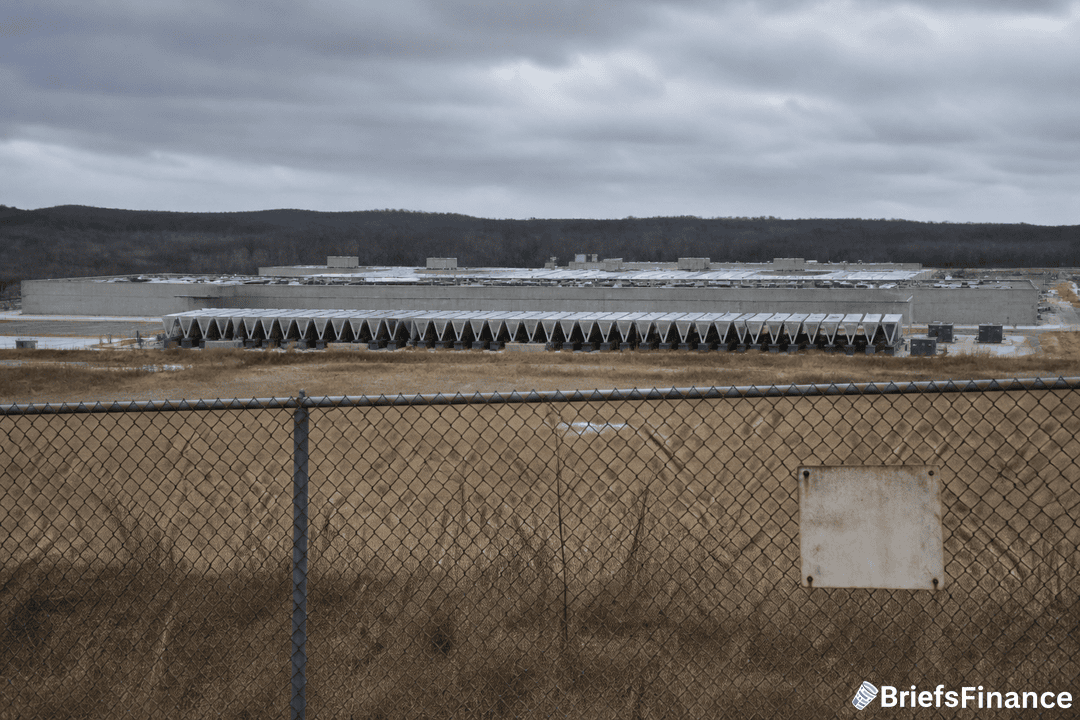
The boom in artificial intelligence has a new problem, and it is not a shortage of chips.
It is the neighbors.
Data centers need massive amounts of power and water, and the people who live near them are starting to say no. That resistance is now reshaping where these billion-dollar facilities get built and which projects get funded.
The Backlash Is Real and It Is Slowing Things Down
Community opposition has moved from a local nuisance to a genuine force in the industry. McKinsey & Co. partner Maria Goodpaster said the pushback is very real and will definitely slow the pace of expansion.
"Some investments have already been made and now we're seeing players pivot from those and abandoning some sites in some cases," Goodpaster said on Bloomberg TV's weekly Deals show.
Power and water access have become central to whether a project makes sense at all. Goodpaster said those resources now affect where companies put their money and which sites they choose, making them a key part of project viability.
Developers Change Their Approach
The industry is adapting to this new reality, and the shift is showing up in how projects get financed and built.
Rates, prices and policy all end up in your budget eventually. Get the free Market Briefs daily newsletter and see it coming.
According to Melissa Kalka, a Kirkland & Ellis partner who works on data center transactions, community engagement has become a top concern across the board.
"Lenders are focused on it. Customers are focused on it. The sponsors are focused on it," Kalka said. She noted that the most successful developers are the ones who actively gain support from local communities before breaking ground.
Equipment shortages are adding another layer of pressure. High-voltage transformers and backup generators are hard to come by, which makes speculative projects riskier. Meanwhile, projects that already have grid connections and contracted demand are becoming more valuable.
Stonepeak Managing Director Kate Dorsey said the industry has gone through a real evolution. What used to be a real estate play is now viewed as infrastructure, meaning developers need all sorts of additional components in place before a project works.
What This Means for Your Portfolio
The money side of this is shifting too. Dorsey said the bank market is still open for well-structured projects, but borrowers are increasingly turning to public market investors and private credit for funding.
That could matter for how data center companies grow and how their stocks perform.
The bottom line: Community concerns are steering investment toward projects that have the infrastructure to actually get built. Dorsey describes this not as a road block but as a filter, a way to make sure capital supports the right types of development.
For investors, that filter is worth watching. The data center boom is not over, but it is getting pickier. The winners are likely to be the projects, and the companies behind them, that solve the power, water, and community questions early. The ones that do not may find themselves abandoned before the first server ever arrives.