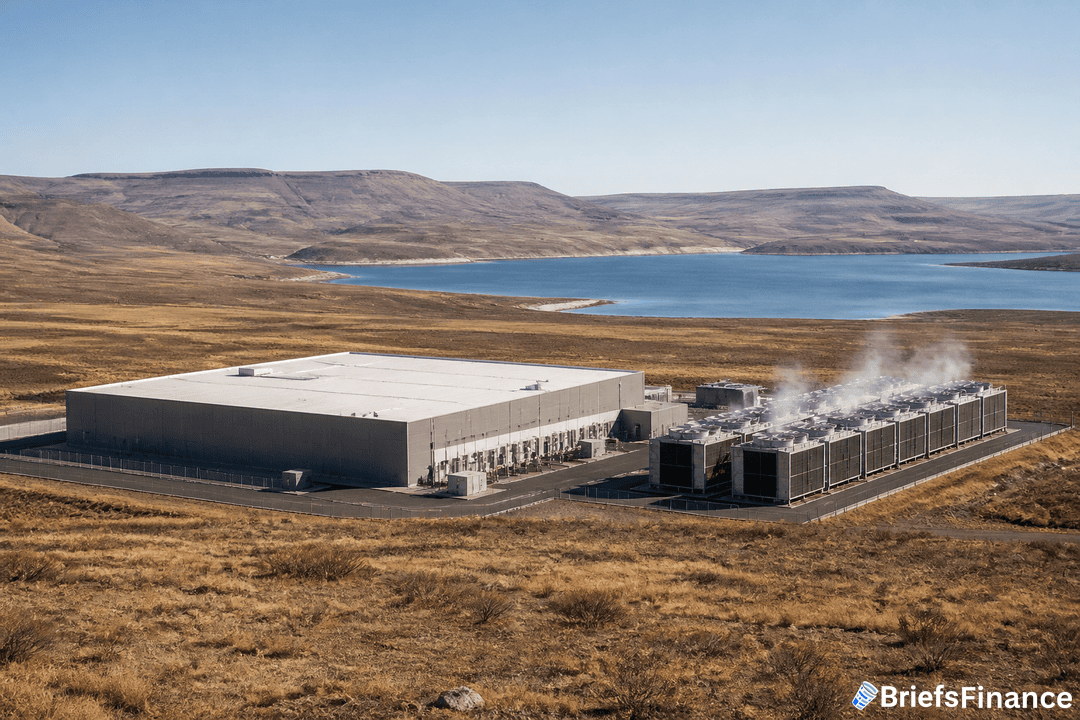
What Australia Is Trying to Do
Australia is welcoming data center investment, but it insists on guardrails. The planned rulebook extends beyond physical infrastructure. There would be one framework for the facility itself and another framework for the system operating inside it.
The pressure reflects a larger reality: data centers no longer run quietly in the background. They consume community electricity, water, and land while serving AI companies that want more capacity. A single national standard can give investors clearer expectations and give communities a baseline level of protection before a project breaks ground.
The Energy Fight Behind the Headline
Data centers use massive amounts of power and water because they run around the clock. That makes their impact different from a typical factory. A new facility can push household bills higher if it puts the grid under strain.
The best financial decisions come from understanding the whole picture. Join Market Briefs free and get the full brief each morning.
Energy Minister Chris Bowen has been direct about what is at stake. He said the government would not permit a "race to the bottom" where states compete for data centers by sacrificing affordability, reliability, and emissions targets. On Sunday, Bowen pushed back against Queensland's objections, arguing that proper rules can attract investment without letting data centers avoid their responsibilities.
Bowen's position is that data centers should supply their own renewable power, with peaking gas plants backing them up during high demand. That approach stands sharply apart from a "build now, worry later" philosophy.
Prime Minister Anthony Albanese is scheduled to address business leaders on Tuesday. His argument combines economic opportunity with public accountability. "Australia can do more to unlock frontier AI development," he says. "We must shape this change to harness the positive opportunities while minimising the downsides."
He also stresses that public support matters. "Australia is in a strong position to attract investment in data centers, but maintaining the social license will be essential," he said. "That means ensuring energy bills do not rise, water security is maintained and locations are appropriate."
What This Could Mean for Investors
A data center appears digital, but it is deeply physical. It needs land, electricity, and water from systems that also serve daily life. If Australia requires data centers to bring their own renewable power, the project economics change before construction begins.
The AI boom has lifted utility and energy shares, but policy now decides where data centers can operate, who pays for new grid connections, and how much water they can consume. If other governments follow Australia's model of "build, but the system must hold," the AI build-out can continue but the cost will be higher.
The investment story is shifting. It is no longer only about data center growth and AI adoption. It is also about whether AI can coexist with households, farms, and fragile power grids in the physical world. The final price of that coexistence will be written in future infrastructure bills.
Australia's proposal covers one country, but the judgment is not limited to its borders. Data center investment has become a story about public policy, water, utility limits, and local pain. The next few months will show if other governments adopt the same balance between technological ambition and the physical limits of the grid.
Markets move every day, and most of it never reaches you in time. Get the free Market Briefs daily newsletter and stay ahead of it.