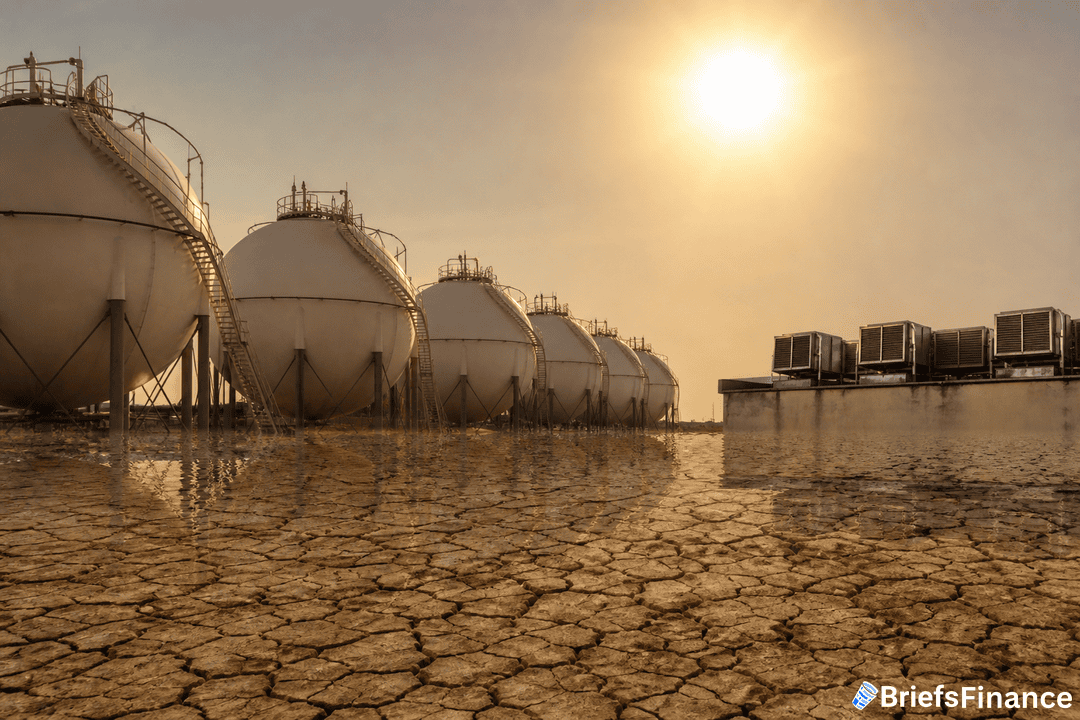
Hot Forecasts Push Gas Prices Higher
"This is what a hot summer does to natural gas prices," said one energy analyst.
Futures ended higher after new weather forecasts showed hotter weather on the way. That matters because power plants burn more gas to run air conditioners when temperatures climb.
The forecast for above-average temperatures across Texas, the Southwest, and the Interior West through September 4 suggests that the high demand will persist, keeping sustained pressure on gas supplies. Grid operators are already relying heavily on natural gas-fired plants to meet the load, and any further heat spike could tighten the market further.
A Tale of Two Markets
The heat is not the only thing moving prices. In West Texas, new pipeline capacity has made it easier to move gas out of the Permian Basin. But the story changes in East Texas.
Markets move every day, and most of it never reaches you in time. Get the free Market Briefs daily newsletter and stay ahead of it.
Rising gas flows from the Permian are now weighing on the Henry Hub benchmark, which sits in southern Louisiana. So while one part of the state sees prices firm up, another part is dealing with the opposite pressure.
The Role of Regional Benchmarks
Natural gas dominates U.S. power generation, and its price swings with seasonal temperature shifts. As the mercury climbs, the surge in air conditioning usage drives power plants to consume additional natural gas. The Henry Hub in Louisiana serves as the benchmark for North American natural gas futures, but regional hubs like Waha in West Texas can deviate sharply due to local supply and pipeline constraints.
In recent years, new pipeline projects have eased bottlenecks out of the Permian Basin, allowing more gas to flow to other markets, which has altered the price dynamics between the two regions. This divergence highlights how infrastructure and geography shape what buyers and sellers pay for the same commodity.
At the close, natural gas was trading at $2.773 per million British thermal units. Texas grid operators expect peak demand to pass the July record each day from Friday through Tuesday, according to the state's system manager. Waha spot prices have averaged above $2 per MMBtu this week.
What It Means for Your Portfolio
For investors, this is a reminder that natural gas prices are local before they are national. The fuel that gets a premium in one place can be a drag in another. The heat wave is real, but so is the supply picture.
Watch the weather maps and the pipeline maps. Both are doing a lot of work right now. The interplay between short-term demand spikes and long-term supply additions will continue to drive price swings.
As the summer heat persists, expect volatility in both regional spot prices and the national benchmark. For those with exposure to energy markets, understanding these local dynamics can help you anticipate moves that a headline number might miss.
Seasonal patterns have long shaped natural gas trading. Summer cooling demand and winter heating demand create predictable swings, but infrastructure changes - like new pipelines or storage constraints - can amplify or dampen those moves. This summer's extreme heat has already pushed some regional prices above their historical norms, while others lag due to ample supply. That divergence is a key reason why investors should look beyond the national benchmark and track regional hubs closely.
The money story behind the headlines is usually the part that matters. Join Market Briefs free and get it every morning.