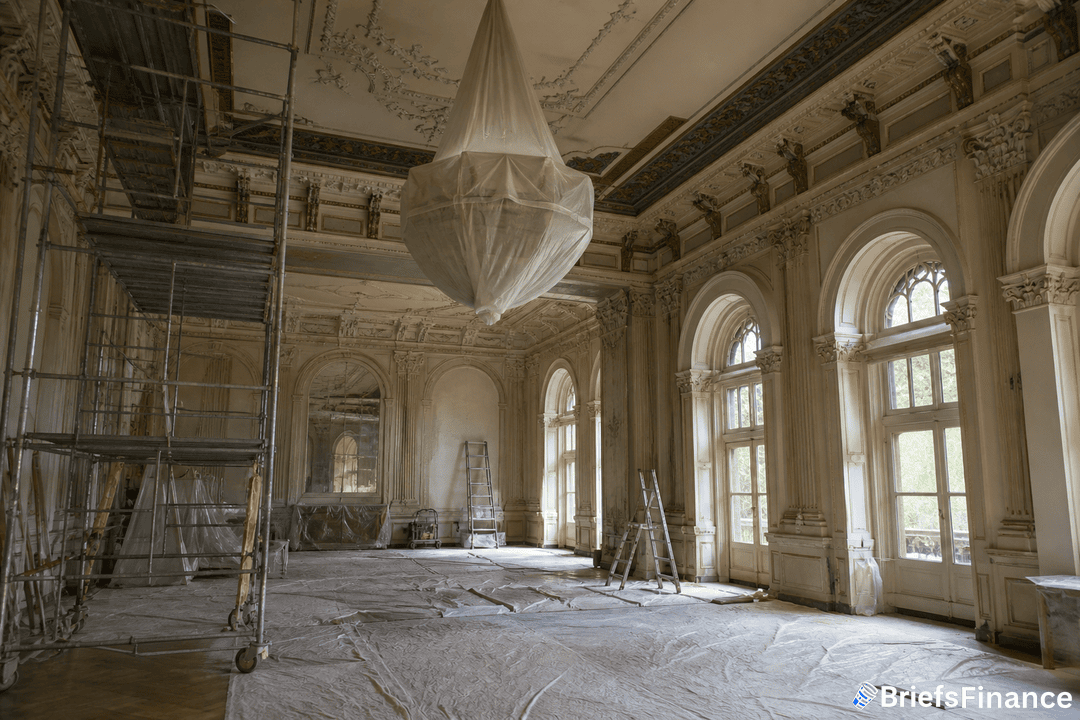
President Trump scored an early legal victory when the Supreme Court allowed work on the White House ballroom to move forward.
Chief Justice John Roberts issued a stay that lets construction continue while a lawsuit over the project plays out. The stay came on the same day a lower court's order to halt work was set to take effect.
The Legal Back-and-Forth
The lawsuit challenges the ballroom project. The president ordered the demolition of the East Wing in 2025 without prior congressional notice, clearing space for the proposed ballroom.
Trump celebrated the ruling on Truth Social, saying "We are grateful for the Decision of the United States Supreme Court." He also said "The Military/Ballroom Complex being built on the hallowed grounds of the White House, which is so vital for National Security, will be THE GREATEST OF ITS KIND!"
The Political Fight Over the Price Tag
Senate Minority Leader Chuck Schumer, D-N.Y., criticized the Supreme Court's action in a post on X. He called it "rubber stamping Trump's vanity-driven, gilded corruption" and added, "As costs skyrocket, the administration is wasting money on an endless and illegal war, corporate giveaways, and Trump's pet projects."
While the Supreme Court fight moves on, grab the free Always Be Buying E-Book for steady wealth building
Schumer continued, "Democrats are laser focused on the issues that Americans care about," and promised to "fight this flagrant waste of taxpayer money relentlessly in the courts."
The Bottom Line
This is far from over. The stay just keeps the bulldozers running for now. The lawsuit over the White House ballroom could drag on for months or longer.
Broader Legal Context
This dispute is about more than a single construction project. It is part of a broader debate over the president's authority across the White House complex and what steps must be taken before major buildings or renovations can begin. The federal district court judge had issued an injunction barring Trump from continuing construction while the case moved through lower courts.
The lawsuit, filed by a coalition of lawmakers and historic preservation groups, argues that the president overstepped his authority by unilaterally razing a historic section of the White House without legislative approval. They contend that federal law mandates congressional consent for such structural changes, and they are seeking a permanent block on the project.
The East Wing demolition in 2025 is central to the case. The plaintiffs say that tearing down that historic section without lawmakers' consent violated federal law, and the Supreme Court's temporary stay does not settle that underlying question.
What Happens Next
The administrative stay issued by the Supreme Court is not a final decision; it only pauses the injunction while the legal fight continues.
That means the fate of the White House ballroom project remains uncertain, even as work advances.
For now, the bulldozers stay busy and the legal bills keep climbing. The next ruling could arrive at any time.
Even with the White House ballroom fight continuing, let the free Always Be Buying E-Book teach consistent investing on any income