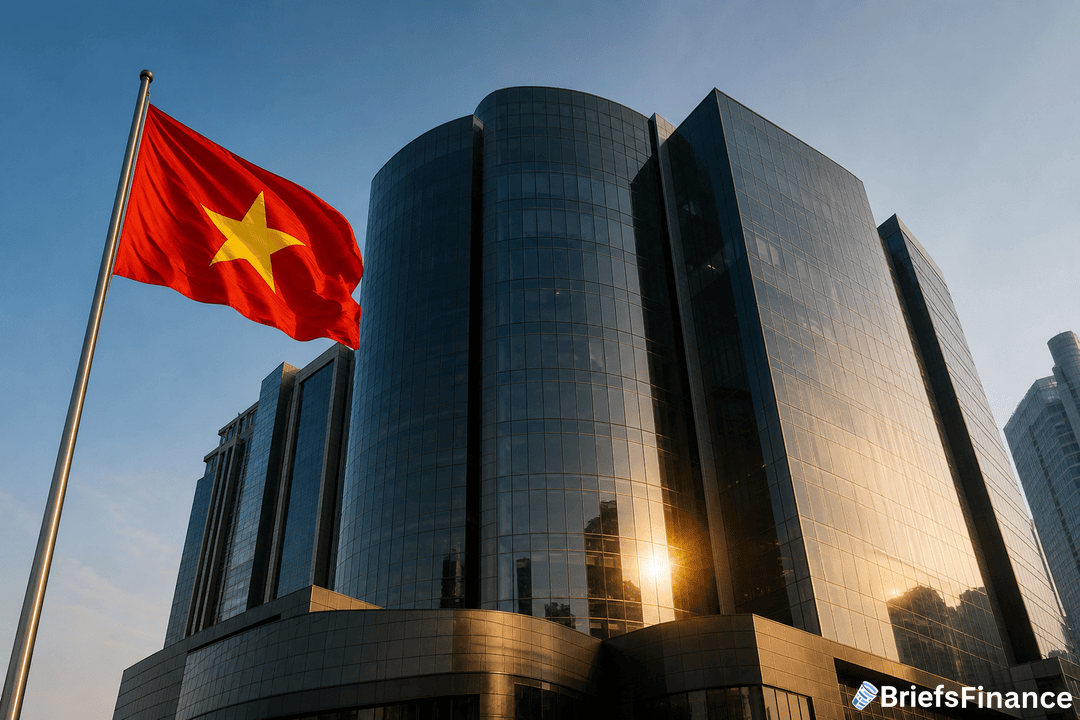
Vietnam Earns a New Label
For years, Vietnam has been the market that keeps getting rejected. Now it actually has arrived.
FTSE Russell, one of the big index providers that decides how global money gets categorized, added more than 100 Vietnamese companies to its global equity indexes on Friday. The list includes Vingroup JSC, the sprawling conglomerate behind everything from cars to real estate, plus Hoa Phat Group JSC, Vietnam Prosperity Joint Stock Commercial Bank, and Vinhomes JSC.
The move is bigger than one trading day. It officially shifts Vietnam from frontier-market status to a secondary emerging-market classification, the same tier as China, India, and Indonesia.
That label matters because a lot of big funds only buy stocks that sit in the emerging-market bucket. When a country gets promoted, money that never could have touched those stocks suddenly can.
FTSE Russell announced back in April that Vietnam had cleared the requirements. The change will phase in over four stages, starting Sept. 21 and stretching into 2027. Six stocks also made it onto the FTSE All-World Index, the provider said.
The Money Already Smells It
The market has not been waiting around. Vingroup shares have climbed 21% so far this year, even as the benchmark VN Index has fallen nearly 1%. In 2025, Vingroup stock rose more than 700% on expectations that the reclassification was coming.
Vietnam's market upgrade creates fresh opportunities, so grab the free Always Be Buying E-Book to build wealth steadily
That kind of run is what happens when investors front-run a structural shift. FTSE Russell itself has estimated the upgrade could channel as much as $6 billion into Vietnamese markets.
"There could be some positive sentiment towards these names," said Ruchir Desai, a fund manager at Asia Frontier Capital.
The sentiment is real, but so is the history. During 2026 through Aug. 21, overseas investors net sold about $3.5 billion worth of Vietnamese equities, following a record $4.7 billion in net outflows in the previous year. So the question is whether the index money can outrun the existing sellers.
The Next Hurdle
Vietnam is not done yet. MSCI Inc., another major index provider, is also weighing a similar reclassification. But in June, MSCI flagged two problems: low free-float levels at some companies and foreign-ownership limits that remain in place.
More than a tenth of the local equity market falls under those restrictions.
The float refers to the portion of a company's shares that are openly tradeable by outside investors. When that portion is too small, large index funds cannot build positions without significantly moving the price on their own.
If Vietnam clears those hurdles, more global money could follow. If not, the country stays in the second tier, still a step up from frontier status but still short of the full prize.
The bottom line: For anyone holding Vietnamese stocks in a fund or directly, the FTSE addition is a real milestone, not just a headline. Index money tends to stay put, and that can add a steadier floor under prices. The next few years will show whether Vietnam can fix the ownership rules and free-float gaps that keep it from the top tier.
If it does, more money follows. If it doesn't, the upgrade still stands, just with a ceiling.
As Vietnam joins the big leagues, the free Always Be Buying E-Book shows how consistent investing pays off