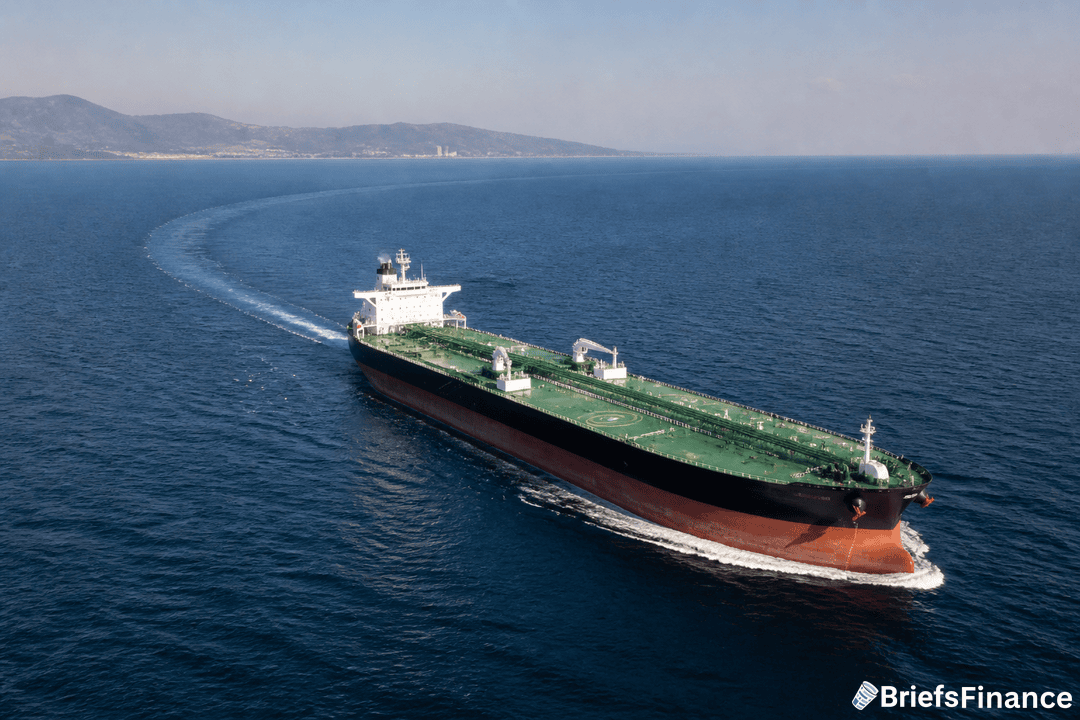
Your gas bill may not know it yet, but the path your fuel takes to get to you just got a lot longer.
Saudi Arabia has quietly found a workaround for the attacks that have made the Red Sea a danger zone for oil tankers. Instead of sending crude straight through the risky stretch, the Saudis are now shuttling it north through a pipeline-and-port system that keeps the cargo out of harm's way for most of the journey.
A New Shuttle Route Emerges
Here is how the new dance works. Think of it as a relay race where the baton is 2 million barrels of crude. The first runner takes the short, protected leg, and the second runner handles the longer journey from there.
The move mirrors a similar approach used for oil moving through the Strait of Hormuz, which avoids Red Sea risks. Saudi Arabia is now running the same playbook on its western coast.
As oil takes a longer path to safety, grab the free Always Be Buying E-Book for steady wealth building
Why the Reroute Was Necessary
A blockade was declared on July 20, and the numbers since then tell the story. Ship tracking shows at least four tankers have made the Yanbu-to-Ain Sukhna round trip with cargo at least twice. Together, those trips have moved about 16.3 million barrels of crude.
"Tanker operators with higher risk tolerance have entered the trade, facilitating shuttle tanker movements between Yanbu and Ain Sukhna so crude supplies can be transported, and Saudi Aramco customers can pick up crude directly at Sidi Kerir instead of Yanbu," according to Xavier Tang, a senior market analyst at Vortexa.
Yanbu matters because it sits at the western end of the East-West pipeline, a line that lets Saudi Arabia bypass the Strait of Hormuz entirely. That pipeline was built for exactly this kind of moment, and it is now earning its keep.
What This Means for Your Portfolio
The catch is time. Mediterranean ports are closer to major demand centers, but most of Saudi Arabia's customers are in Asia. That means tankers leaving Sidi Kerir have to sail all the way around southern Africa to reach them, adding weeks to what used to be a straightforward trip.
More time at sea means more fuel burned, more ships tied up, and more pressure on the global tanker fleet. It also means Saudi Arabia is paying a premium to keep its crude moving, and some of that cost will find its way into the price of the oil itself.
For investors, this is a reminder that geopolitical risk does not have to shut down supply to move markets. Sometimes it just makes the supply chain longer, slower, and more expensive. Oil prices have already been creeping higher this year, and a persistent reroute like this one is exactly the kind of quiet pressure that keeps them there.
The system is working, for now. But every extra week at sea is a reminder that the world's energy map can shift overnight, and the effects show up in your fuel bill months later.
When tankers reroute around threats, get the Always Be Buying E-Book for a simple investing system