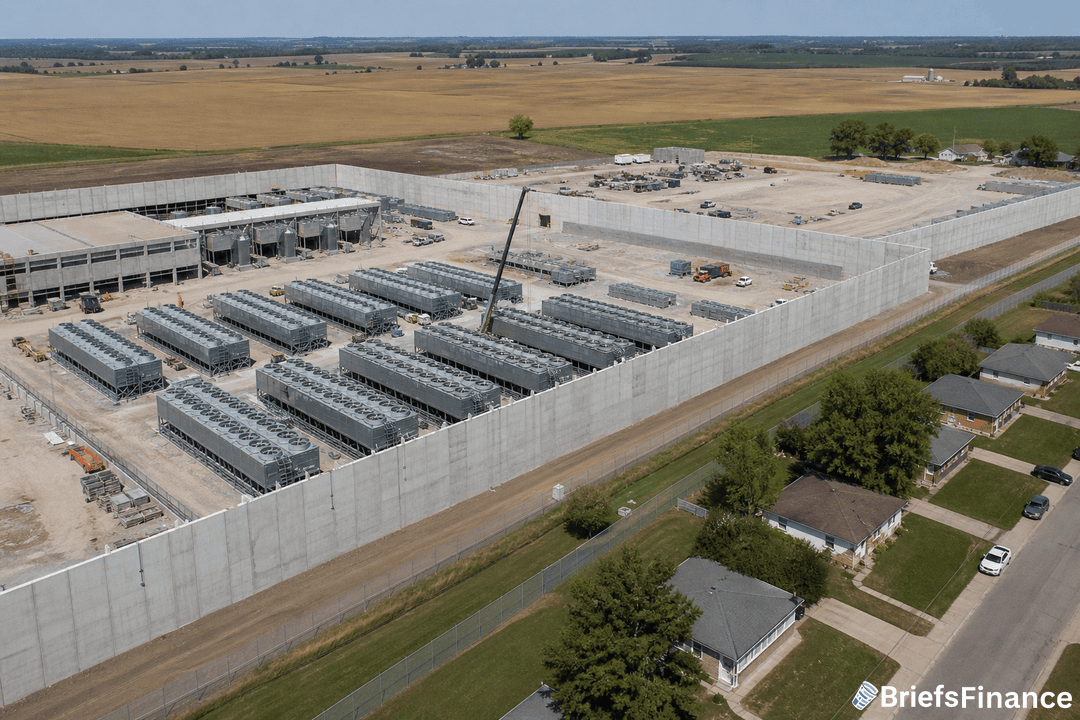
President Trump spent part of his Wednesday addressing local officials on a less glamorous side of artificial intelligence: where the massive data centers that power AI actually get built. His message was straightforward. If you're a mayor or governor and you have the chance to host one of these projects, say yes.
"The construction jobs are enormous," Trump said on Aug. 19, 2026. "We're building the biggest plants anywhere in the world. And I can say, if I were the mayor of a town or the governor of a state, and I had the chance to get a big AI plant or a data center, I would absolutely take it, because the jobs are enormous and the taxes paid are just enormous."
That comment came amid a wider effort to ease the way for AI infrastructure across the country. But not everyone is on board. A May poll shows that a majority of Americans do not want these facilities in their neighborhoods, a reality Trump acknowledged when he said the industry "could use a little public relations help."
A few minutes a day is enough to stay genuinely informed about your money. Join Market Briefs free and start tomorrow.
The administration's main evidence is Stargate, a $500 billion AI infrastructure venture announced on Jan. 21, 2025. Its flagship data center in Abilene, Texas, is already partially operational, and the project has expanded to other sites. These facilities are massive - Trump described them as the largest of their kind globally - and an executive order in July streamlined permits to speed construction.
The policy also requires developers to secure dedicated power supplies before breaking ground. This is intended to protect regional grids and prevent households from footing the bill for new power plants. A single large data center can consume electricity like a small city, and AI training uses far more energy than a typical web search. Without this requirement, utility costs could rise for everyday customers.
The administration also points to medical research breakthroughs as a key benefit of AI, with Trump suggesting the technology will surpass the internet in impact. He emphasized maintaining the U.S. regulatory lead to foster innovation without overreach.
For communities, the trade-off is clear: construction jobs and property tax revenue in exchange for hosting energy-intensive facilities. For investors, the shift from digital to physical infrastructure represents hundreds of billions in planned spending. The real test will be whether the promised jobs and tax gains outweigh the power demands - and whether the cost of that power stays off household bills, as the administration intends.
The president's pitch to local leaders is straightforward: welcome these projects or risk being left behind. But with public opposition rising, the political calculus may not be so simple.
Rates, prices and policy all end up in your budget eventually. Get the free Market Briefs daily newsletter and see it coming.