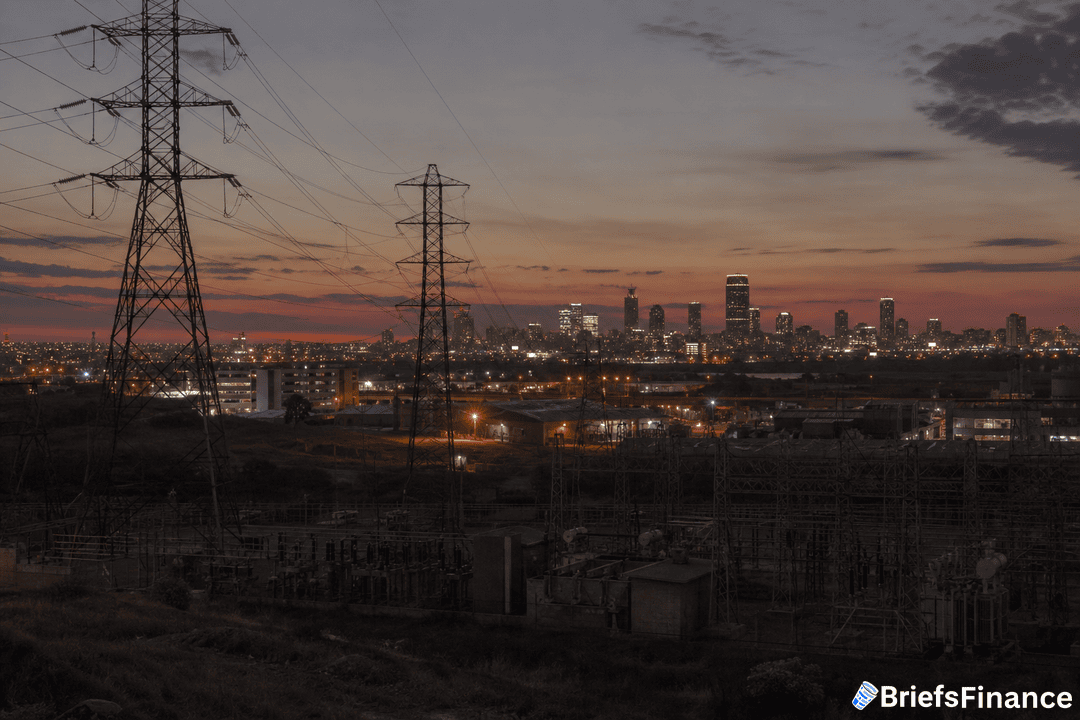
The Bill Came Due
You know that feeling when you put off a big bill, hoping it will just sort itself out? South Africa's largest city tried that with its electricity provider. It didn't work.
The city's municipal utility made the final payment on Friday, according to Eskom's statement. Going forward, Johannesburg has confirmed it will pay on time, or at least by the due date.
This wasn't a friendly reminder situation. Eskom had sent the city a formal notice that it could cut power at certain bulk supply points. That means entire neighborhoods could have gone dark if the money hadn't shown up.
More Than One City in Trouble
The bigger picture here is uncomfortable. Johannesburg isn't the only municipality that's behind on its power bill. It's just the biggest one that got caught.
Paying a big bill is just the start; build steady habits with the free Always Be Buying E-Book
Municipalities across South Africa owe Eskom about 119 billion rand in total. To put that in perspective, Eskom supplies roughly 85% of the country's electricity, so when cities don't pay, the utility feels it directly.
The national government stepped in back in November with new rules. Under those measures, Eskom can take temporary control of a defaulting municipality's electricity distribution and force it into a payment agreement. Think of it as a financial intervention for cities that can't manage their own power budgets.
The 119 billion rand in arrears has been building for years, and Johannesburg's settlement is only a small slice of that total. Without systemic changes to how municipalities budget and collect revenue, other cities are likely to fall into the same trap, leaving Eskom to chase ever larger unpaid bills.
What This Means for Your Money
Here's where this gets personal. Eskom has been leaning on tariff increases to covers its costs, and those increases have been steep. Electricity prices in South Africa have climbed almost 900% since 2008, which works out to roughly 15% a year on average. If you've noticed your power bill getting bigger every year, this is why.
Eskom still carries about 346 billion rand in net debt, and it has its own financial troubles to sort out. The utility has warned that if municipal finances keep deteriorating, the damage could delay the planned break-up of the company into separate generation, transmission, and distribution units and also undermine the government debt-relief program designed to help the utility get back on solid ground.
The good news for Johannesburg residents is that their lights will stay on for now. But the deeper question, whether municipalities can keep up with rising power costs, is still wide open. If your city is the one that can't pay, you're the one who feels it. Whether through higher rates, unreliable service, or both, the cost of this debt eventually finds its way to the meter.
When a debt is settled, the real challenge is staying consistent, so download the Always Be Buying E-Book