Free NewsletterPro Login
S&P 500 6,287 +0.42%
DOW 44,521 -0.18%
NASDAQ 21,103 +0.71%

Warning: Undefined variable $funds in /var/www/briefs.co/htdocs/wp-content/plugins/oxygen/component-framework/components/classes/code-block.class.php(133) : eval()'d code on line 491

Warning: foreach() argument must be of type array|object, null given in /var/www/briefs.co/htdocs/wp-content/plugins/oxygen/component-framework/components/classes/code-block.class.php(133) : eval()'d code on line 491
/* the link was here */

Iran's Economic Squeeze Could Trigger a Violent Response

Published Aug 23, 2026
[tts_player]
Share:
Summary:
  • Treasury Secretary Scott Bessent will unveil a new economic pressure plan against Iran on Monday, targeting its trade partners.
  • Iran is facing an economic crisis with inflation above 80% and its currency down almost 30% this year.
  • Analysts warn that effective economic pressure may push Iran to retaliate militarily rather than give in.

The White House is betting that money can do what bombs have not.

President Trump wants to force Iran into a war-ending deal on US terms using sanctions, a naval blockade, and economic pressure on Tehran's trading partners. Treasury Secretary Scott Bessent is set to roll out the details of that plan on Monday, and it could reach far beyond Iran itself.

But here is the catch the administration may be underestimating. Iran has taken hits since Feb. 28, when the US and Israel first attacked. It has absorbed airstrikes, sanctions, and a Navy blockade. And it still has ways to hit back.

The Plan and Its Targets

The idea is simple on paper. If you cut off the money, the regime has no choice but to negotiate. The US wants to hit Iran's oil sales and its connections to the global economy, which means applying pressure on countries like China, India, Turkey, and the United Arab Emirates.

Beijing purchases the largest share of Iran's crude exports, so Washington must target China to inflict real economic damage. That carries its own risks, and going after smaller players in Iraq, Turkey, or the UAE probably will not break the regime's will.

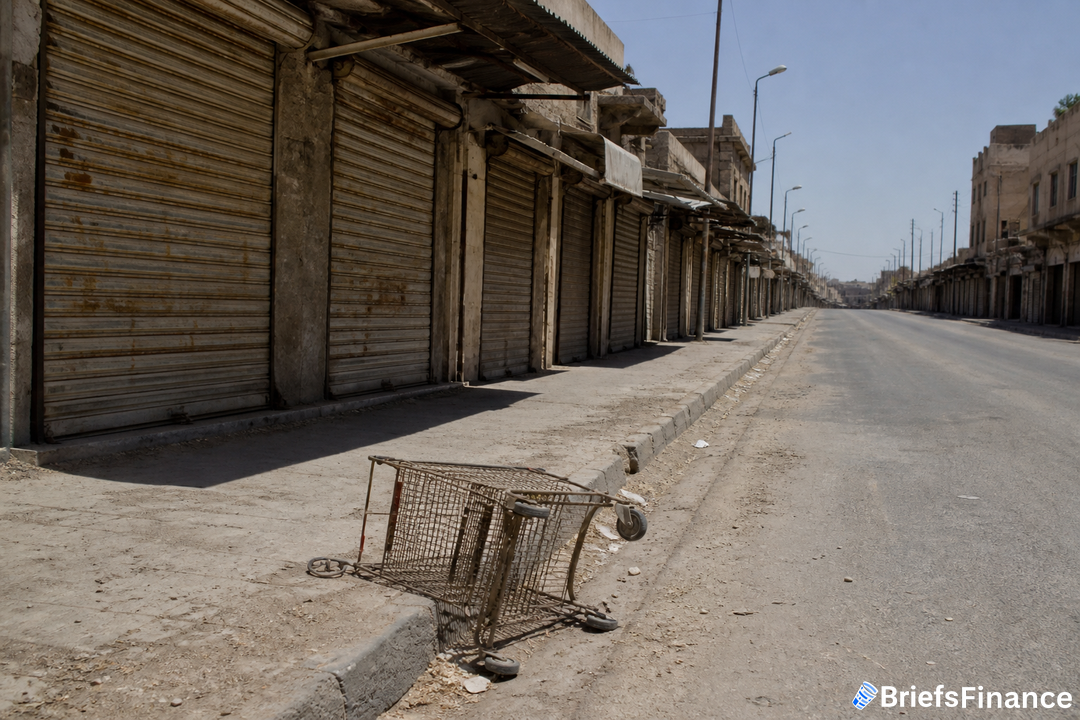
Iran's economy was already in bad shape before this latest push. Inflation is running above 80%, and the rial has plummeted by close to 30% since January. The central bank governor said oil exports have "virtually stopped" under the blockade.

Sanctions and strikes can shake markets, but your wealth plan shouldn't, so stick with the Always Be Buying E-Book

The Retaliation Question

The pressure is real, but so is the danger that comes with it.

Iran's Islamic Revolutionary Guard Corps controls the Strait of Hormuz and has already used drones and ballistic missiles against US bases and Gulf civilian sites. The group has shown it can strike across the Persian Gulf, and it has kept the strait largely closed, which is one reason global energy prices have climbed.

Analysts are skeptical that Iran will simply fold. Nate Swanson, who watches the region closely, put it plainly. If the pressure is actually effective, he said, Iran will lash out again because it will have no alternative.

Chris Kennedy, another analyst, made a similar point. Just because the US has paused its full-blown military operation does not mean Iran will follow suit.

Bessent has suggested the economic campaign might mean "there will not be a large-scale kinetic restart." But the analysts who study this stuff are not buying it. The more likely path, they say, is military action coming out of Iran as a first step, not capitulation.

What This Means for Your Portfolio

The risk here is not just for diplomats. It is for anyone with money in global markets.

If Iran does strike back at Gulf energy infrastructure, the goal would be to raise oil prices and make the US campaign too expensive to continue. That is a direct line from a geopolitical standoff to the price you pay at the pump and the value of energy stocks in your portfolio.

David Schenker, a former US Middle East diplomat, thinks the standoff could drag on for some time. Iran, he said, views itself as holding key advantages and being in a favorable situation. That suggests the conflict may not end quickly, no matter what the economic plan says.

For investors, the takeaway is straightforward. This is a situation with a wide range of outcomes, and the price of oil is the signal to follow. If Iran lashes out, expect energy markets to react fast.

If the pressure works and Tehran comes back to the table, the relief could come just as quickly. Either way, it is worth watching what happens after Monday.

While Iran tensions rise, focus on your own financial future, and grab the free Always Be Buying E-Book

Disclosure

Recent News

1 2 3 60

Get Market Briefs delivered to your inbox every morning for free!

No fluff. No noise. No politics. Just finance news you can read in 5 minutes.

Blogs

August 23, 2026
How to Get the Most From Your Guideline 401k
  • Guideline is a company that provides low-cost 401k plans, popular with small businesses and their employees.
  • A "Guideline 401k" follows the same core rules as any 401k: tax-advantaged growth, contribution limits, and often an employer match.
  • The biggest results come from capturing the full match, choosing low-cost funds, and picking Roth or traditional to fit your situation.
Read More
August 23, 2026
Principal 401k: What to Know About Your Plan
  • Principal is one of many companies that manage workplace 401k plans, so a "Principal 401k" is simply a 401k where Principal is the provider.
  • The rules of a 401k are the same no matter who runs it: pre-tax or Roth contributions, tax-advantaged growth, and often an employer match.
  • The biggest wins come from grabbing the full match, picking low-cost funds, and knowing whether Roth or traditional fits you.
Read More
August 23, 2026
What a Tariff Dividend Means for Your Money
  • A "tariff dividend" is the idea of taking money the government collects from tariffs and paying some of it back to citizens.
  • To judge the idea, you first need to know what a tariff is: a tax on imported goods, usually paid by the companies bringing them in.
  • Tariffs ripple through prices, businesses, and your investments, so the smart move is understanding those ripples, not just the headline.
Read More
August 23, 2026
No Tax on Overtime: How Overtime Pay Is Taxed
  • "No tax on overtime" refers to a tax break that lets certain workers deduct some overtime pay, lowering the income they get taxed on.
  • A deduction does not mean overtime is truly tax-free. It means part of that pay is subtracted before your tax is figured.
  • The bigger money lesson: how you earn money changes how it is taxed, and investors often get the friendliest treatment of all.
Read More
August 23, 2026
Reading the Silver Price Forecast for 2026
  • Nobody can honestly promise a specific silver price for 2026. Any exact number is a guess, so treat forecasts as opinions, not facts.
  • Silver is unusual because it is both a precious metal and an industrial metal, so its price answers to two very different forces.
  • Instead of chasing a forecast, learn the drivers - inflation, interest rates, recession fear, and industrial demand - so you can judge any prediction yourself.
Read More
August 23, 2026
What to Do When Reddit Stocks Go Viral
  • "Reddit stocks" usually means stocks getting hyped in online communities, where crowds can send a price soaring or crashing fast.
  • These tips can be entertaining and sometimes useful, but they are opinions, not research, and often come loaded with hype.
  • The safe move is to treat every online tip as a starting point, then do your own homework before risking a dollar.
Read More
August 23, 2026
Why Is Bitcoin Dropping Right Now?
  • Bitcoin drops for a mix of reasons: interest rates, big-picture money policy, regulation news, and simple shifts in how much risk investors want to take.
  • Bitcoin has a fixed supply and no earnings, so its price runs almost entirely on supply, demand, and sentiment.
  • Sharp drops are normal for bitcoin. Understanding the drivers matters more than reacting to any single day.
Read More
August 23, 2026
The Fidelity 500 Index Fund, Made Simple for Beginners
  • The Fidelity 500 Index Fund is a low-cost fund that tracks the S&P 500, an index of 500 large U.S. companies.
  • Buying it means owning a tiny slice of 500 businesses at once, which spreads your risk in a single purchase.
  • Index funds like this win over time mostly by keeping fees low and letting compounding do the work.
Read More
August 23, 2026
USA Penny Stocks: Risks and Rewards Explained
  • USA penny stocks are very low-priced shares of very small companies, often trading under $5 and sometimes under $1.
  • They dangle the dream of huge, fast gains, but carry brutal risks: low liquidity, wild swings, and high failure rates.
  • Most investors build wealth faster with quality companies and funds than by chasing cheap shares.
Read More
August 23, 2026
Finding Cheap Stocks to Buy Now Without Getting Burned
  • A low share price does not mean a stock is cheap. Real value compares the price to what the business is actually worth.
  • The best cheap stocks to buy now are quality companies trading below their true value, not the tiniest, riskiest shares on the market.
  • For most beginners, a low-cost index fund is the simplest "cheap" way to own great companies at once.
Read More
1 2 3 25
Share via
Copy link










