A Shifting Harvest Calendar
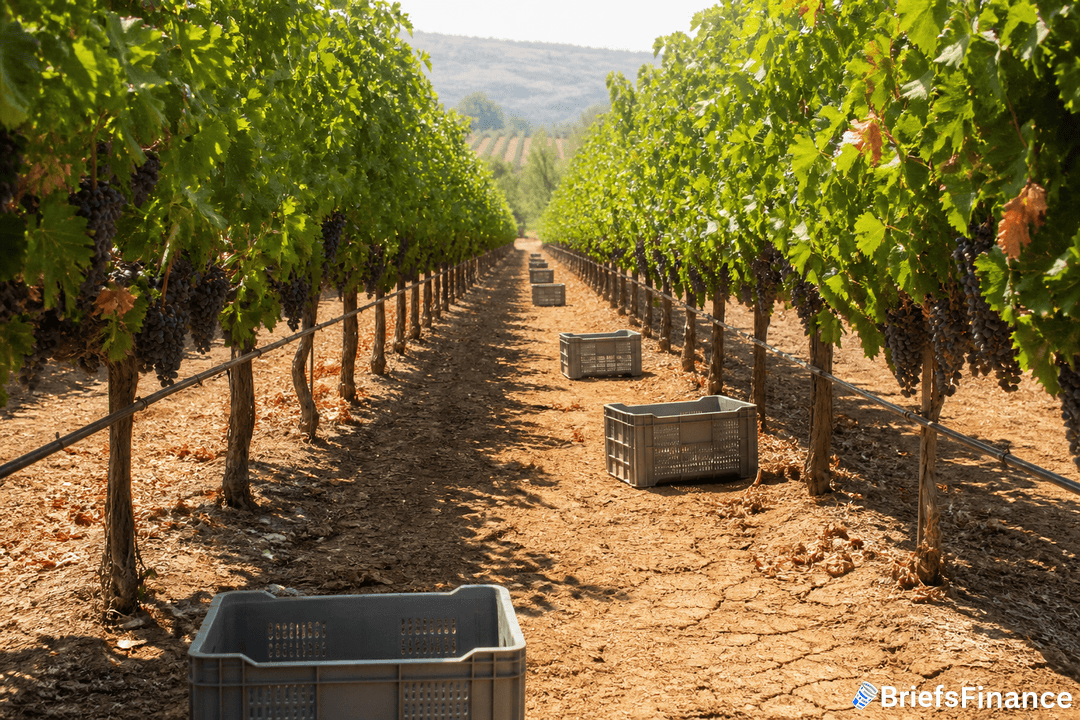
Champagne's harvest is underway, with most growers in the vines from Aug. 20 to 25. That is roughly two weeks earlier than the norm in recent years. In the years before 2000, growers usually harvested in September or October. The sparkling wine generated $6.6 billion in brand sales last year.
Warmer springs and summers have sped up grape maturation, boosting sugar levels and narrowing the window for picking. In a region whose identity is tied to those grapes, the earlier calendar is not just a logistics change; it is a visible sign that the area's growing season has been transformed. Much of Champagne's craft depends on a long, slow season, so the harvest-date shift forces growers to adjust their expectations.
The Flavor Balancing Act
Growers face a trade-off: pick early to preserve acidity, or wait for "phenolic ripeness," the point at which tannins and other compounds are fully developed to produce the desired taste and mouthfeel.
"For great wine grapes, you want the maturation process to be slow. This is true with most fruit," said Linda Johnson-Bell, founder of the Wine & Climate Change Institute.
A compressed season is easier to convince in red wines, whose alcohol levels have risen in recent years because of high-sugar fruit. Yet for Champagne, where the product's identity depends on balance, the challenge becomes even more serious.
When climate change shifts the harvest, a steady investing habit can protect your future with the free Always Be Buying eBook.
The extra sugar can translate into higher alcohol, which is easier to tolerate in red wines but harder in Champagne. That is why timing matters so much. If growers wait too long, they risk losing the acidity that gives the wine its lift; if they pick too early, they miss the flavor depth that comes with full ripeness.
Johnson-Bell said the region has been preparing for decades: "The Champenois will do absolutely everything to safeguard that product, they've been onto these issues for decades."
Industry Pressures
The harvest shift comes as demand weakens. The Comité Champagne trade group said shipments dropped 9.2% in 2023. High inventory and tariffs add to the strain. One industry analyst said, "Quality seems promising, and the industry could do with lower inventory."
That combination of climate pressure and market softness is testing one of the sought-after world's rare wine regions.
New Ground in England
Warmer weather is also changing the map for sparkling wine. Taittinger has purchased vineyard land in Kent for English sparkling wine. Balfour Winery's wine director, Fergus Sklias, said the change has been dramatic. "It's quite astonishing to see the forward shift in the harvest."
Elias added that the grapes are already usable. "If I really wanted to, I could pick these vines and make a passable wine with them," he said. He says the England growing season remains long enough, and he is excited about the possibilities.
Adaptation and Outlook
Some producers in southern France are also having a strong year. Jean-Claude Mas, founder of Domaines Paul Mas, said, "In 30 years I've never seen a year like this. I was so stressed, but this year it looks like we could have a really good harvest."
For investors, the story is less about a single heat wave and more about how the industry adapts. Champagne houses are experimenting with different varieties, reploughing, and looking north. The taste of Champagne may change, but producers are determined to protect the brand.
Just as great wine needs a slow build, your money grows with consistency, so get the free Always Be Buying eBook.