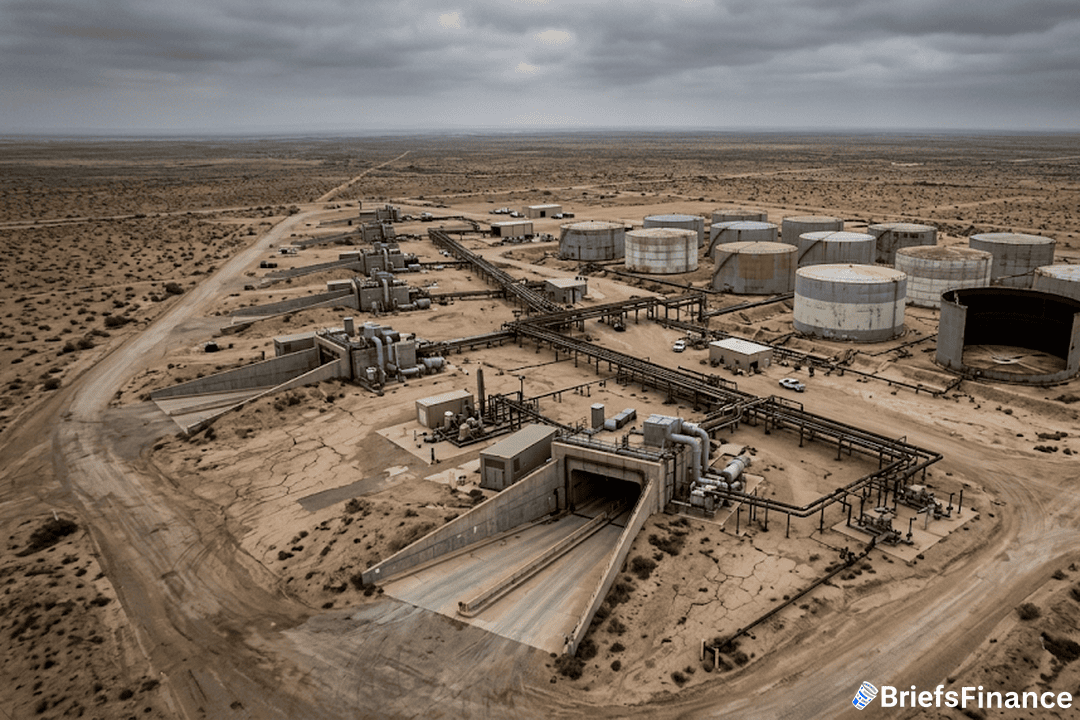
The U.S. Strategic Petroleum Reserve just crossed a line it hasn't seen since 1983.
Energy Department data released Monday put the reserve at 298.7 million barrels, down 6.1 million barrels over the past week. That marks the smallest stockpile in more than four decades - a direct result of the largest emergency drawdown in the reserve's history.
How the Reserve Got Here
The Strategic Petroleum Reserve is the nation's emergency stash of crude oil, built to soften the blow when global supply gets disrupted. Its authorized capacity is 714 million barrels, and before the U.S. and Israel attacked Iran on Feb. 28, it held about 415 million barrels.
Then came the supply shock. Iran responded to the attack by halting oil exports via the Strait of Hormuz, a narrow waterway that carries a huge share of the world's oil. The situation was described as the most severe oil-supply disruption ever.
Get the free Always Be Buying eBook and learn the simple system for building wealth on any income
This is not the first time a president has leaned on the reserve. President Joe Biden released 180 million barrels to calm energy markets following Russia's invasion of Ukraine in early 2022.
The Limits of the Reserve
The reserve is getting harder to use, and not just because it's running low.
A Government Accountability Office report from May found that aging infrastructure is straining the system. As of December 2025, more than a quarter of the reserve's oil could not be tapped because of construction projects and cavern outages. Rapidan Energy's July analysis goes further, saying current holdings include at least 103 million barrels that cannot be deployed at all.
That raises a practical question: how low can the reserve actually go? An Energy Department spokesperson told CNBC in July that about 70 million barrels is the minimum needed to operate the SPR safely. If the reserve hits roughly 243 million barrels once the current drawdown is complete, it would still be above that floor - but not by a comfortable margin.
What It Means for Your Money
The dwindling reserve has sparked worries that government stockpiles are getting close to empty. But not everyone who watches this closely is alarmed.
David Goldwyn, who held the international energy envoy post at the State Department while Barack Obama was president, told CNBC he is not worried about the reserve's stability or its ability to support another drawdown if needed.
Still, the reserve exists for exactly this kind of moment - a serious supply disruption with the potential to spike prices at the pump. When the government had a bigger cushion, a release of this size felt like a clear solution. With the stockpile at its lowest point in over four decades, the next emergency would arrive with far less room to maneuver.
For investors, the takeaway is about the cushion itself. The reserve was built to absorb shocks in global oil markets, and those shocks tend to spill into everything from energy stocks to inflation. Right now, the cushion is thinner than it has been in a generation. That does not mean another crisis is coming - but it does mean the safety net has less give than it used to.
Download the free Always Be Buying eBook and start putting your money to work today