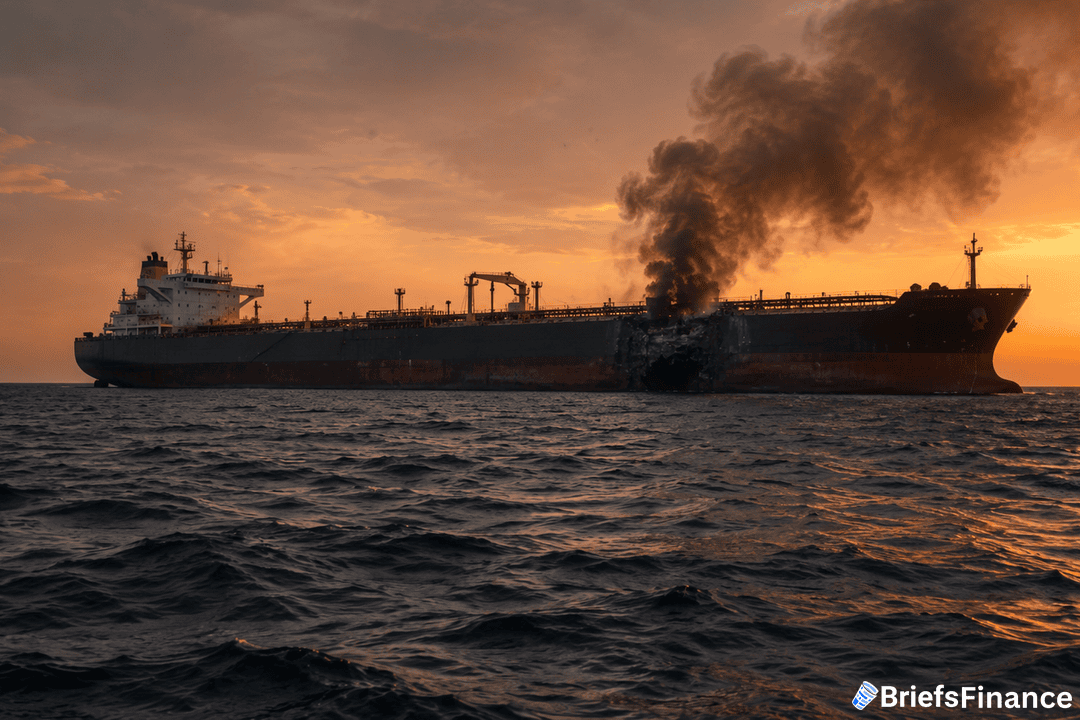
Early Saturday, Aug. 8, 2026, a missile directly struck a tanker connected to Abu Dhabi's state energy company in the Strait of Hormuz.
ADNOC says nobody was hurt and the situation is under control. But the attack lands at the worst possible time, with the world's most important oil waterway already closed and every side claiming a deal is just around the corner.
The Waterway That Moves the World's Oil Is a War Zone Now
For a long time, the Strait of Hormuz was just a line on a map. Ships passed through free, no tolls, no questions.
That ended Feb. 28, when the U.S.-Iran conflict began. Since then, the strait has gone from open international lane to the center of a shooting match, and the entire global economy has felt it through higher gasoline prices, worsening inflation, and fresh worry about oil reserves.
Saturday's missile strike is the latest reminder that this waterway is not close to normal. The IRGC, Iran's Revolutionary Guard Corps, has made its position clear. "The strait stays shut until the U.S. meets Iran's conditions," spokesman Sardar Mohbi said, adding that reopening has nothing to do with the separate negotiations between Iran and Oman.
Vice President JD Vance summed up the U.S. approach in a Fox News interview Saturday. "We don't trust. We verify," he said.
Vance said Iran and Gulf neighbors, Oman especially, had discussed safety measures including a traffic system, mine clearing, and an Iranian promise to leave commercial ships alone. But Vance made clear Washington's trust in Tehran would depend on observable actions, not promises.
Why the Strait Still Matters
This narrow stretch of water connects Gulf producers with global markets. When it becomes dangerous, the effects are felt far beyond the region - at gasoline pumps, in shipping costs, and in inflation numbers. Saturday's strike is the latest sign that those risks remain live.
Get the free Always Be Buying eBook and learn the simple system for building wealth on any income
How We Got Here
The conflict traces back to Feb. 28, when the U.S. and Iran went from confrontation to open fighting. Washington has swung between planned strikes and diplomacy: Trump scrapped strikes days earlier and said terms were already agreed, while Iranian officials denied talks. That whiplash is why traders are watching what ships do, not what officials say.
A Deal Everyone Keeps Promising
Treasury Secretary Scott Bessent said in a CNBC interview Tuesday that a deal ensuring free passage through Hormuz could be finalized as soon as Wednesday. President Trump and Secretary of State Marco Rubio also predicted an agreement was close. None has appeared.
Iran's top negotiator, Mohammad Bagher Ghalibaf, mocked the whole routine Thursday in an X post. "Massive attack coming … wait, never mind, they want to negotiate. That's theater diplomacy on loop," he wrote.
Iranian state media on Thursday described a draft plan to divide the strait, routing inbound ships through Iranian waters and outbound ships through Omani waters. Iran's parliament is reviewing it. The same plan would bar American and Israeli vessels and require countries that harmed Iran to pay compensation before using the strait.
What the Numbers Say About the Noise
For all the deal talk, the market is not buying it yet.
Brent futures ended Friday up more than 1% at $83.55 a barrel. West Texas Intermediate rose about 1% to $78.18 per barrel. Both still posted weekly losses of more than 7%, which tells you how volatile this stretch has been.
The bigger signal came from Kpler, the trade-data firm. Vessel traffic through the strait on Friday fell 33% from the prior day, and most ships that did move used Iran's corridor.
What It Means for Investors
Every day the strait stays contested, the risk of a supply shock sits in the background. Energy facilities around the Gulf and vital shipping lanes are again under threat, and the war is expanding around the region.
Oil prices have already climbed because investors were waiting for a signal that navigation through Hormuz was about to be restored. Until that actually happens, expect more days like these, with prices swinging on headlines and no clear end in sight.
Download the free Always Be Buying eBook and start putting your money to work today