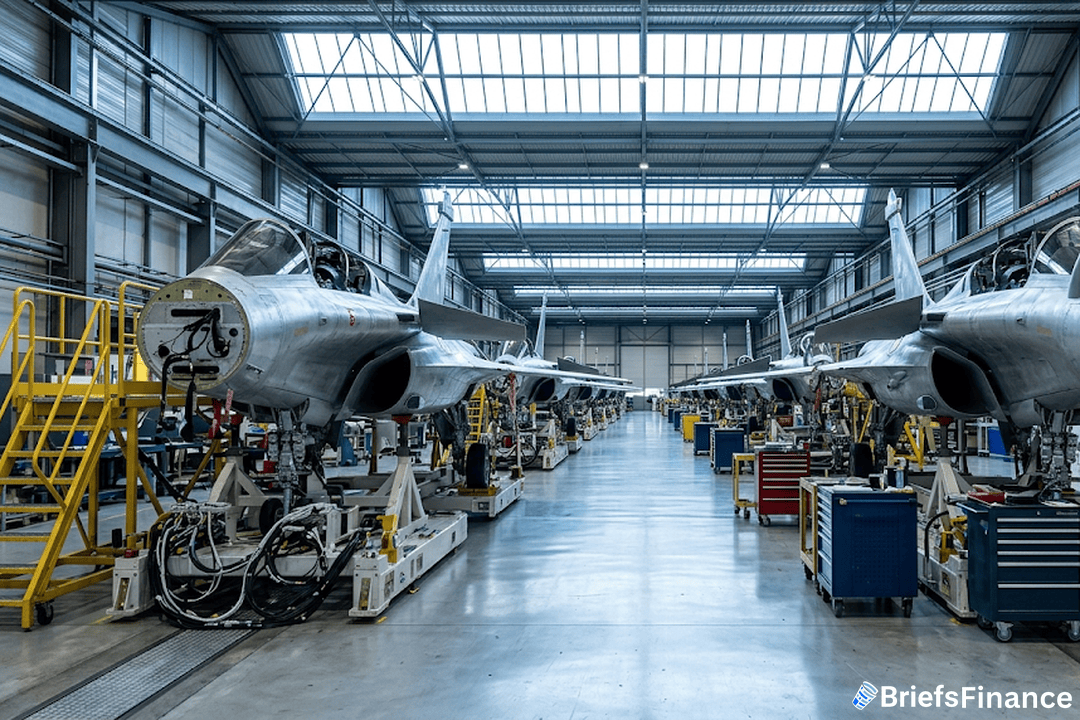
The Deal on the Table
India wants more French fighter jets, and this time it wants most of them built at home.
On August 6, 2026, news agency ANI reported, citing unnamed sources, that France has officially submitted an offer to New Delhi for 114 Rafale multirole combat jets. The price tag is 3.25 trillion rupees, which is $34 billion.
Multirole simply means the jet can do different jobs, from air combat to ground strikes. The acquisition wing of India's Defence Ministry and the Indian Air Force are closely evaluating the full technical and commercial bid.
This would be a government-to-government deal, not an open tender. In that setup, the two governments negotiate directly, which can simplify the political side of a major purchase.
India already issued a letter of request, which is the formal step a buyer takes when it wants to negotiate for a specific product. The military's Defence Acquisition Council, the body that approves major purchases, had already cleared the buy, according to local media.
So this is the next chapter in a long process, not a sudden surprise.
The Centerpiece Is Local Manufacturing
The most striking part of the proposal is where the jets would be built.
Get the free Always Be Buying eBook and learn the simple system for building wealth on any income
That condition changes what the deal means. It is not just India buying planes; it is also a way to build defense manufacturing at home.
If the deal goes through, the work would flow to Indian companies. Tata Group and Larsen & Toubro Ltd. would be major beneficiaries.
The French side would have to work with that condition. Dassault Aviation SA, MBDA, Safran SA and Thales SA would each need to identify a local partner.
That local partner is the company that would handle the manufacturing and supply work in India. That is why these deals can create jobs and engineering work for years.
The Rafale Is Already a Familiar Name in India
India's initial Rafale deal, signed in 2016, covered 36 jets built by Dassault in France. France delivered the first five in July 2020.
The relationship continued after that. In April last year, India signed a separate agreement to buy 26 Rafale-Marine jets for its navy.
The new proposal would be bigger than both of those earlier orders. It covers 114 jets all at once, a sign of how much India's air-power needs have changed.
What It Means for Investors
A defense deal this size does not just matter to pilots. It has a long economic tail.
Why does it matter? Defense contracts can last for years, and requiring most of the fleet to be built inside India means money would flow through Indian factories, engineers, and suppliers. That eventually shows up in earnings reports and, for people who own funds with defense exposure, in portfolio performance.
Once a contract is signed, the work does not disappear after one quarter. It becomes a stream of revenue that can last for years.
Defense spending of this scale is not a single event. It creates a production line that needs workers, parts, and logistics for years.
The catch is that the deal is still under review, and no one has signed a final contract. That leaves plenty of room for changes.
Still, the proposal is now on the table. The price tag is large, the local manufacturing requirement is serious, and India keeps returning to France for jets. For investors, that makes this a story worth following as it moves from proposal to contract.
Download the free Always Be Buying eBook and start putting your money to work today