Free NewsletterPro Login
S&P 500 6,287 +0.42%
DOW 44,521 -0.18%
NASDAQ 21,103 +0.71%

Warning: Undefined variable $funds in /var/www/briefs.co/htdocs/wp-content/plugins/oxygen/component-framework/components/classes/code-block.class.php(133) : eval()'d code on line 491

Warning: foreach() argument must be of type array|object, null given in /var/www/briefs.co/htdocs/wp-content/plugins/oxygen/component-framework/components/classes/code-block.class.php(133) : eval()'d code on line 491
/* the link was here */

Pentagon Pacts Could Bring Northrop $3B in Lockheed Missile Work

Published Aug 3, 2026
[tts_player]
Share:
Summary:
  • Northrop Grumman is receiving up to $3 billion under two Pentagon framework agreements tied to Lockheed Martin interceptors.
  • About $2 billion is for PAC-3 MSE work, including solid rocket motors, and $1 billion is for expanded THAAD output.
  • The deals support rebuilding stockpiles depleted by Ukraine aid, Middle East operations, and the Iran conflict.

What the Agreements Cover

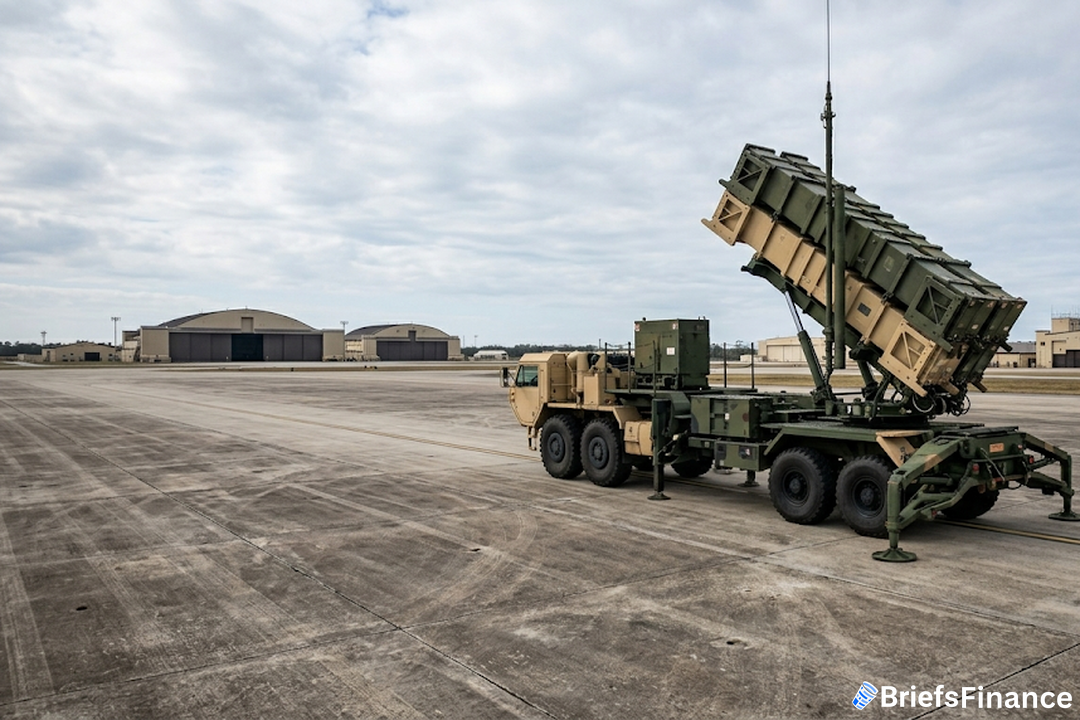
Northrop Grumman Corp. has landed framework contracts from the Pentagon to provide parts for interceptor missiles made by Lockheed Martin Corp. The two systems involved are the Patriot Advanced Capability-3 Missile Segment Enhancement (PAC-3 MSE) and the Terminal High Altitude Area Defense (THAAD) interceptor.

The larger portion, valued at about $2 billion, is linked to the PAC-3 MSE. Northrop will manufacture solid rocket motors for that interceptor and also keep making ignition safety devices for the program. L3Harris Technologies Inc. is currently the only supplier of the rocket motor, so Northrop's entry creates a second source for that critical part. The PAC-3 MSE work accounts for most of that amount, according to Ben Davies, who leads Northrop's defense systems unit.

A separate arrangement valued at roughly $1 billion will aid Lockheed's THAAD production. Northrop will expand its current role producing high-temperature structural components for THAAD. The Defense Department wants to quadruple output of that interceptor, and the new agreement is designed to help meet that target.

Get the market news that matters in a five-minute read with Market Briefs, our free daily newsletter

Why Stockpiles Are Being Rebuilt

These pacts fit into a larger effort to replace U.S. munitions inventories that have been strained over the last several years. Weapons sent to Ukraine, interceptors fired during Middle East operations, and munitions consumed in the conflict with Iran all contributed to the drawdown. The Trump administration has pressed major defense contractors to rebuild those stocks quickly.

Pentagon framework agreements of this type serve as preliminary commitments before a final contract is signed. Similar pacts have been reached in recent months with several arms makers, including Lockheed and Northrop. The broader initiative is intended to improve the availability of key munitions if a protracted war with China ever became necessary.

Northrop had been preparing for this moment for years. The company began investing $2 billion in its missile business in 2019, expanding operations in Utah, West Virginia, and Maryland because executives expected stronger demand for missile propulsion. Those facilities are now positioned to support the added PAC-3 and THAAD work.

Lockheed aims to triple PAC-3 production to 2,000 missiles per year by 2030. To support that goal, Northrop plans to ramp up solid rocket motor output over a two-to-three-year stretch at its West Virginia plant. The company is expanding that plant to triple its manufacturing capacity, Davies said.

What Comes Next

In the near term, Northrop expects Lockheed to issue a production contract once the new framework deal is in place. The agreements come after Northrop invested $2 billion in its missile business beginning in 2019. That investment paid for expanded operations in Utah, West Virginia, and Maryland because company leaders expected stronger demand for missile propulsion systems.

The new pacts join a wider Pentagon push to restore American missile inventories that have been drained by repeated overseas shipments and steady interceptor use. That focus reflects both current conflicts and the need to be ready for a major-power confrontation. As production lines accelerate, companies like Northrop, Lockheed, and L3Harris will be central to the Pentagon's plan to avoid another inventory crisis.

Join Market Briefs, our free daily newsletter, for a quick daily rundown of the markets
Disclosure

Recent News

1 2 3 47

Get Market Briefs delivered to your inbox every morning for free!

No fluff. No noise. No politics. Just finance news you can read in 5 minutes.

Blogs

June 29, 2026
Portfolio Diversification: Why Putting All Your Eggs in One Basket Destroys Wealth
  • Real diversification means spreading investments across all 11 economic sectors plus bonds, alternatives, and cash so no single bet can sink the portfolio.
  • Different sectors perform at different times, so a diversified portfolio captures upswings while smoothing the brutal drawdowns that wipe out concentrated bets.
  • Total market index funds offer the simplest path to diversification, and annual rebalancing is what keeps the structure working over time.
Read More
June 29, 2026
Non Taxable Income: What It Is and Why It Matters
  • Non taxable income is money you receive that you don't owe income tax on.
  • The tax code treats workers, investors, and business owners very differently, and investors often come out ahead.
  • Learning how income is taxed is a quiet superpower for keeping more of what you earn.
Read More
June 29, 2026
Semiconductor Stocks: A Simple Guide for Investors
  • Semiconductor stocks are companies that design and make computer chips, the brains inside nearly every modern device.
  • The AI boom has turned chips into one of the market's most important and most watched groups.
  • They offer big growth potential, but come with high valuations and a notoriously cyclical history.
Read More
June 25, 2026
How Stocks Work: A Simple Guide for Beginners
  • A stock is a slice of ownership in a company - buy one, and you own a piece of the business.
  • You make money two ways: the share price rising over time, and dividends paid to shareholders.
  • The simplest path for most beginners is buying into the whole market through a low-cost index fund.
Read More
June 25, 2026
Stop Loss vs Stop Limit: What's the Difference?
  • A stop loss order sells your stock once it hits a trigger price, prioritizing getting you out.
  • A stop limit order only sells within a price range you set, prioritizing price over a guaranteed exit.
  • The trade-off: a stop loss almost always executes; a stop limit might not if the price moves too fast.
Read More
June 25, 2026
Energy Stocks: A Simple Guide for Investors
  • Energy stocks are companies that produce and supply the power the world runs on, from oil and gas to newer sources.
  • They make up one of the 11 sectors of the market and tend to move with energy prices and big-picture shifts.
  • Like any sector, the key is diversification and understanding the forces driving demand.
Read More
June 18, 2026
What Is a Stop Loss Order? A Simple Guide
  • A stop loss order automatically sells a stock once it falls to a price you set.
  • It's a tool to cap losses or lock in gains without watching the market all day.
  • It works best for active strategies, and can backfire if used carelessly on long-term holdings.
Read More
June 18, 2026
Best S&P 500 Index Fund: How to Choose One
  • The best S&P 500 index fund for most investors is simply the cheapest, most established one that tracks the index well.
  • Funds like VOO, IVV, and SPY all hold the same 500 companies, so the biggest difference is the fee.
  • Pick one, automate your buys, and let time do the heavy lifting.
Read More
June 17, 2026
What Are Penny Stocks? Risks and Rewards Explained
  • Penny stocks are very low-priced shares of very small companies, often trading for just a few dollars or less.
  • They promise huge gains but carry huge risks: low liquidity, high failure rates, and wild price swings.
  • Most investors are better served by quality companies and funds than by chasing cheap shares.
Read More
June 17, 2026
Best Stocks for Beginners With Little Money
  • The best stocks for beginners with little money usually aren't individual stocks at all - they're low-cost index funds.
  • You can start with $100 or less and use small, regular investments to build wealth over time.
  • Focus on diversification and consistency, not on picking the next big winner.
Read More
1 2 3 24
Share via
Copy link











