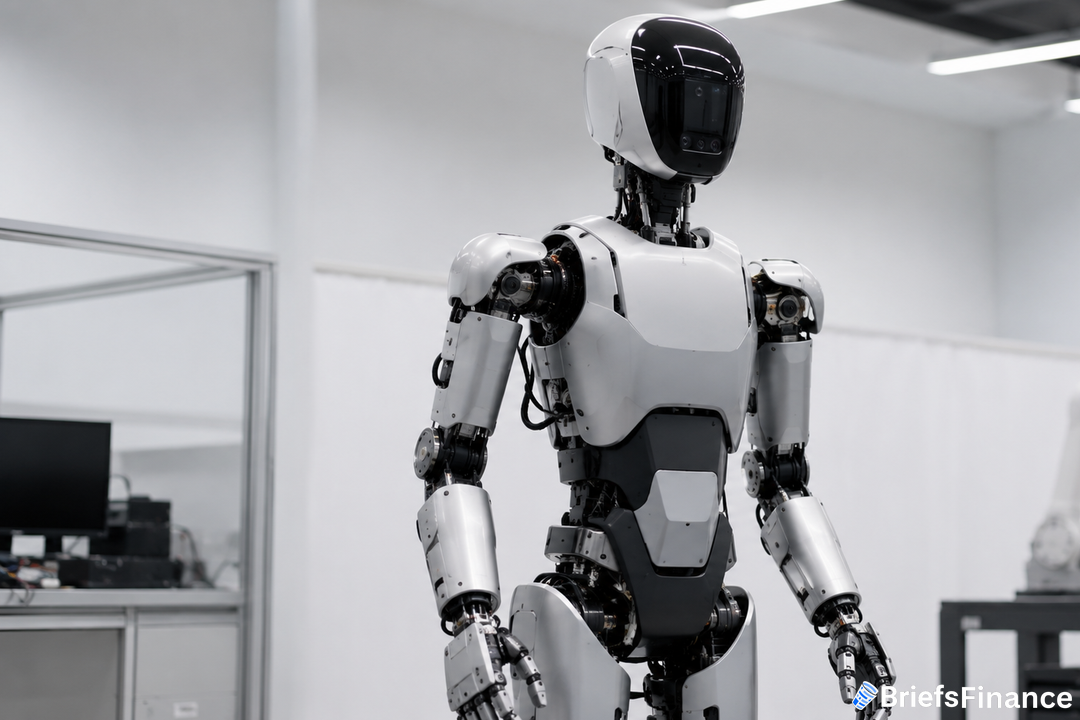
A Robot That Can Unscrew a Light Bulb
That might sound like a small trick. But for a robot, it is a surprisingly hard one.
The 2025 model only controlled a robot's upper body. Now the AI can plan and adjust movements from the torso down to the legs, letting a machine twist, lean, and reach all at once.
That number matters because it shows the robot can handle a task that requires a steady hand, a careful grip, and just the right amount of twisting force - all while keeping its balance.
"Our goal is to bring AI into the physical world and then build the intelligence layer that can be used by every robot," said Carolina Parada, Google DeepMind's vice president of robotics.
The ability to coordinate a full body is especially significant because earlier humanoid robots often struggled with tasks that required simultaneous lower‑body stabilization and upper‑body manipulation. Without that coordination, a robot attempting to unscrew a light bulb might overreach, lose its footing, or apply uneven torque. Gemini Robotics 2 addresses this by integrating vision, planning, and motor control into a single model that treats the entire body as one system rather than separate parts.
Get the market news that matters in a five-minute read with Market Briefs, our free daily newsletter
Why Full-Body Control Is a Big Step
Most industrial robots today are bolted to the floor or stuck inside a cage. They do one thing over and over, never needing to catch their own fall. Humanoid robots are different.
They are built to walk through your warehouse, climb stairs, and maybe one day stock your kitchen cabinets. That kind of movement demands an AI that can handle a running list of decisions: lift here, shift weight there, reach around an obstacle.
Gemini Robotics 2 builds on Google's larger Gemini AI system, which is already used for text, images, and video. The idea is to extend that same reasoning ability into a physical body. The robot can now look at a scene, figure out what to do next, and move its whole frame to finish the job.
The demonstration used Apollo, a humanoid robot made by Apptronik Inc. Google is also working with Agile Robots SE and Boston Dynamics as early-access partners. Those companies will test the model in real-world settings, which should tell Google how well the system holds up outside a lab.
What It Means for Your Portfolio
Alphabet is betting that robotics will be a major business someday, not just a research project. By building an "intelligence layer" that works across different robot models, Google positions itself as the operating system for physical AI in the same way Android powers phones.
The company is opening a waitlist for robotics developers and making three models available. Among the offerings, Gemini Robotics ER 2 can be reached via Google's AI Studio and as a private preview on the firm's enterprise platform. The other two models - Gemini Robotics 2 and On-Device 2 - are being shared with more than 100 trusted testers and a handful of early partners.
That means the payoff is years away, not months.
For investors, the story here is less about a single product launch and more about the direction Alphabet is pushing. If robots eventually become as common as computers, the company that provides their brain could own a very valuable layer of the market.
Join Market Briefs, our free daily newsletter, for a quick daily rundown of the markets