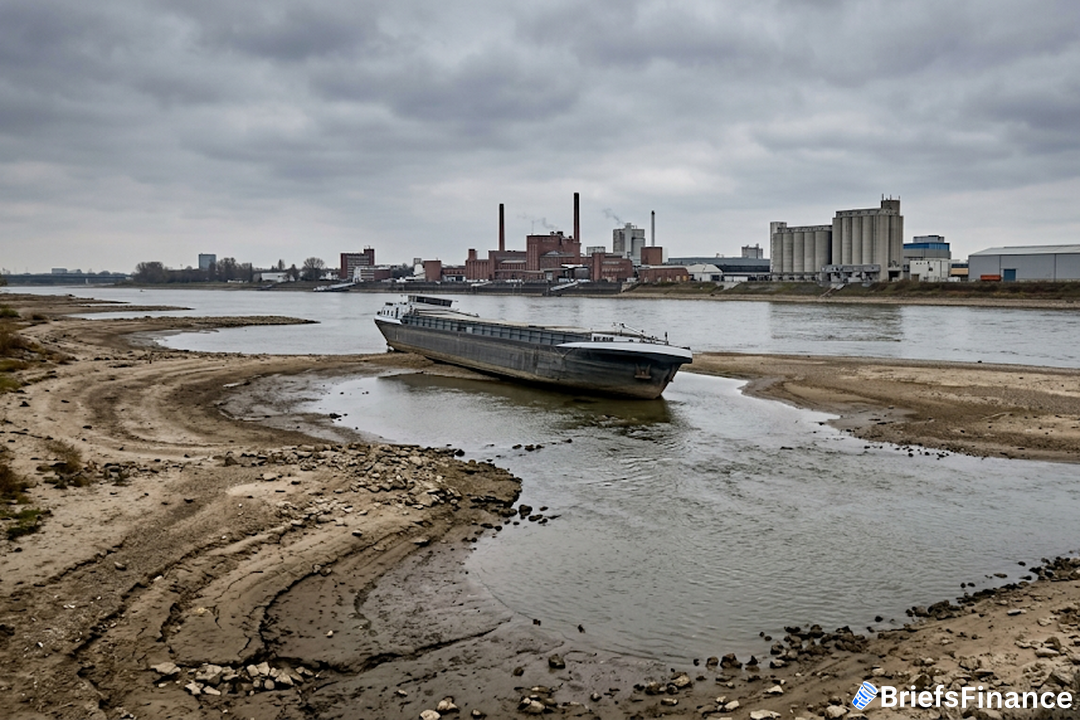
Heat Waves Push the Rhine to the Brink
Another heat wave is baking Europe, and the Rhine River is paying the price.
At the Kaub measurement point, a narrow stretch that acts as a bottleneck for cargo ships, the water depth is already down to 28 centimeters. That matches the lowest reading since 2018.
"It's getting more difficult with every centimeter," said Florian Krekel, an official with Germany's Federal Waterways and Shipping Administration.
The Rhine runs about 800 miles from Switzerland to the North Sea, cutting through the industrial heart of Europe. It carries everything from coal and chemicals to oil products and iron ore. When the water gets this low, barges have to load far less cargo to avoid running aground. That pushes up costs for every barrel and bushel that moves along the river.
Already, the Rhine's dropping water levels are causing freight disruptions.
Frankfurt is forecast to hit 39°C on Thursday, with little rain expected in the coming days. That means conditions are unlikely to improve soon.
The River's Central Role in Europe's Commerce
The Rhine has long been Europe's most vital inland waterway, moving roughly 80% of all goods shipped on German rivers. Its low depth during past droughts, such as the 2018 event that stranded hundreds of vessels, cost the German economy an estimated €5 billion. The current dry spell threatens to repeat that disruption.
Get the market news that matters in a five-minute read with Market Briefs, our free daily newsletter
Industries from chemical giant BASF to refineries in the Ruhr depend on barge deliveries for raw materials and finished products. When the river cannot handle normal traffic, they are forced to turn to rail or truck, which are more expensive and less efficient.
The Energy Grid Feels the Squeeze
The timing is rough for Europe's energy markets.
But that stockpile is stuck. The river can't handle the traffic.
Alexandre Claude, chief executive of DBX Commodities Ltd., put it bluntly: "The Rhine has effectively locked the door on inland coal delivery, and Rotterdam is where the trucks are queueing up."
Diesel is getting hit too.
The heat waves have also stressed power systems, caused wildfires, and put public health at risk across the region. So the disruption is not just about shipping - it is another layer of pressure on an energy system that has been under strain for years.
What It Means for Your Portfolio
When a major shipping route slows down, the ripple effects reach further than the ports.
Energy costs inside Europe are likely to stay elevated as long as the Rhine runs low. That means higher prices for diesel, heating oil, and coal-fired power - and those costs eventually show up in everything from factory goods to trucking rates. Companies that rely on river transport for raw materials may take a hit to their profit margins.
For investors, the key question is how long the drought lasts. Weather forecasts point to more heat and little rain in the near term. If the water stays shallow into the fall, the impact on energy prices could compound.
But the bottom line: when a river that carries the region's energy starts to run dry, it is worth watching how your holdings in European energy, shipping, or industrial stocks might be exposed. The heat is real, and the costs are already climbing.
Join Market Briefs, our free daily newsletter, for a quick daily rundown of the markets