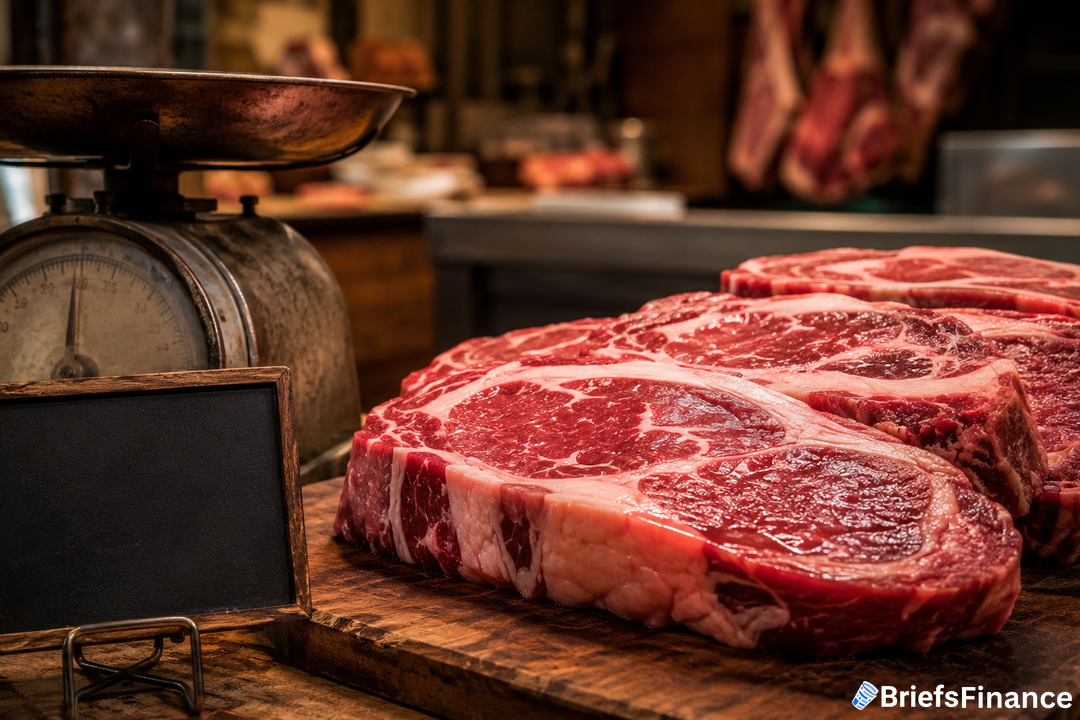
Beef prices are near all-time highs. Yet consumers keep buying steak - and they are trading up to premium cuts and organic options.
Prices Climb, Demand Holds
The price for steak reached $12.80 per pound in May 2026, marking a 16% increase year-over-year and representing the second highest figure on record.
Despite the sticker shock, shoppers are not cutting back. A Kroger spokesperson said, "We are seeing customer demand for steaks remain quite high, with a shift towards more premium and organic options." Omaha Steaks saw sales of its new USDA certified tender top sirloin filet value cut jump 25% in the weeks before Father's Day 2026 compared to 2025.
Get your free investing masterclass bonus when you join Market Briefs, our free daily newsletter
The Supply Squeeze
The reason for high prices is simple: there are far fewer cattle. Years of drought and expensive feed pushed ranchers to sell off herds. This scarcity of cattle has pushed up prices for live animals, which in turn raises the cost consumers pay for beef in stores and eateries. It would take several years to rebuild the national herd, which could later boost beef availability and lower prices.
The current supply shortage stems from a multi-year drought across the Great Plains and Southwest that began in 2020, forcing many ranchers to cull breeding stock due to soaring hay and grain costs. As a result, the U.S. cattle inventory fell to 87.2 million head in January 2026, the lowest since 1962, according to USDA data. Without a quick turnaround, tight supplies are expected to persist.
Shoppers Look for More Than Price
Consumers are becoming pickier. NielsenIQ reports that 42% of shoppers now favor USDA Prime quality claims when buying meat. Another 40% look for "no added hormones," 37% prefer "grass-fed," and 36% seek "no antibiotics ever."
NielsenIQ noted in a June report, "Shoppers are looking past the label and into the story behind the meat." The research firm also observed, "Consumers are entering the holiday with discipline, making more trips but with clear intent behind each one."
At LongHorn Steakhouse, parent company Darden Restaurants sees an opportunity. CEO Rick Cardenas said, "The guests know they're getting high quality steaks when they come to LongHorn [Steakhouse]. They get a great value. And it doesn't hurt that there's a high beef inflation in the market. And so the relative value looks a little bit better." Meanwhile, Omaha Steaks CEO Nate Rempe added, "Customers are still celebrating dad with premium proteins, but they're also being thoughtful about value and versatility."
What to Watch
Investors are left wondering for how much longer this trend will persist. Rebuilding the national herd requires several years if no foreign cattle are imported, and only after that could beef supplies increase and prices drop. For now, the tension between tight supply and resilient demand keeps steak prices near record levels.
Subscribe to Market Briefs, our free daily newsletter, and claim your bonus investing masterclass