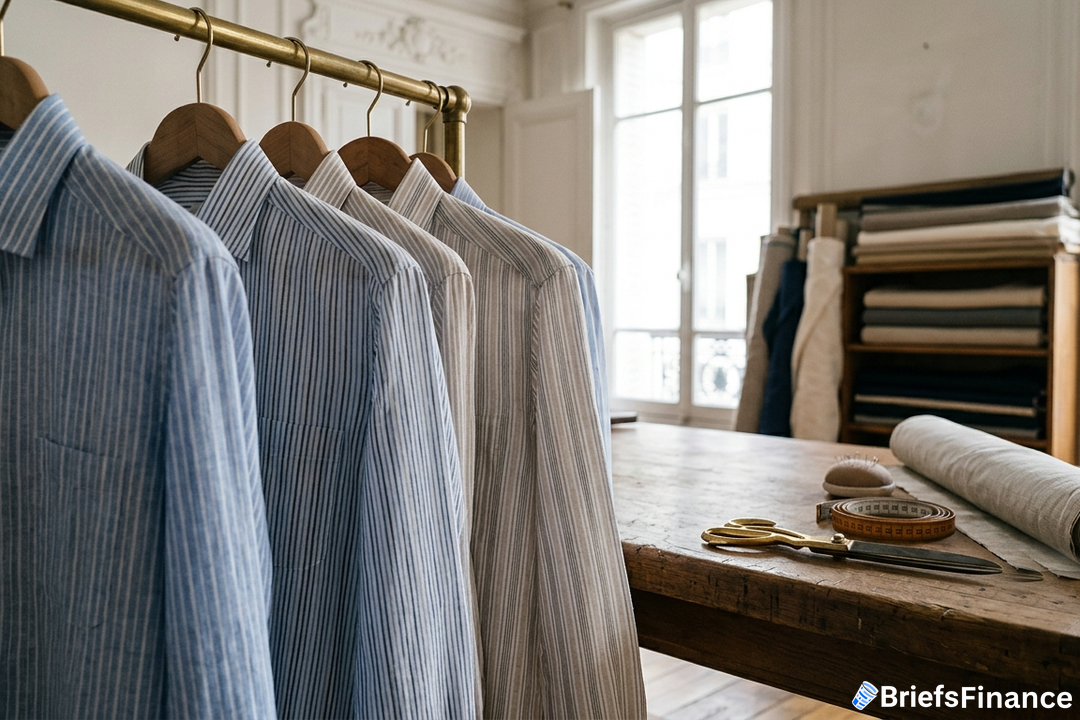
Chanel's owners are worth $42.8 billion each. The deal began with a polo player who wore Charvet a century ago.
Boy Capel, the British polo player who had a relationship with Gabrielle "Coco" Chanel, famously wore Charvet shirts.
The Blazy Connection
Chanel stated there was a "desire to continue the dialog, by envisaging the integration of Charvet, in order to preserve and perpetuate this savoir-faire within a lasting framework." The house wants to protect Charvet's craftsmanship inside a stable home.
Bruno Pavlovsky, who heads Chanel's fashion activities, commented on Boy Capel's link to the brand. That personal history made the acquisition feel natural.
A Storied Past, A New Future
Chanel already owns other specialty brands like swimwear label Eres, jewelry maker Goossens, and cashmere specialist Barrie. Charvet will join that group. Financial details of the transaction have not been made public.
Get your free investing masterclass bonus when you join Market Briefs, our free daily newsletter
The Wertheimer brothers, who control Chanel, have a strategy of acquiring heritage artisans to preserve their traditional skills. This move aligns with their broader goal of bolstering the brand's narrative of exclusivity and craftsmanship, especially as the luxury market faces slower growth.
The luxury market is growing slowly. Bain, a consulting firm, expects the personal luxury goods industry to grow 2% to 4% this year at constant currency - that means after adjusting for exchange rate changes. This is a downgrade from a previous prediction, but still up from the 1% growth last year.
Chanel itself had a downturn in 2024 on product price increases that turned consumers away. But last year sales returned to growth.
The company reports that Blazy's collections are proving popular with shoppers, a positive sign. Jacob Elordi, the actor and ambassador for Chanel's Bleu de Chanel fragrance, represents the brand's modern appeal.
What to Watch
Chanel may expand distribution or keep the brand exclusive. The real test will be whether Blazy's vision continues to draw customers to Chanel's own collections.
Charvet's legacy of crafting bespoke shirts for luminaries underscores its reputation, making it a fitting addition to Chanel's portfolio of high-end artisans. The brand's meticulous handwork and storied past align closely with Chanel's emphasis on traditional skills, a key differentiator in a luxury market where exclusivity increasingly drives consumer interest.
Background: A Legacy of Craftsmanship
Charvet's history extends far beyond its modern price tag. Founded in 1838, the Parisian atelier has dressed figures ranging from Winston Churchill to Hollywood stars, earning a reputation for hand-stitched shirts that can take weeks to complete. This tradition of artisanal excellence mirrors Chanel's own commitment to preserving couture techniques, such as those at its Lesage embroidery house or Maison Michel millinery.
By adding Charvet, Chanel deepens its control over the supply chain of luxury essentials, ensuring that the shirtmaker's unique patterns and fabric sourcing remain intact. The acquisition also reflects a broader industry trend: heritage houses like LVMH and Kering have long snapped up small ateliers to secure scarce skills. For Chanel, which remains privately held by the Wertheimers, such purchases reinforce its independence from public market pressures, allowing it to invest in slow, meticulous production even as rivals chase quarterly returns.
Subscribe to Market Briefs, our free daily newsletter, and claim your bonus investing masterclass