Brazil's government wants to show it can control its spending. At the same time, the economy is expected to grow only 2% this year.
A Deficit That Worries Investors
A budget deficit is the gap between what a government takes in and what it spends. "Nominal" means the number is not adjusted for inflation. Brazil's deficit of 9.6% of GDP is very high.
The country lost its investment-grade credit rating in 2015 because of similar problems. An investment-grade rating means lenders see the country as safe to lend to.
The government introduced big tax breaks and subsidies after the Middle East war began. The total value of those measures is now estimated at 13 billion reais.
Get your free investing masterclass bonus when you join Market Briefs, our free daily newsletter
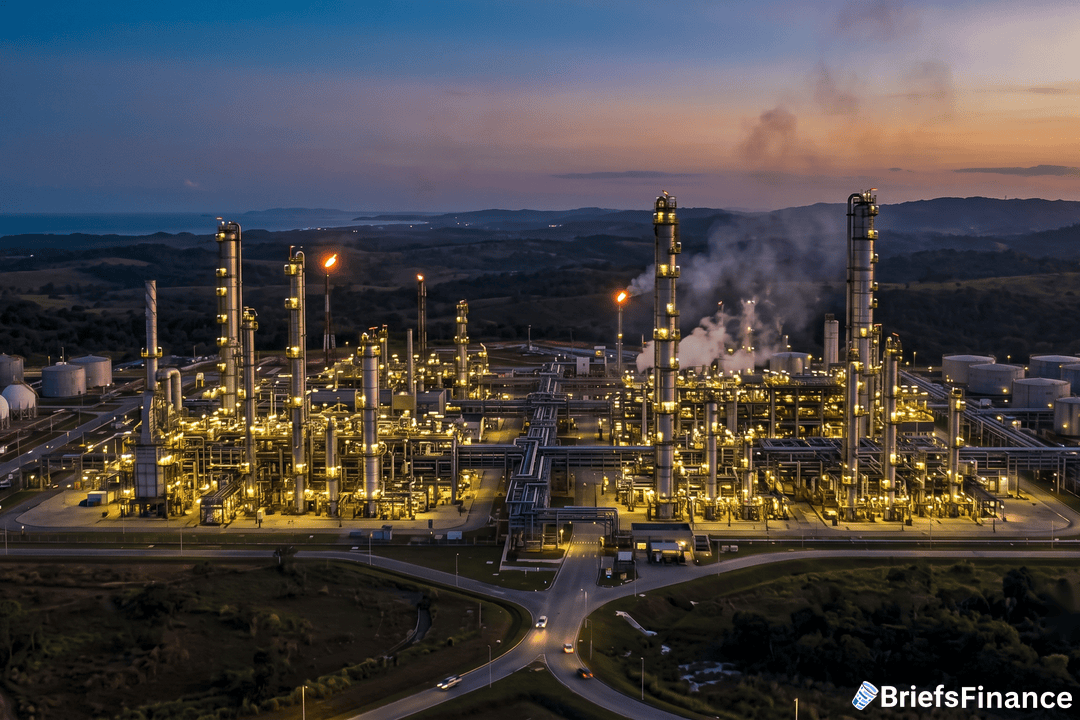
Now Lula wants to pare back those costs. He authorized Petroleo Brasileiro SA, or Petrobras, to raise fuel prices. The state-controlled oil company had delayed price adjustments earlier.
Diesel First, Then Gasoline?
An anonymous person familiar with the matter said, "The government will scale back diesel subsidies first." This is a partial reversal of the temporary tax cuts and subsidies. The move is meant to demonstrate fiscal discipline to investors.
The Lula administration inherited a challenging fiscal environment. The emergency measures introduced after the Middle East war were designed to shield consumers from soaring energy prices, but they significantly widened the budget gap. Reducing these subsidies is a delicate balancing act between maintaining public support and satisfying investor demands for fiscal responsibility.
But the economy still has stimulus. Fiscal and credit measures have boosted demand. The central bank recently raised its 2026 growth forecast to 2%, partly because of that stimulus.
Policymakers warned that the stimulus measures could pressure inflation, which has run above the 3% target since 2020. The central bank is already using tight monetary policy to keep prices in check.
These fiscal challenges are reminiscent of Brazil's economic turmoil in the mid-2010s, when a combination of low commodity prices, political instability, and unsustainable spending led to a deep recession and the loss of its investment-grade status. Regaining that rating has been a key goal for successive governments, but the emergency measures adopted after the Middle East war have set back progress.
Brazil has dealt with comparable fiscal difficulties before; its investment-grade credit rating was revoked roughly ten years back due to similar deficit and spending concerns. The emergency fuel subsidies, tax breaks, and other measures were a direct response to the Middle East war's impact on global energy prices, but they added billions in monthly costs. Rolling them back is considered an initial step toward rebuilding credibility with investors, though the broader stimulus still in place may complicate the central bank's inflation fight.
Subscribe to Market Briefs, our free daily newsletter, and claim your bonus investing masterclass