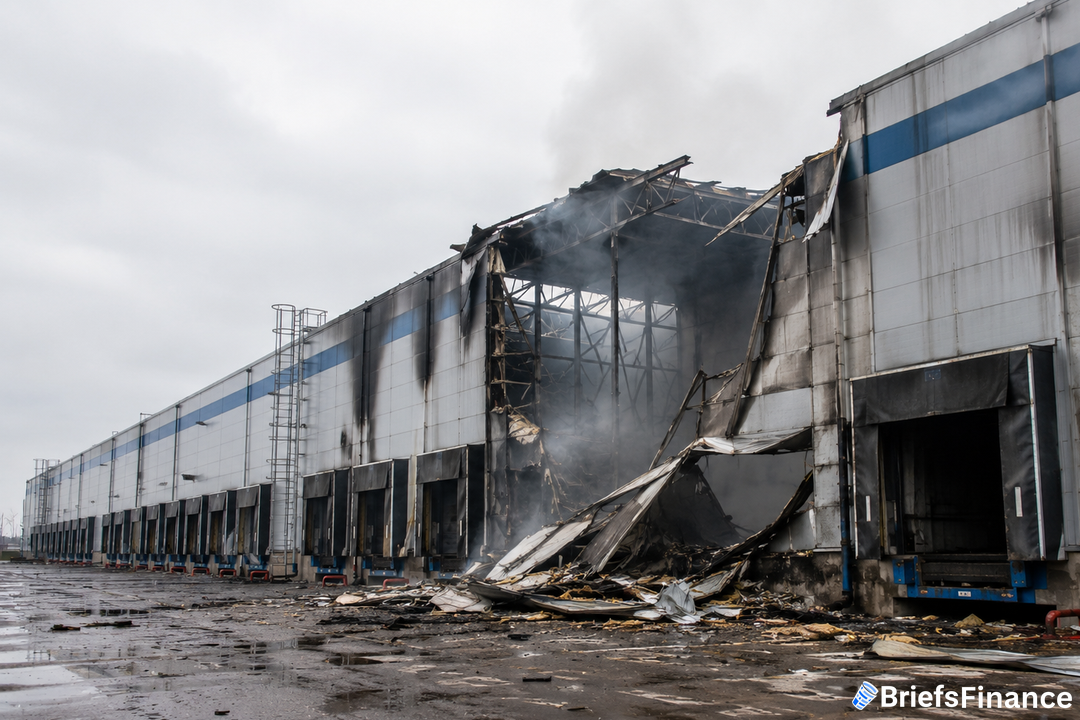
A New Target in Russia's Economy
For nearly four and a half years, Ukraine has fought Russia's invasion with soldiers and weapons. Now Ukraine is targeting a different realm: the civilian economy that Russians rely on daily.
Wildberries, which employs roughly 48,000 people, is a household name across Russia. The drone strike hit its logistics hubs, aiming to disrupt the supply chain for a wide range of consumer goods - from electronics to clothing - that millions of ordinary Russians purchase regularly. The message is clear.
Natalya Kovaleva, an expert on Russia and Eurasia at Chatham House, outlined the mounting difficulties: "Western sanctions fractured supply chains. Tax increases squeezed margins. Internet blackouts disrupted operations. And recent fuel shortages drove up costs while adding to inflationary pressures."
Get the market news that matters in a five-minute read with Market Briefs, our free daily newsletter
She noted that although Russian entrepreneurs have mostly managed to cope with these difficulties, "Ukrainian strikes on Wildberries present a significant new development, reflecting Kyiv's broader effort to ratchet up economic pressure on business and ordinary Russians."
The Russian Economy Is Running Out of Steam
Even before the drone strike, Russia's economy was showing cracks. Elina Ribakova, senior fellow at the Peterson Institute for International Economics, laid out the numbers: "The Russian economy has stalled. It will have growth of zero percent this year - at best, we have seen contraction of the economy in the first quarter and industrial output contraction as well."
"That last part matters more than it sounds. Industrial output contraction means that also the defense sector has decelerated meaningfully," Ribakova said. "So, Russia is vulnerable." This stagnation marks a notable departure from the early war years, when heavy state spending on defense temporarily propped up growth, but now persistent inflation and weakening demand are taking a toll.
For much of the war, Russia seemed to defy Western sanctions thanks to energy revenues and wartime spending. But now the cracks are widening. The state-controlled bank VTB is expected to help prop up Wildberries, and Sberbank is said to have created a plan to restructure loans for the retailer's vendors.
She added: "It remains to be seen if this strategy will have the desired effect. Even as it becomes even harder to do business in Russia, the country's elites appear more dependent on - and wary of - the Kremlin [than] ever before."
Ribakova also pointed to another factor: the connection with Iran. "The fact that Iran is able to close the Strait of Hormuz is boosting oil prices and, of course, giving Russia another way to continue fighting in Ukraine."
Meanwhile, U.S. lawmakers are again moving to impose stricter sanctions on Russia; a bill backed by the late Senator Lindsey Graham has cleared an initial Senate vote. Ribakova stated that this kind of energy sanctions bill could prove "extremely impactful" to Putin's wartime economy.
Join Market Briefs, our free daily newsletter, for a quick daily rundown of the markets