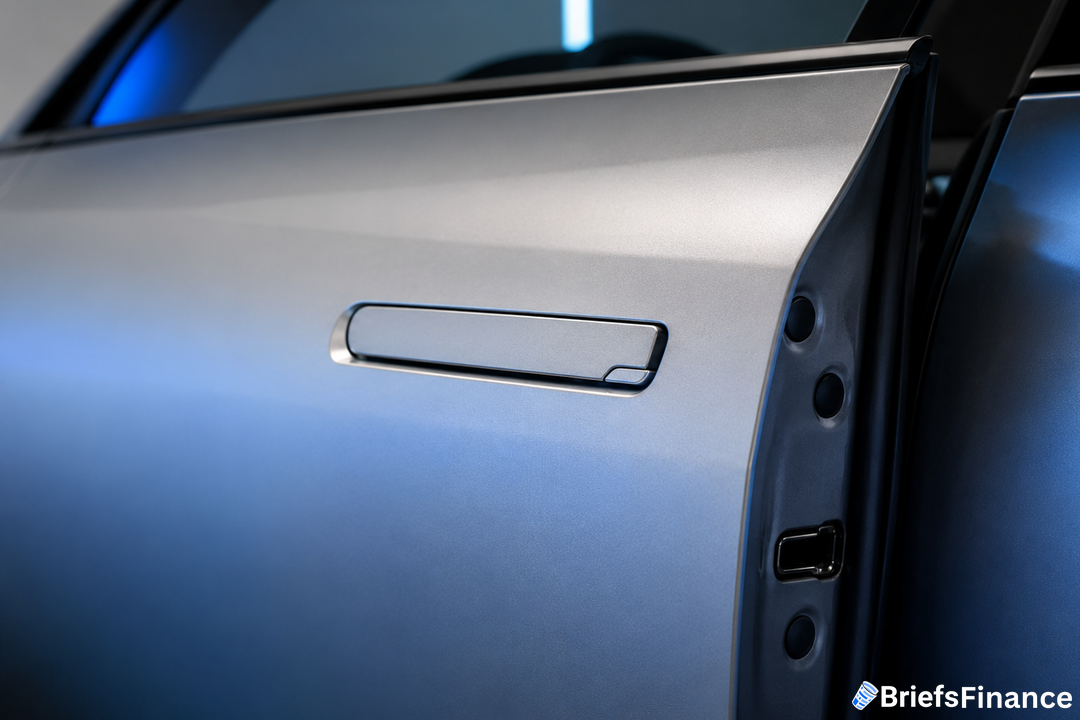
The Door Handle Problem Nobody Asked For
You probably do not think about your car door handle much. You grab it, you pull, you get out. But what if the handle is flush against the door and works electronically? And what if the battery that powers it runs low?
That is the exact question U.S. regulators are now trying to answer.
U.S. auto-safety regulators from the National Highway Traffic Safety Administration revealed a plan to create new standards for car doors. The goal is to make sure people can get out of vehicles easily - even when the electronic systems fail. The move follows several incidents where drivers and passengers could not escape cars with flush, electronic door handles, similar to the ones Tesla uses.
Get the market news that matters in a five-minute read with Market Briefs, our free daily newsletter
The timeline moves fast. Now the agency is taking it a step further by starting rulemaking for the whole industry.
Why Electronic Handles Can Be a Trap
Here is the technical problem. Flush door handles look sleek and modern, but they depend on the car's electrical system. If the battery does not supply enough voltage to the electronic door locks, the handles may not work. That means you could be stuck inside your own vehicle.
In one instance, a driver had to break a window to escape. These real-life scenarios underscore the risk of depending exclusively on electronic systems for door operation.
During its initial review, NHTSA concluded that the issue is bigger than one car model. It is a design problem that touches every automaker using flush electronic handles.
Some companies have already started fixing it. But regulators want to make sure everyone does it, not just the early movers. NHTSA will now develop new requirements that apply to all automakers - if the rules actually get issued.
The agency is careful to note that starting rulemaking does not guarantee new rules will come out. Still, the pressure is on.
The rulemaking process could take years, but automakers are already feeling the heat. Some industry observers note that the shift to electronic door handles reflects a broader trend toward keyless entry and smartphone-based controls, which introduce new failure modes. Mechanical backup releases, like the one in the Tesla Model 3 that requires a hidden manual cable, are often confusing to users. NHTSA's eventual rules may require clear labeling and easy operation of mechanical overrides, regardless of the vehicle's electronic state.
Join Market Briefs, our free daily newsletter, for a quick daily rundown of the markets